
Le Jardin Secret – Marrakech
The word paradise has its origins in the Old Persian pairidaeza that means an enclosed space. This is an apt description of Le Jardin Secret with its 30 feet high walls making it almost invisible from the rest of the Medina of Marrakech.
Le Jardin Secret was one the the largest riads (house with a courtyard) in the Medina. It’s Islamic garden forms the centrepiece of a palace that once belonged to the wealthiest and most influential people in the city. It was created in the late 16th century and today most of its general character is from the 2nd half of the 19th century. In 2013 a project of restoration began to restore the riads former glory. It opened to the public in 2016.
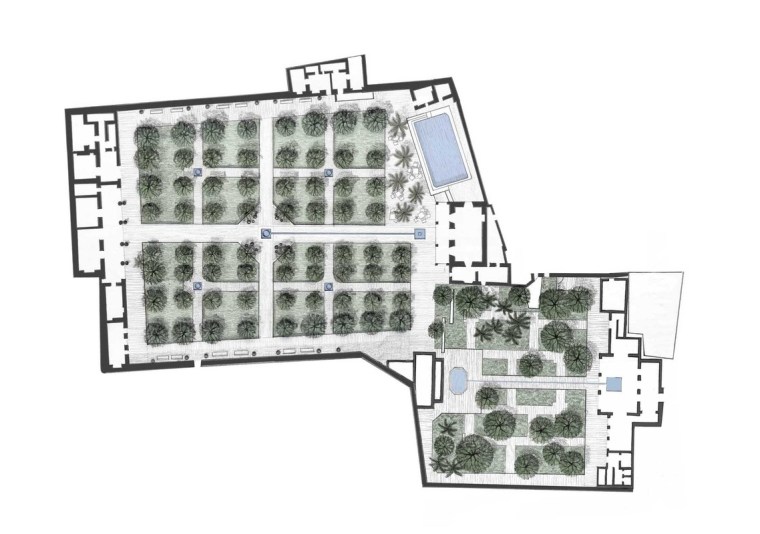
There are two separate courtyards, a smaller exotic garden and a larger Islamic garden.
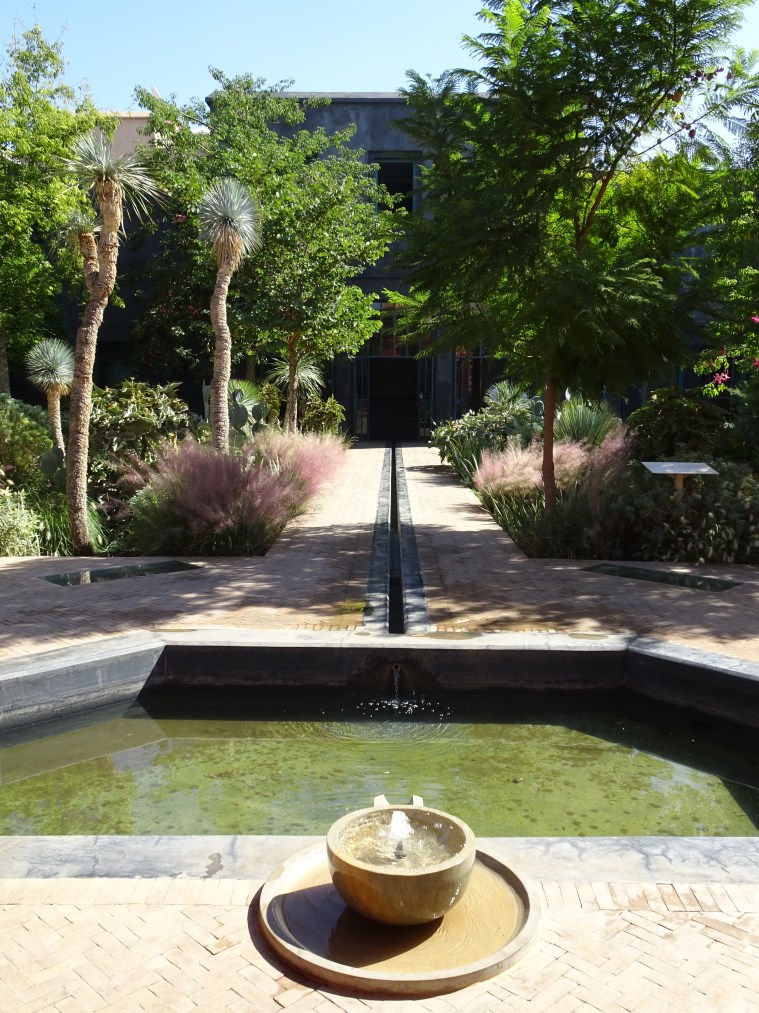
The exotic garden does retain the features of the earlier garden but it is planted in a contemporary romantic style using plants from all over the world. Apparently it may be considered to represent an aspect of the Garden of Eden; as it says in Genesis “Out of the ground the Lord God caused to grow every tree that is pleasing to the sight and good for food” There are three Australian plants here. The Acacia covenyi, Grevillea ‘Winpara gem’ and Westringia brevifolia.
The Islamic garden is part of a tradition that goes back to the earliest Persian gardens laid out more than 2500 years ago and is typical of others in Marrakech. A pattern called chahar bagh meaning fourfold garden, is central to this tradition and could be found as far apart as India and Portugal.
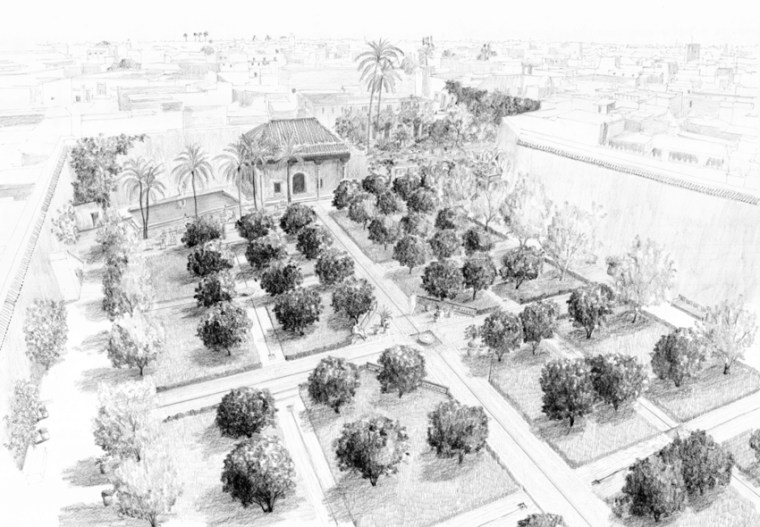
The garden has been restored and replanted to reflect the traditional character of a Moroccan garden before European influence. Shrubs and trees are what would have been planted in a Moroccan garden of the mid-19th century where every plant had a special meaning or use.
Water is the primary focus of the design occupying a central position in the composition. In Islam, water has a symbolic value as the divine essence of life and is an essential part of all Islamic gardens. Marrakech was founded by the Almoravids (a Berber Muslim dynasty) in 1071 and was the capital of an empire covering Morocco and the southern half of the Iberian Peninsula. The water supply was essential to the success of the city. The Almoravids built a system of khettaras, underground tunnels, conveying water entirely by gravity from the base of the Atlas Mountains to the city (approx 50kms). Whoever controlled the Atlas Mountains controlled the water to the city and therefore the city.
The defining feature of chahar bagh was the most efficient means of distributing water to the plants later developing as an important symbol of the domestication of the wild desert landscape. In the 7th century with the rise of Islam this way of ordering a garden was adopted by Muslims and the fourfold division became symbolic to reflect the description of paradise in the Quran. In Le Jardin Secret’s Islamic garden the path that leads from the centre of the garden to the Hbiqa Pavilion had water in the form of a narrow rill. The garden is engineered to provide water at the right place and pressure with the main paths and irrigation channels set above the planted level allowing water to spill down and irrigate.
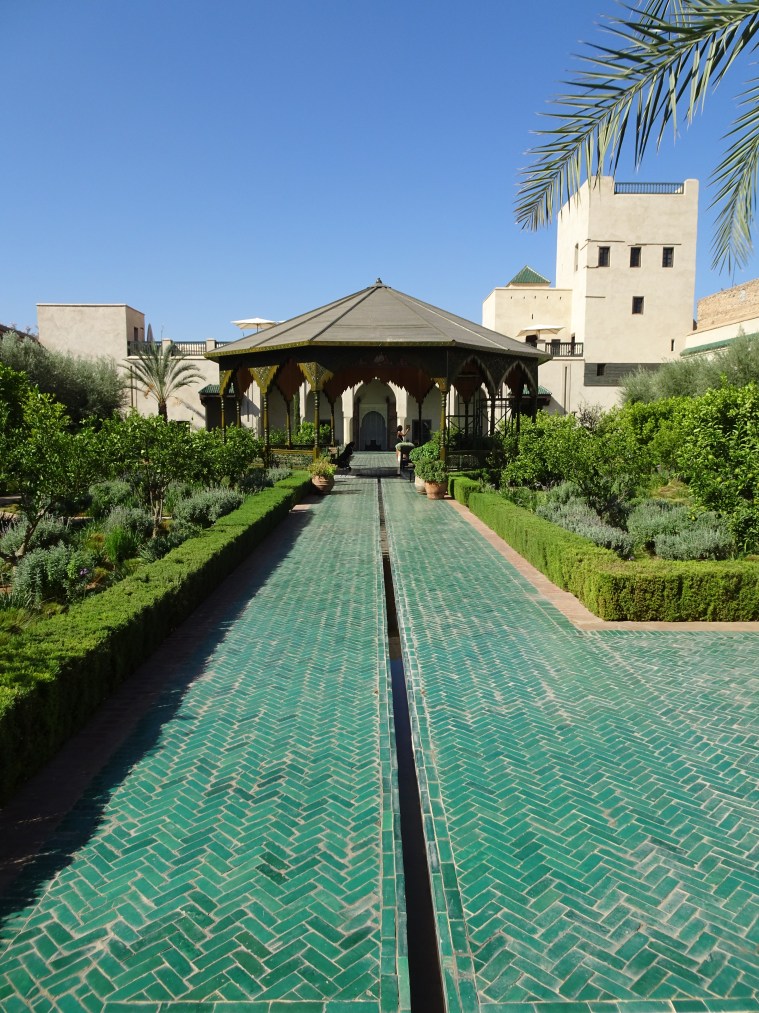
In Islamic gardens paths are paved with traditional terracotta tiles (or bejmat) with glazed green in the more important areas. Around the fountains the paving is with smaller glazed tiles called zellij and at the lowest level each quarter is further divided by bejmat paths.
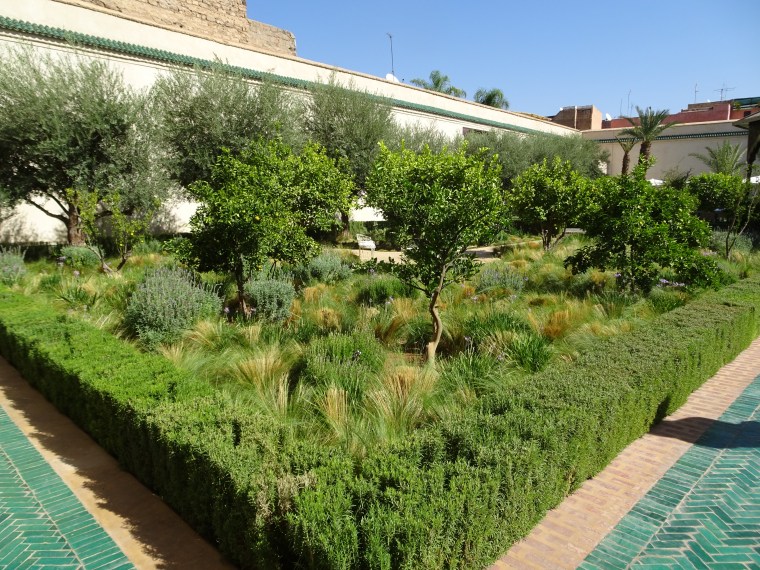
In the Islamic garden all shrubs and trees are species that would have been grown during the last 600 years in a traditional Moroccan garden. Plants with rich history and symbolism. The planting is designed to give the effect of a bustan or a flowering, fragrant orchard with species chosen to give a long season of interest but not necessarily native to Morocco.
The four most important tree species in symbolic terms are:
Ficus carica (fig)
Olea europea (olive)
Phoenix dactylifera (date palm)
Punica grantum (promegranate)
Other tree species are:
Citrus limon (Lemon)
Citrus sinensis (Sweet Orange)
Argania speciosa (Argan)
Shrubs, Climbers and herbs:
Artemisia abisinthium – Wormwood
Cistus salvifolius
Eschscholzia california – Californian poppy
Iris germanica – Iris
Jasminum officinale – Jasmine
Jasminum polyanthum – Jasmine
Lavandula dentata var. Candicans – Lavender
Lippia citrodora – Lemon Verbena
Myrtis communis – Myrtle
Polianthes tuberosa – Tuberose
Rosa damasceana var.Sempreflorens – Damask Rose
Rosa moschata – Musk Rose
Rosmarinus officinalis – Rosemary
Salvia archers var. canescens – Turkish Tea Sage
Stupa tenuissima – Mexican feather grass
Tulbaghia violacea – Society garlic
Viki’s vinifera – Grape Vine
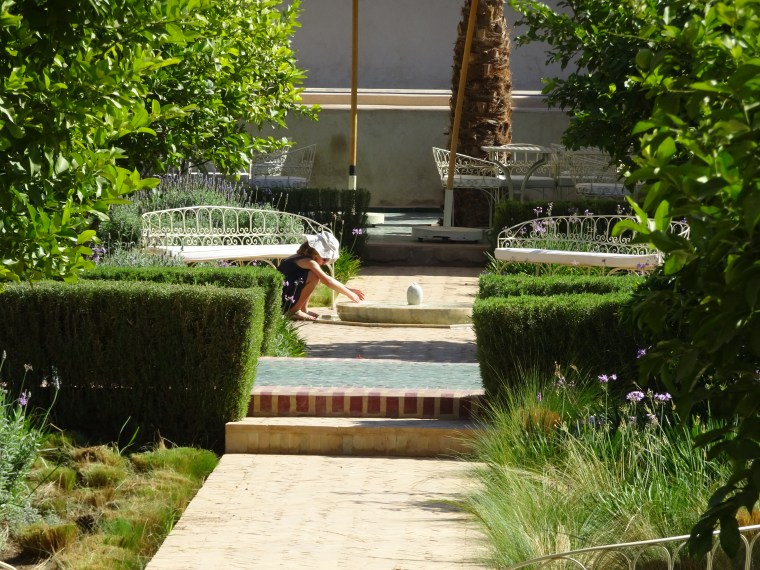
Le Jarden Secret is a place to shelter from the chaos and heat of Marrakech. It is an oasis of peace where the shade of a tree, the splashing noise of the fountains and, when flowering, the scents of the flowers favour contemplation and rest.
Photography & words by Cherrie McDonald
Drawings Tom Stuart-Smith
 2CsBlog