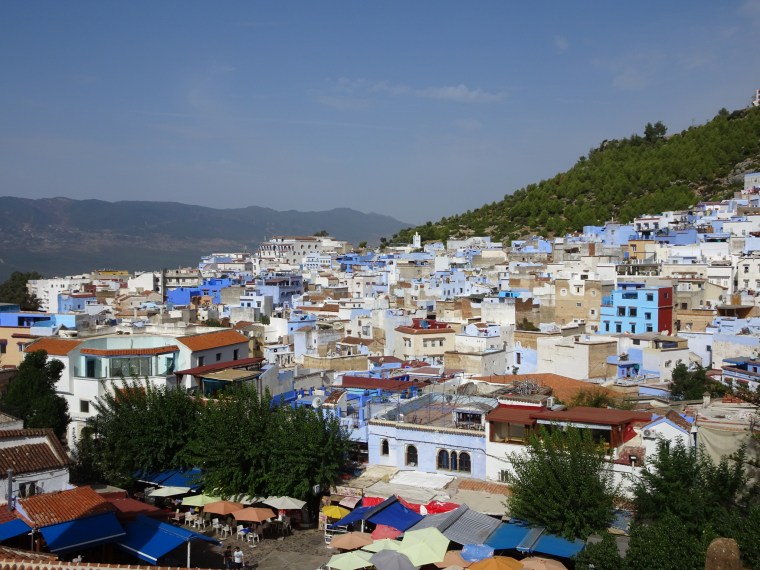
Ugh, Food. And Erfoud

Wednesday 18 October 2017

Today we drive from Fes to Erfoud, in the Deep South of Morocco, and on the edge of the Sahara dunes.  The day does not start well for me, with the discovery that I have lost one of my precious gold stud earrings, which I bought in London’s Burlington Arcade last year. To replace the one I had lost in Paris.  Bummer, I thought I was being so careful too.

We are both still feeling as if we may never need to eat again, such is the size of the servings here, and we ignore the offerings which cause our breakfast table to groan under the weight of the pastries, crepes, honey crumpets, Moroccan omlette, pastries and fruit.  We stick to just the yoghurt and a cup of airline coffee.

Jillali picks us up in time to be at the Jnane Sbil Garden when it opens at 9am.  This is the garden we missed on Monday and yesterday but we know that we have limited time because we have a long drive today. i ask Jillali if he would kindly ring the Riad in Chefchaouen whilst we are in the gardens,  just to check that they haven’t found my earring.  These are peaceful gardens set in 7 acres in the centre of Fes, typical Islamic geometric design.
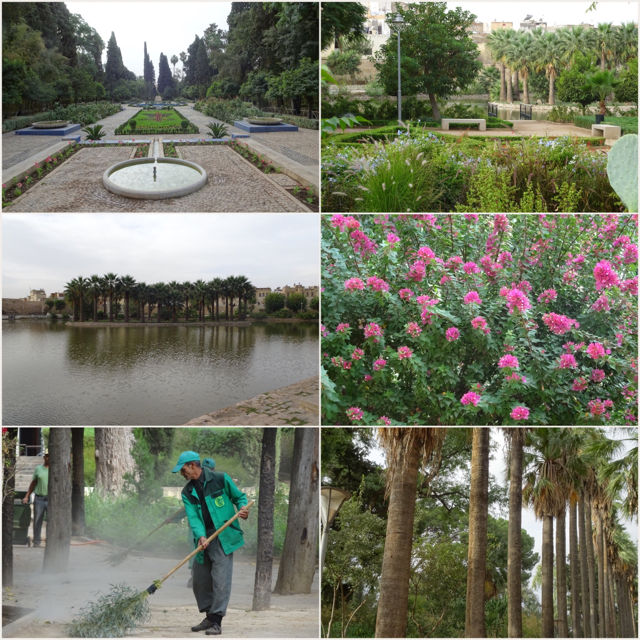
46D3FBD0-FDDA-4DB5-B250-CD2860EC9443.png

After 30 minutes we return to the van (which could so easily be mistaken for a hearse) to find Jillali at the coffee shop opposite with phone in one hand and the ubiquitous mint tea in the other.  Poor man did not understand what I had asked of him and he had been fretting the whole time.  He dialed the number and handed the phone to me.  The riad has not found the earring – frankly I would have been surprised if they had.  Pearls from now on for the rest of the trip!
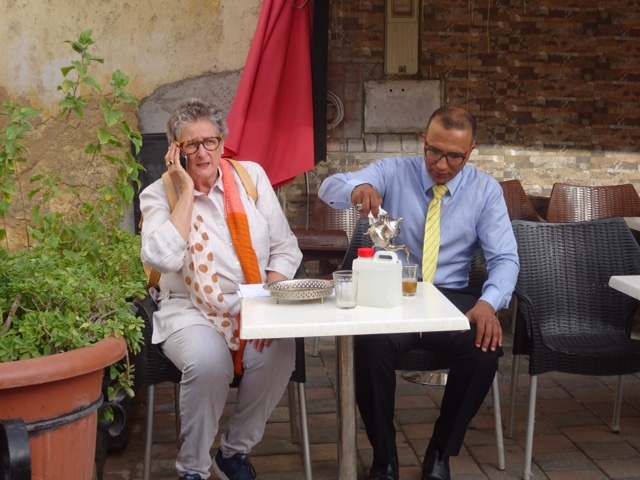
278590E4-38E6-4199-9406-25A319D4838C.jpeg

We proceed to drive thru the centre of new Fes, a bustling city with tight security.  This is a 360 degree camera, cunningly disguised as a palm tree.
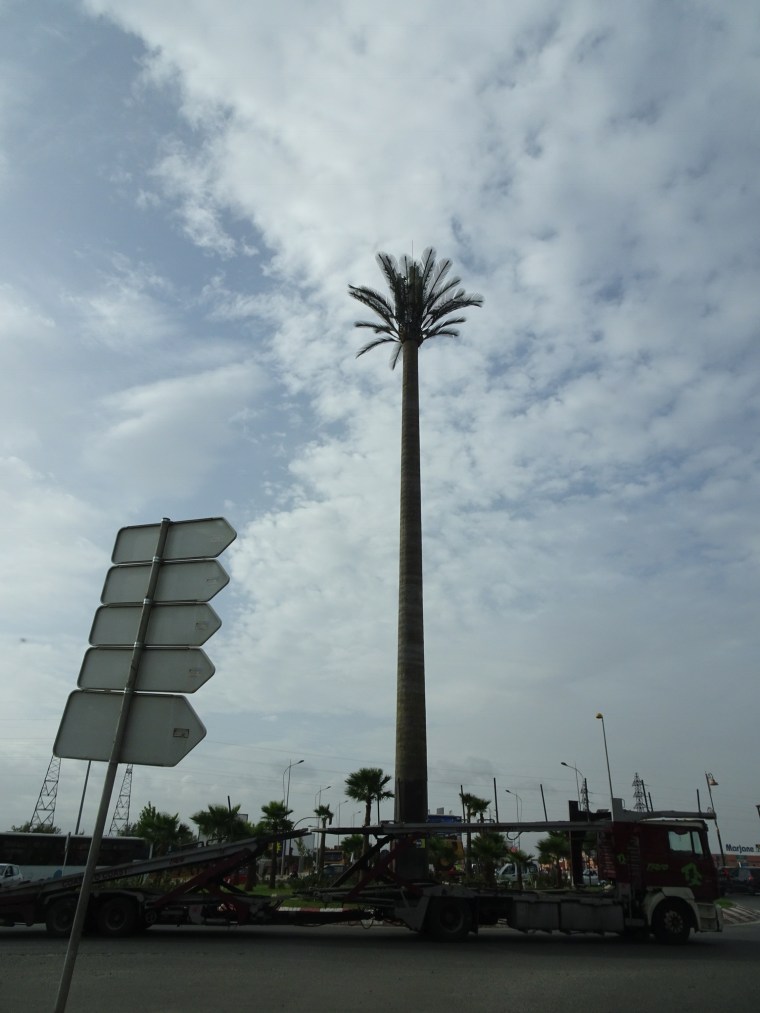
E3ABC1EA-9367-4B7F-920A-B929B0301C87.jpeg

We head up the hills, and continue to experience police check points, as we have all along these drives in Morocco.  Cars are required to stop at the checkpoints and the police either question the driver or wave them through.  We are always waved through, no doubt out of respect for the dead, but we believe the police are on the lookout for illegal immigrants from Africa – the dreaded “black men” as Jillali refers to them, as did Obi.

We stop for coffee at Ifrane, a curious Swiss style alpine village, popular as a weekend resort for Moroccans.  It’s chilly and we have to extract jumpers from our luggage, for the first (and very possibly the last) time on this trip.  It’s a relief from the heat we have been experiencing, and even the coffee is good.

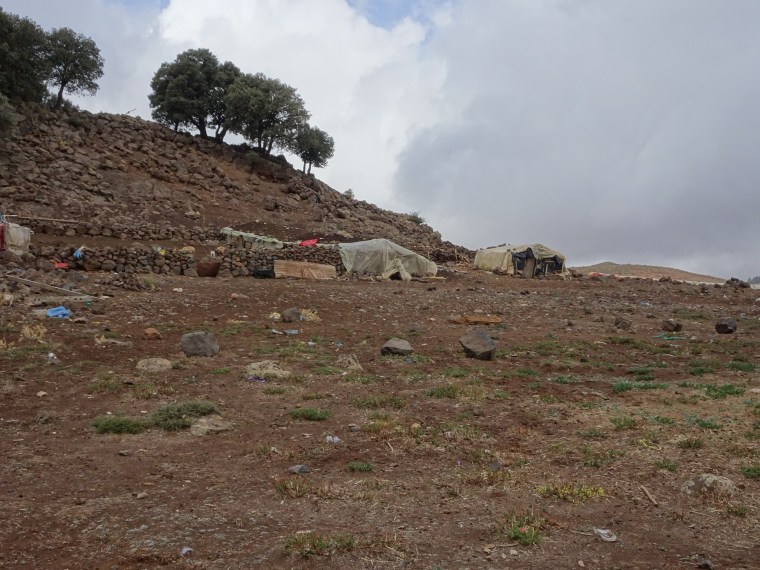
We are struggling to understand Jillali, and he is struggling equally.  His English is passable as a driver, but this poor man has found himself to be the tour guide and he is clearly frustrated at his inability to make himself understood.  We say OK a lot but more often than not don’t know what we’re saying OK to!  On the open road, in the middle of rocky countryside with nothing to be seen but some sheep
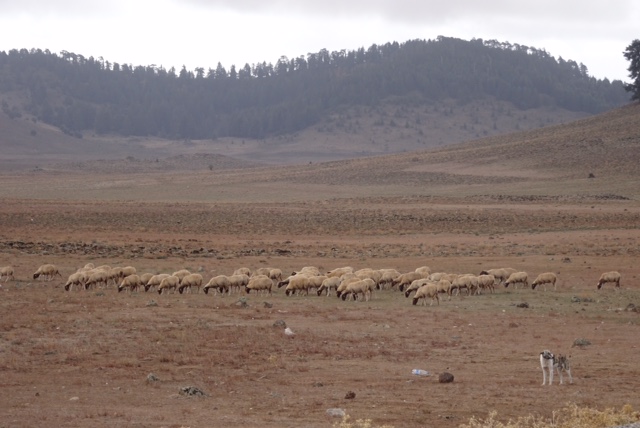
F463A248-10BF-4AA6-BD47-F5DCE5B71E51.jpeg

and a Berber hut

11920A33-CF02-40FC-AB5C-0589DE0AA0EC.jpeg

The hearse pulls up, Jillali comes round and opens the door.  Like obedient little children, we alight and follow this man, in his neat black trousers, shiny black shoes, blue shirt, snappy yellow and blue tie (mercifully the black jacket has not been sighted for a couple of days) through the dust and rocks, Sedum plants  (so my resident horticulturist tells me)

to the Berber shack.  Here we meet a Berber family
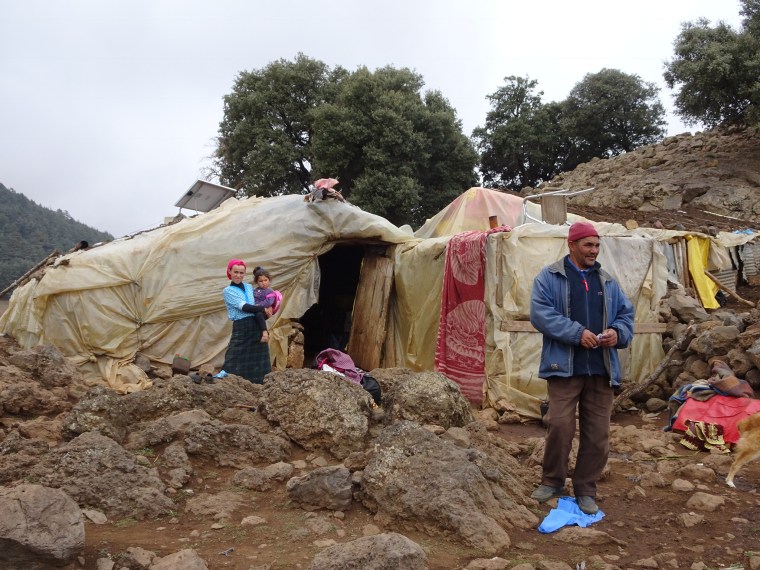
9A34FE47-F2EA-463E-909B-BAD8D3B2C03A.jpeg

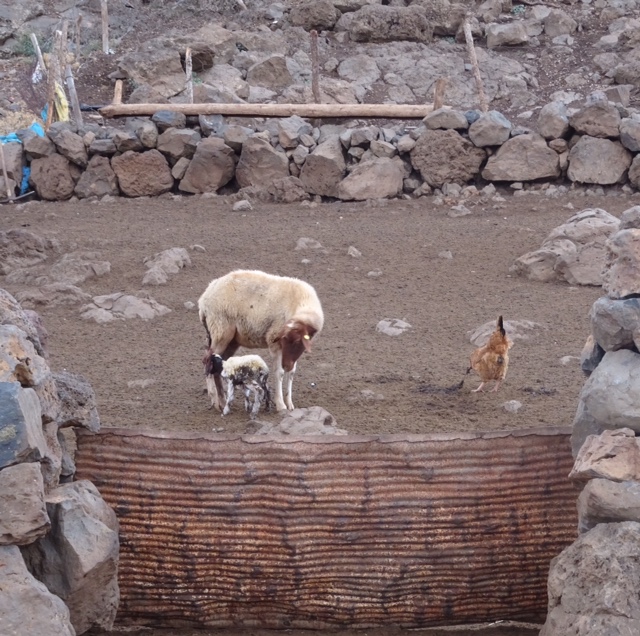
swoon over the new born lambs

26F44290-54E0-41D7-B369-40845850308A.jpeg

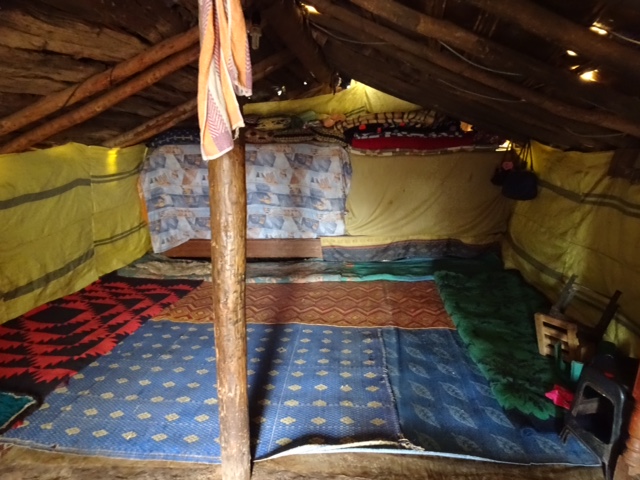
and even enter their home

0B3E63A6-BBB0-4366-B71D-654F14AE3B84.jpeg

Fortunately we have some change in our pockets (we’ve learned that tips are appropriate at the most unexpected time) and we press some into the man’s hand.  This feels like such an instrusion into the lives of others, but what to do?  Do these people despise the tourists and their curiosity or does the cash help?  We are uncertain and we are unable to ask Jillali as such a complex question would send him into a tail spin.  Not a good look for an undertaker.

We are bundled back into the hearse and head up the Mid Atlas Mountains.  Such beautiful country but no photos as we really can’t do it justice from the moving van.

We drive through apple country and a town called Midelt, which must surely be mistaken for  New York
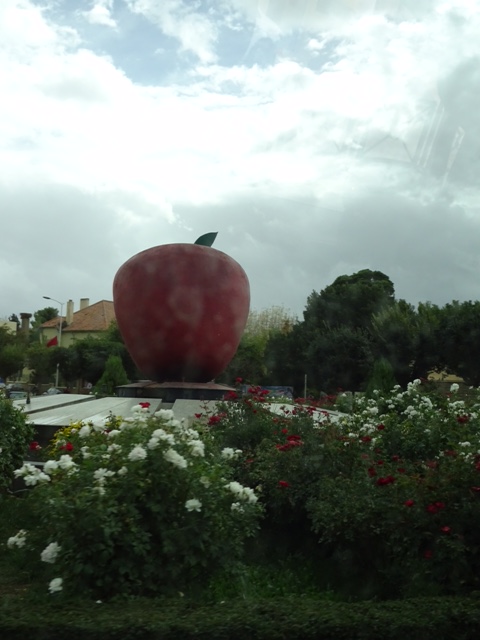
E30D64F0-5602-4A5B-8579-D9BD32FE36FB

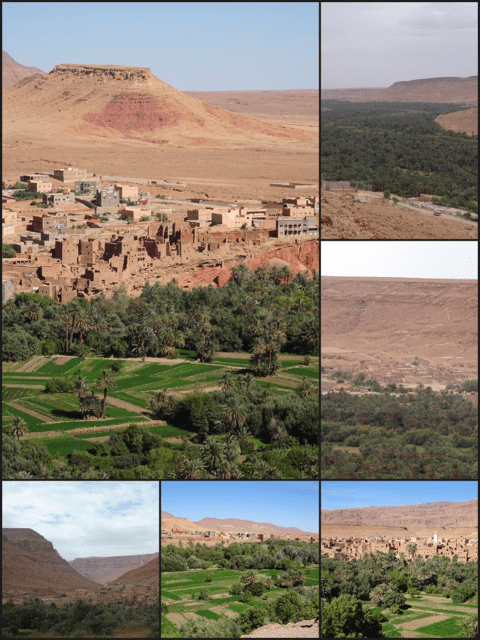
We follow the River Ziz and the most wonderful oases of palms, and Kasbah
1C1C9C5E-4B4C-43DC-9039-99A4A5576DDB

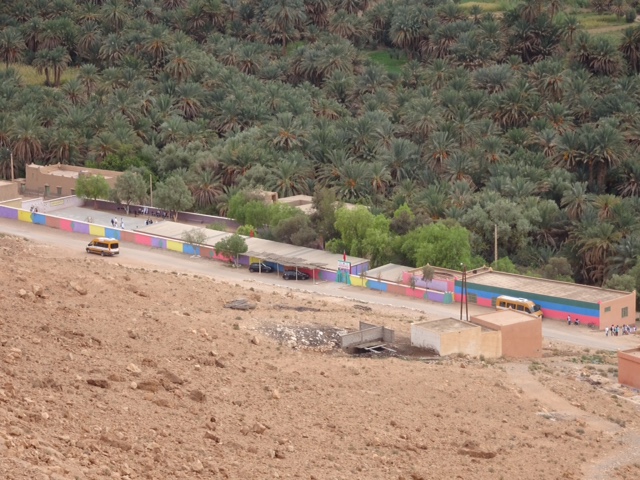
All the schools in Morocco are painted the same bright colours, which really stand out against the otherwise monotone structures, and make them so easy to identify.
3B47187B-B85F-4585-BC5A-A059956D7854.jpeg

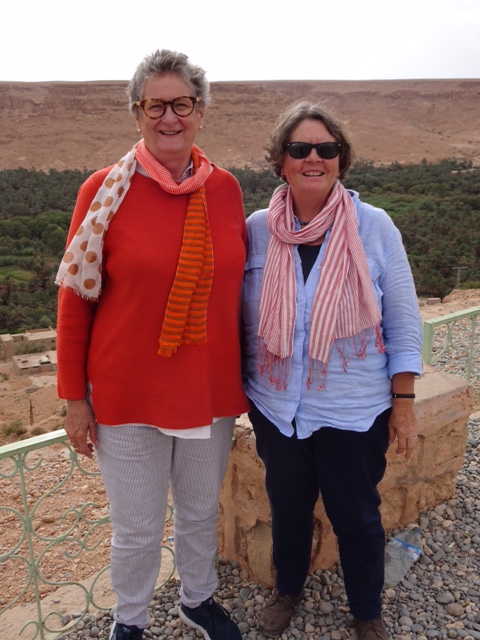
These two students of life are having a whale of a time, with the oasis in the background.
96050BC1-0BB6-49E8-B2C2-A6DA658D3187

The journey continues, It’s lunchtime, but we only know this because the hearse pulls up at yet another tourist restaurant.  Out we get, but quickly get back into the van again.  It’s another set three course menu and we really can’t face so much food again. So we continue the journey, until another restaurant is offered at 3.30pm.  Again we refuse this one, as the only choice is a tagine, and we’re just not up to it.  But, there’s a little general store next door, so Cherrie opts for an ice cream and I have a packet of crisps.  Best lunch for a while!


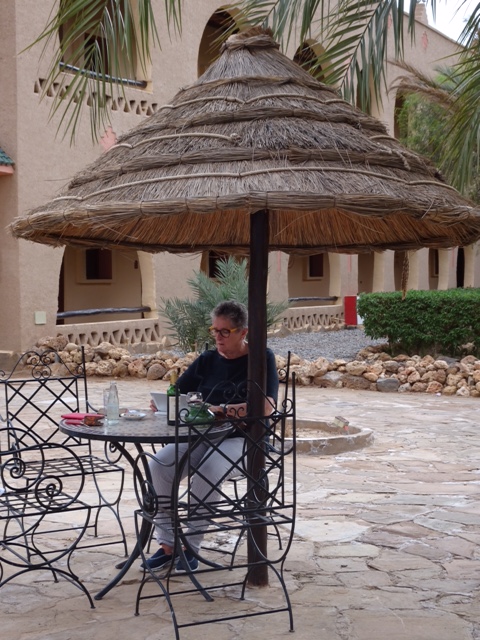
We arrive at our hotel in Erfoud at about 4pm and spend a pleasant couple of hours by the pool, reading and blogging
0D221105-EE19-47B4-A56D-23C1A412F989.jpeg

There are lovely date palms here.  It’s date season
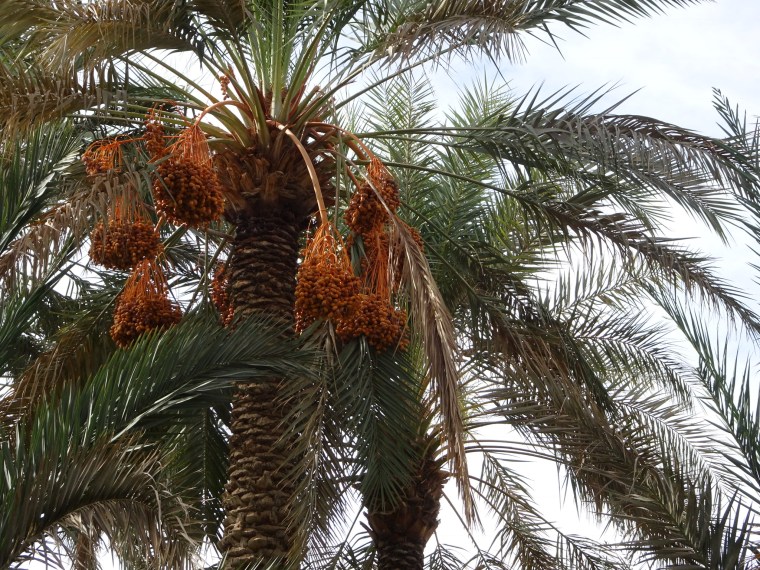
F7FEE695-3F7D-4067-9923-B11B8062CFA3.jpegThe peace is shattered by the arrival of two large tourist buses, one with Americans and the other with Chinese.  Oh, the noise…..

Dinner is a predictable affair, in a large dining room with huge tables to cater to the huge groups.  And a little table for two.  The buffet looks ghastly to us.  We are still feeling fooded out, and pick at some pasta and salad.  Shortly after returning to the room I feel extremely unwell but get over it during the night.  Cherrie doesn’t.  She has a bad case of diarrhoea and feels pretty awful.  Bound (perhaps poor choice of word) to happen, but the GastroStop we are carrying kicks into action eventually.

Ah Erfoud.  Ah the food.  To the Desert tomorrow and hopefully we’ll be feeling better.
 

Time To Fess Up (part 2)

Tuesday 17 October
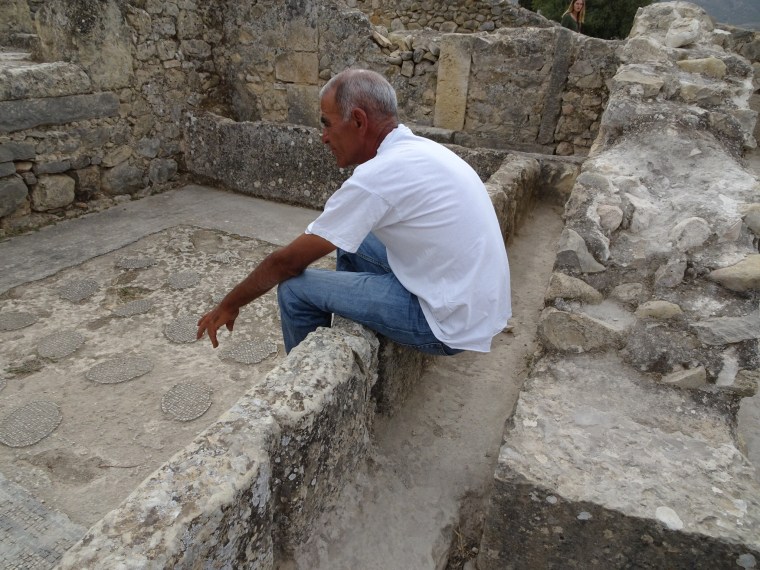
Today we head to Volubilis, about an hours drive from Fes and another ABR. Another Bloody Ruin. This from Phonecian times, and then inhabited by 15000 Romans. Our guide for the one hour long tour is Khalid and his is a tour by rote. He is completely thrown by any unsolicited questions and has to start again. Still, anyone is better than Obi. Khalid gives us a tour of the town, which was largely destroyed by an earthquake in seventeen hundred and something, and even gives a demonstration of what a latrine was used for.  Fortunately today was not a dress rehearsal.

B3005482-1D26-47A3-8C30-0EA797ACA9CE.jpeg

This must have been an amazing city in its day. It is huge and has at least two extremely large villas, where Caligula spent a lot of time. So too did Baccus, but wasn’t he always w(h)ining?
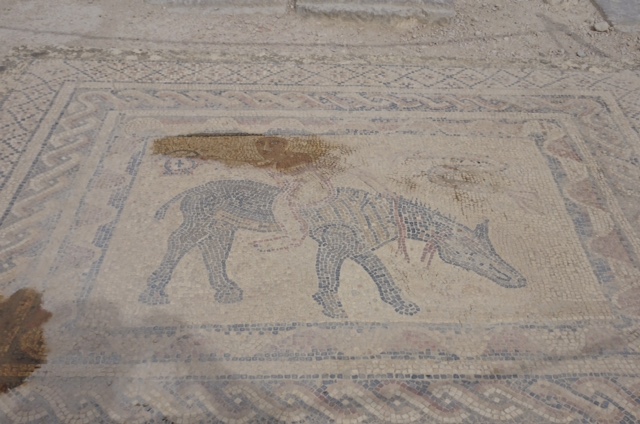
There was also a zoo, represented here by one of many mosaic animals.

BC822550-E77E-45D9-BF1D-18E171CD071F.jpeg

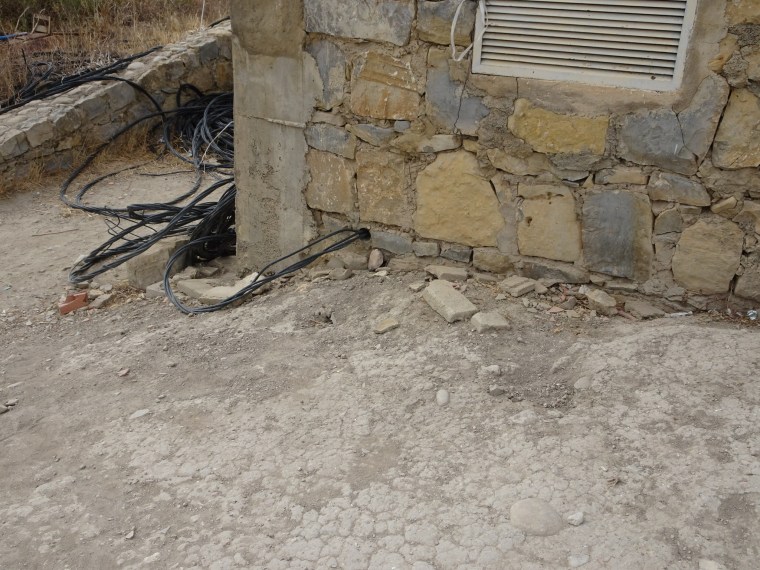
Ancient Roman ruins are joined by ancient Roman telephone wires

552072D2-2904-4789-8AB4-E3E7301EE52F.jpeg

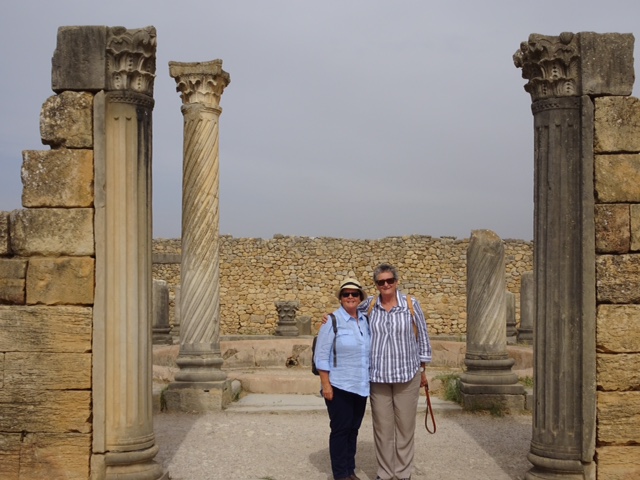
And Ancient Australian tourists

AA11EDF8-9DFB-4B4E-A2D8-169D3F684872
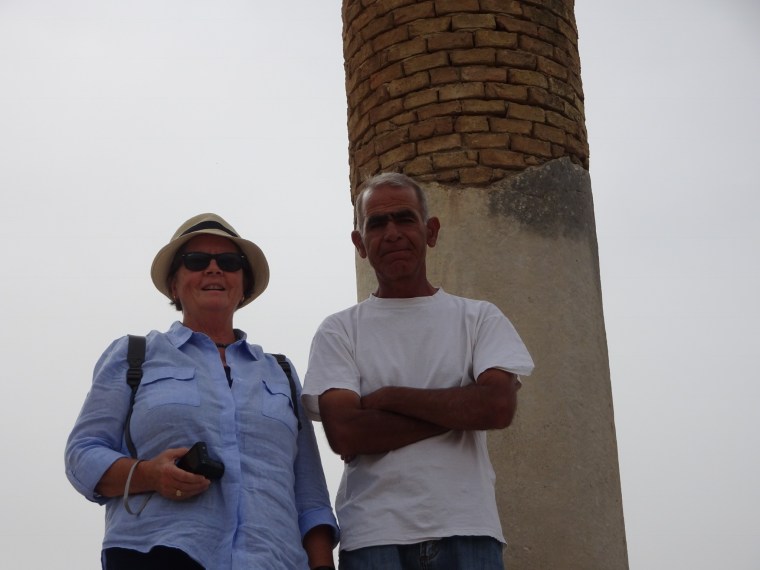
I shoot Khalid before I shoot him, and we wave him farewell

DE2C253D-8770-4135-B3EE-1CCBB222D36A.jpeg

The view from the old Volubilis of the new shows the landscape

BA1035AA-7EF8-4306-849D-9A52B3A46B36

After we leave Volubilis, we head to Meknes, one of four imperial cities in Morocco (the others being Rabat, Marrakech and Fes). We have lunch there, which just confirms that we are over Moroccan food. It’s all the same and the servings, at least for tourists, are enormous. We never finish more than half and the restaurants we are taken to are all 3 course. It seems that a request for a simple salad is an impossible one to meet. Today our simple salad, the entree to a main omlette, was obscenely large and we couldn’t even complete that. After lunch we report to Jillali that we never want to do a luncheon restaurant again. Unfortunately, this is read as we never want to eat again and so, ala willing, we may return home slender.
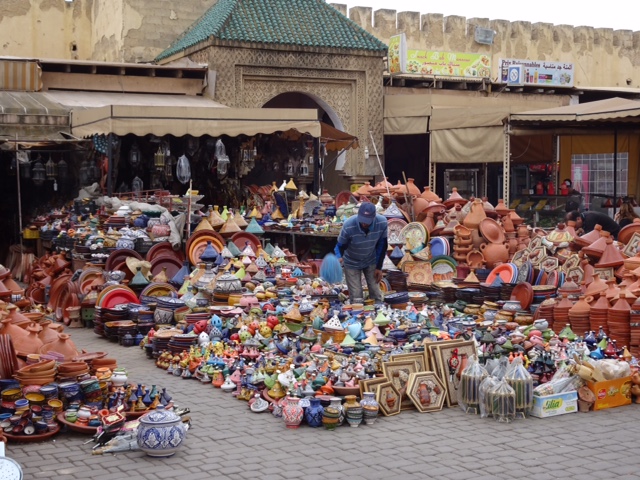
The main square of Meknes is enormous

77318AC4-FB9D-4ED6-9C4E-ACDBC96B9733.jpeg

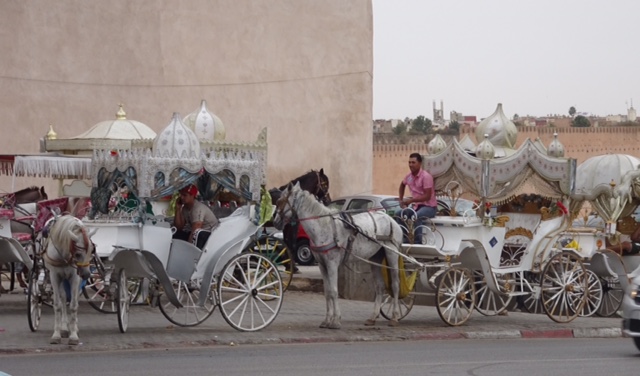
But instead of just horsing around,

D7BD5E13-1CCF-4290-B9E7-456DEB457D46.jpeg
we are anxious to get back to Fes to visit the Jardin Jnane Sbil, an 18th Century public garden which was on the itinerary for yesterday but the gardens are closed on a Monday.
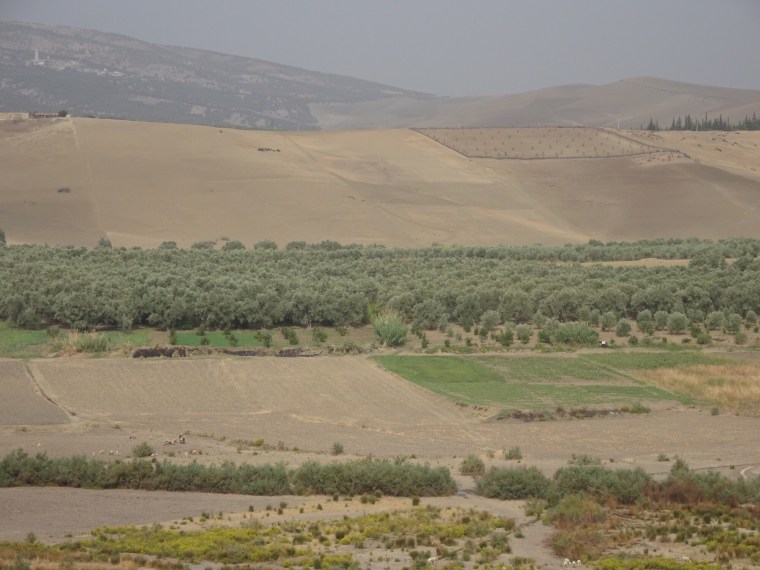
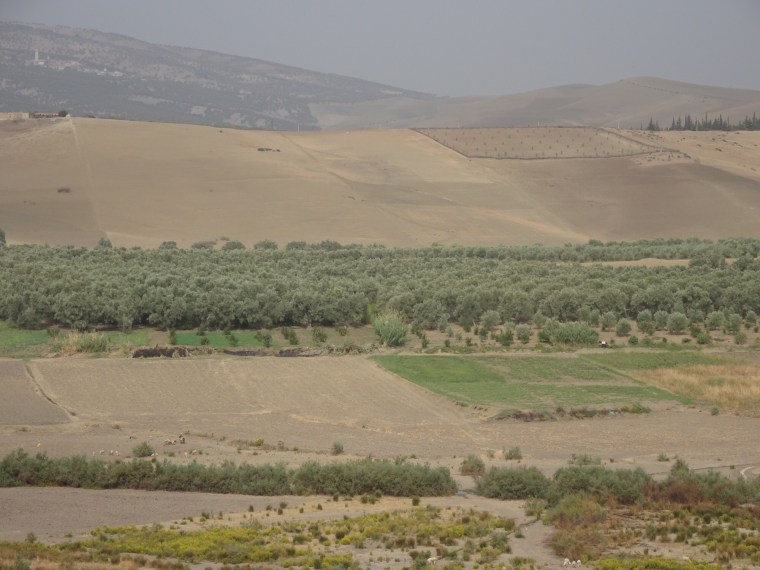
We return via a different route, past lots of ploughed fields waiting for the overdue rain so that the wheat and barley can be planted, and acres of olive groves and grapes.

ED711674-12EF-4C14-A183-0BBFB31407DB04F006D7-2E07-423E-9B7D-0FC51951C8F6

We get back to Fes and the gardens at 4pm.

The gardens close at 4pm.

So we head to the bottle shop instead and buy two bottles, which Jillali ties securely in a bag and hides under the seat of the car, to be taken to the desert where he reckons we will need it most.
Dinner in the riad again tonight. We try the chicken pie, to compare it with the delicious one of last night. Incomparable. This one is dusted with icing sugar and cinnamon – the Moroccan sweet tooth is literally to die for I suspect. Even the bottle of wine is left unfinished as we head to an early night. This holiday lark is exhausting.

Time To Fes Up (Part 1)

Sunday 15 October 2017

Today Jillali, back in suit and tie, drives us from Chefchaouen to Fes. It’s a 5 hour drive through really lovely farming country.

7272543F-BEC9-402C-9BAC-8D005FB94CBD.jpeg

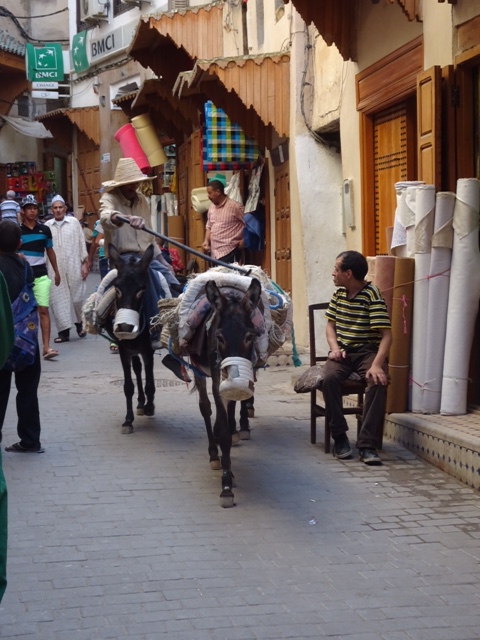
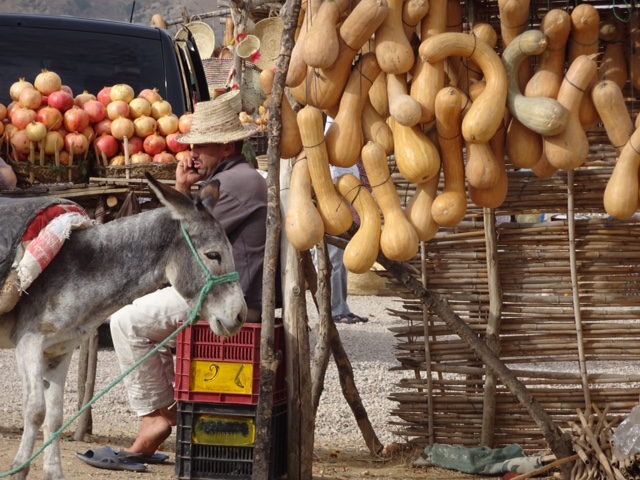
Agriculture is a big part of the Moroccan economy – agriculture and tourism.  We pass by orange orchards, olive groves, wheat fields and chickpea crops.  The donkeys are working hard here, hauling carts full of produce, often with huge sacks on their backs too.  They are such strong, sturdy creatures in tiny bodies.

It is said that Fes is the cultural heart of Morocco and is home to the world’s first university, founded in the 8th century….by a woman amazingly enough.

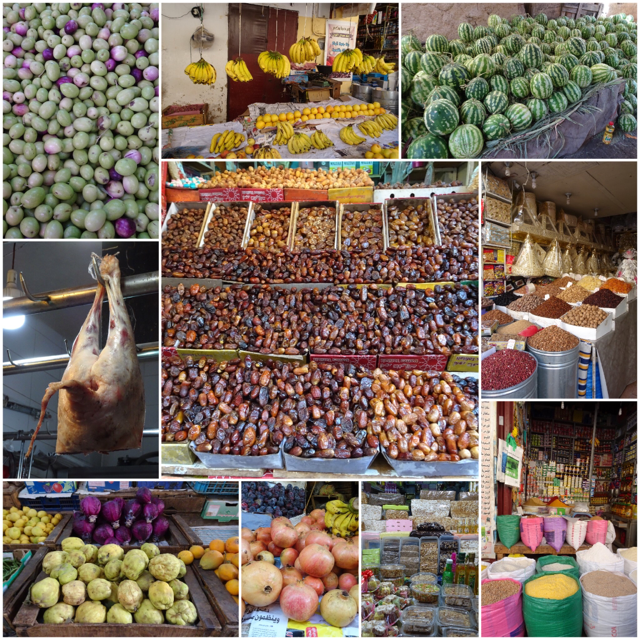
We are staying, once again, in an old riad (meaning house) with a wonderful internal courtyard, in the sprawling medina – the largest in the world and a UNESCO cultural heritage site.  But check in is not until 3pm in Morocco and it is now only 1pm, so Jillali parks near the Medina and takes us for a stroll,  As ever, it is a bustling place with people, donkeys, stalls and a variety of goods.

3E3120AA-2240-4CB0-9721-5C1003E43830A955391C-6166-4D7C-808A-FC5758A7DD5D

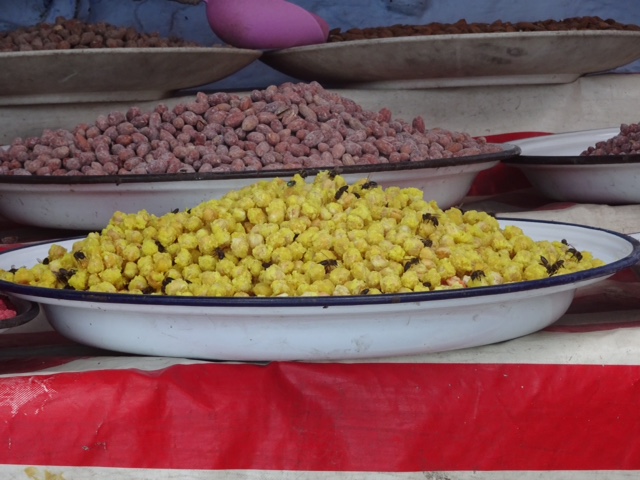
There are a whole lot of other foodstuffs we could have photographed, but one must draw the line somewhere.  At the camel and goat heads for example, the live chickens tied up, the offal (just offally awful) and the flies.

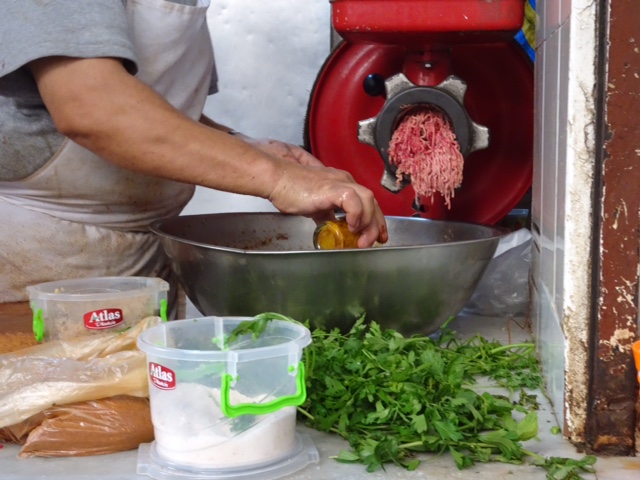
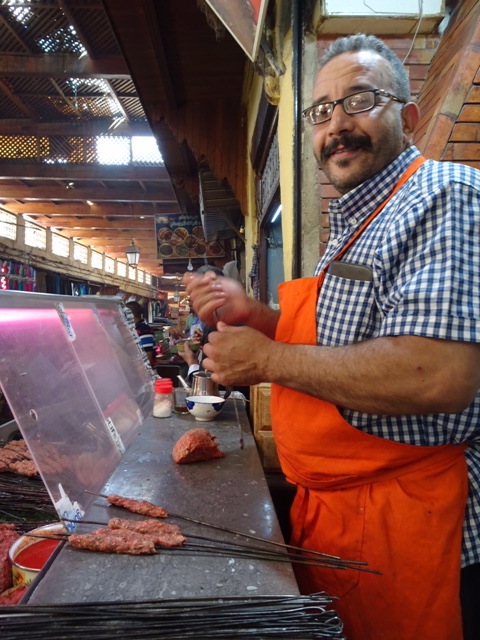
Jillali is a tall, good looking man, in a smart blue shirt and bright yellow and blue striped tie. He looks more like a banker than a tour driver and we follow him through the crowds.  Eventually, having first sought our permission, he ditches the tie and dons a white cap.  We are now focussed on the cap to keep up. He stops and shakes hands, people are happy to see him.  He borrows 5 dirham from Cherrie and buys two eggs.  We keep walking, no words.  Then we stop at a meat stall and watch while the butcher minces some meat, adds herbs and spices, and the eggs.

0AE4F26D-9769-4955-8273-AD6B82349673.jpeg

Mixes it well, puts in a bag and gives it to Jillali.  We suspect this might be for us so we insist on paying.  A pittance.  We then execute a U-Turn and back to a tiny cooking stall, the proprietor of which greeted Jillali warmly earlier.  The meat is kneaded onto the skewers, beef liver cubes are added to other skewers and all goes onto the hot coals.

931B9C63-78C0-4182-9AB9-28C247073BF3.jpeg

“Salads, patates?” asks Jillali. “Oui” we nod as we are directed to a pair of makeshift stools at the front of the stall.  Jillali is intent on looking after us.  Once the meat is cooked and three saucers of chopped tomato and cucumber and three saucers of fries are delivered from a nearby stall, we are ushered inside the stall.  We didn’t even know the stall had an inside, but indeed on closer inspection there is a table and bench.  Lunch is served.

85C219E2-A052-4F61-A2CC-314A09F0F855.jpeg

And it’s delicious.  This is where Jillali eats whenever he is in town.  He stays at a hotel around the corner and comes to this stall for lunch and dinner.  He has entertained us today, and is proud as punch.  The stall owner has Jillali take a photo of us with him, he too is proud to have fed some westerners and we are sated.  Frankly, some of the best food we have eaten in Morocco.  So simple, so tasty.

We are escorted back to van to collect our luggage and then to the riad, where Jillali leaves us to await check in.  But not before he tells us he loves us.  He is clearly thrilled to be able to show us his country.  He has not been a guide before and he is lapping it up.

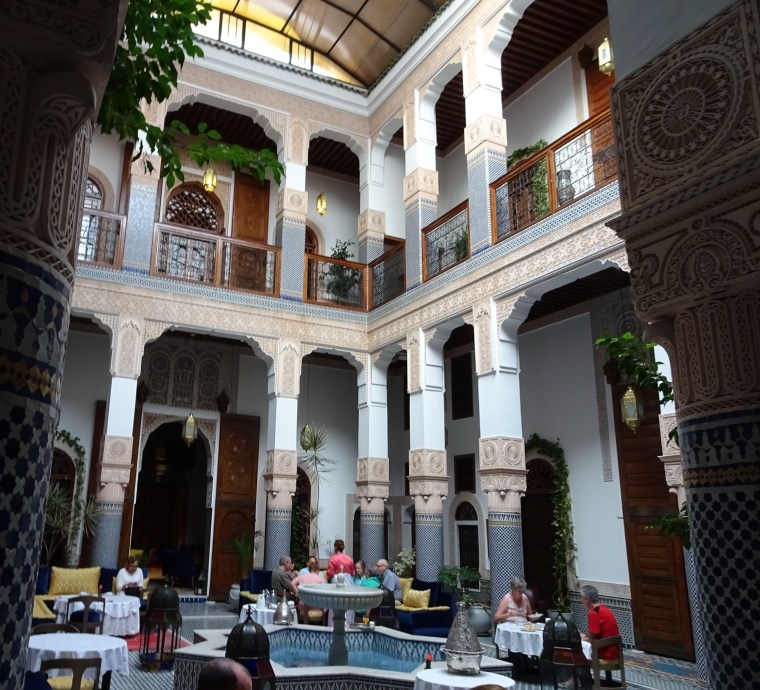
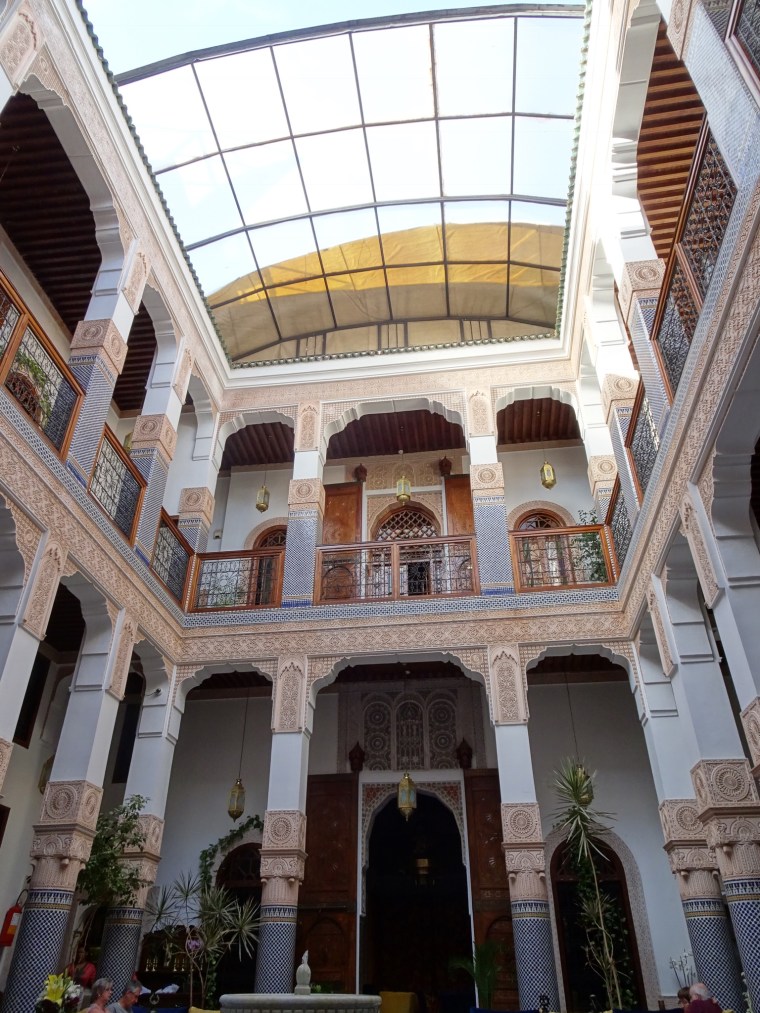
The riad is lovely, as they all are.  We sit in a beautifully tiled internal courtyard, with fountain running, for half an hour or so until our room is ready.

99C93055-2ECF-4B1D-A1DE-290D77A86BDA.jpeg


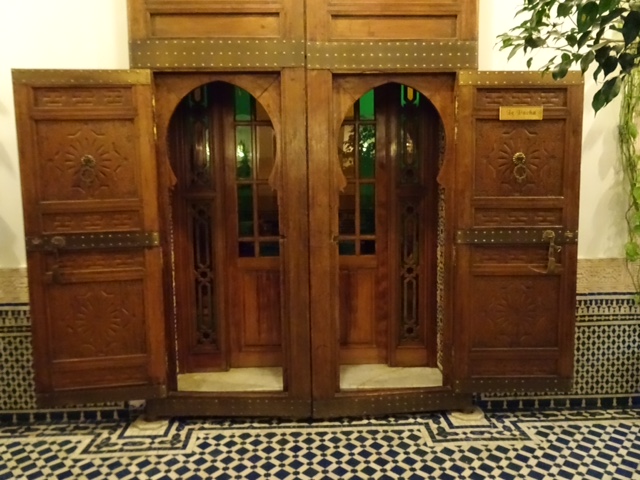
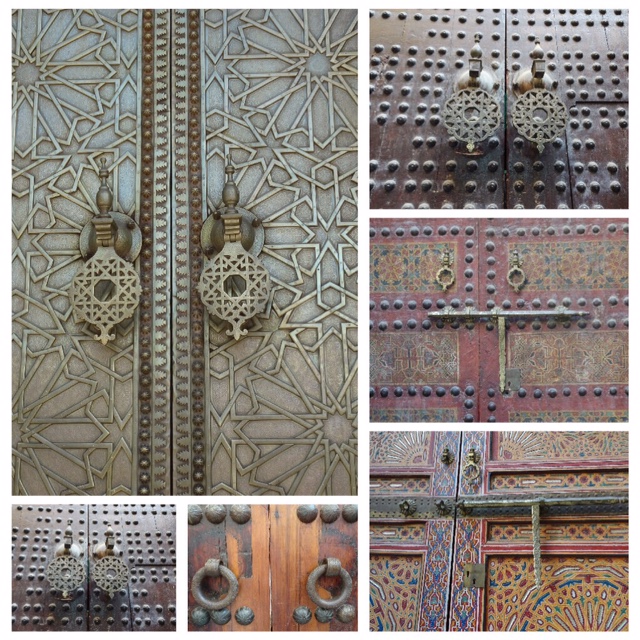
As always, we are ushered to a twin room (despite the booking being for a double) and, as always, we reject it and ask for a double.  No sign of disapproval if there is any, simply a new room.  They are a friendly and polite people, these Moroccans.  Our room opens on to the courtyard, but we have privacy behind these heavy doors

6ECD8D64-5477-4690-A01B-BEFA63B41C33.jpeg

We dine in tonight, mercifully with a bottle of wine.  A Moroccan Cabernet merlot and very palatable.  Not in a plastic water bottle either.

Monday 16 October 2017

We are met by our guide.  Farida is a gorgeous woman in her late 20s we suspect.  She is in a Djellaba (robe) of a lovely green, and a patterned hijab.

40D4B8D0-5788-41BB-B6E2-0B2FA6C71DAF.jpeg

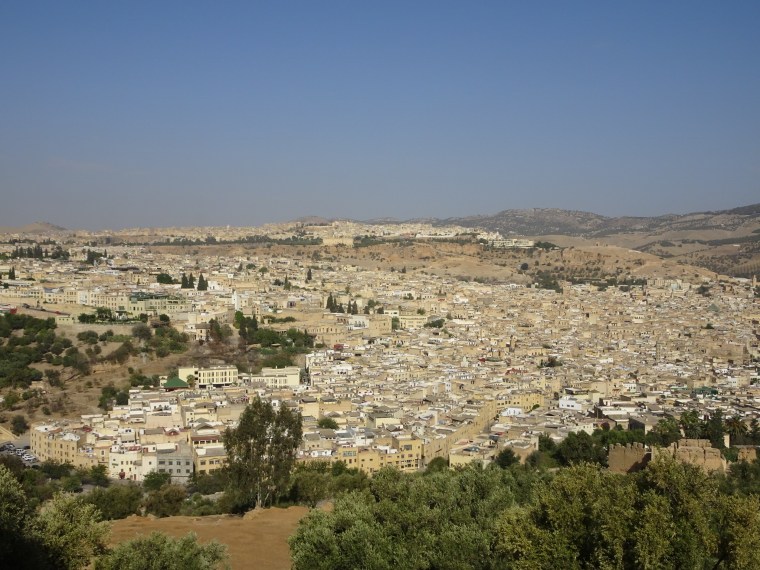
Her English is excellent, her religious beliefs strong and her sense of humour in tact.  Jillali is with her this morning (in tie but no sign of the coat, thankfully) and he drives us to New Fes, outside of the Medina and established in the 14th century (hence “new” Fes).  We drive past one of eight imperial palaces, look down on the old Medina

E401EE5F-6BAE-485C-AC6A-0DC98572DD8E.jpeg

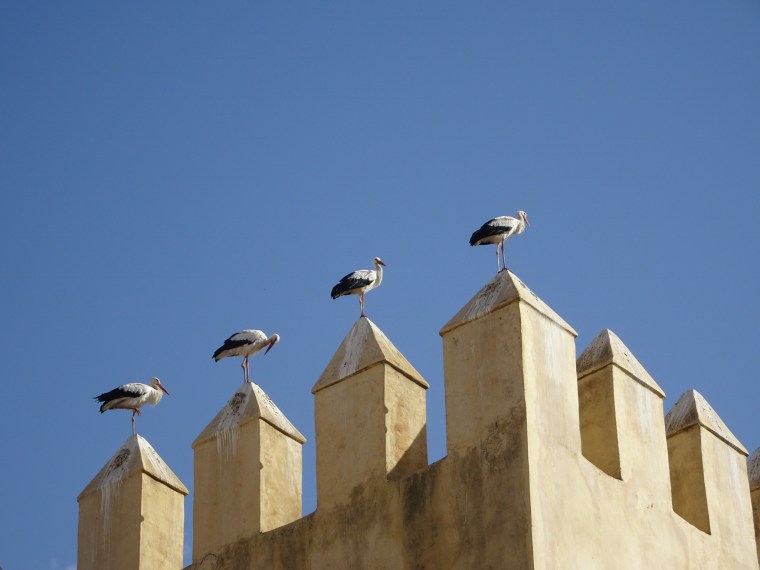
see more storks (which migrate from Latvia each year, so my Latvian niece tells me – Signe I think you became my niece when you married Tim)

E86C2671-29CA-4244-99AB-2DE8D1D34E07.jpeg

Jillali drops us at the old Medina and leaves us for the day in the capable hands of Farida.  She grew up here and she knows it like the back of her hand.  This narrow, winding maze has a surprise around every corner and we spend six fascinating hours exploring many of those corners.

D936D0A2-19A6-4450-92EC-8D57E949648872690213-6FAB-4696-8199-E9B9593FFDB07F9634FA-4769-46A4-B8D7-EF0B23EAB37B

There is so much more to the Medina than the stalls.  160,000 people call this home.  There are 18 primary schools, 12 secondary schools, several libraries, hospitals etc.  No cars though.  If an ambulance is required, the nearest donkey is called.

In the course of today, we see so much.  The leather auctions and the tannery,

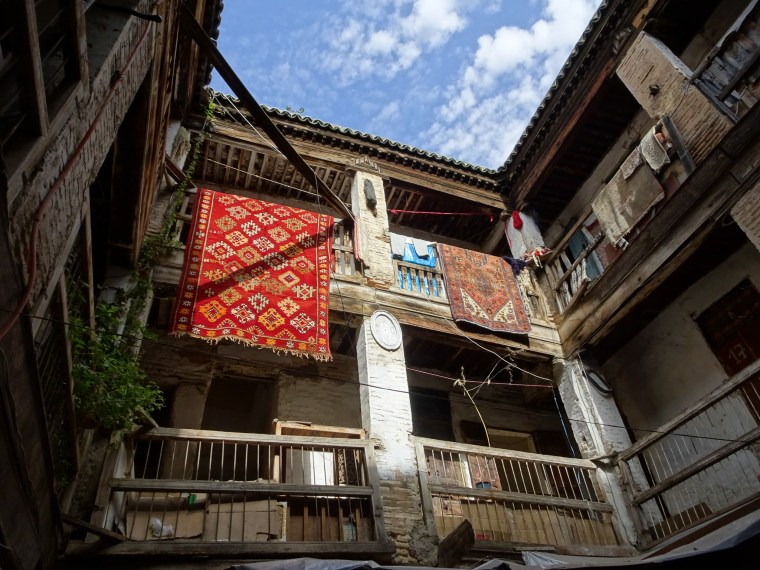
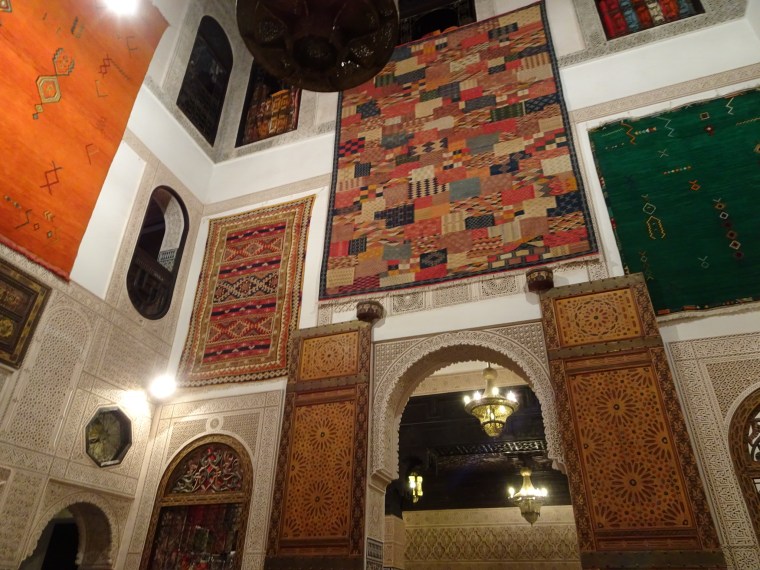
inside lavish buildings which are now home to carpet sellers, libraries, restaurants, museums, hotels etc

29F9EC15-94BA-4250-91C0-DD58C74971730324CA0B-FD8A-4EB2-9F15-FC12B7E881D1077A266F-EB75-4F41-850A-3EEB4EEB0B8CEE784C72-B1D8-4F94-A67A-27F24DE87EE530CC1368-63E5-46C3-8B1D-2C6F1E60638B650C93BB-B29A-4274-AC65-A5C56D6452FE0D42ABC1-B643-4165-86C6-DB12BCA712647B218F09-B244-49C6-8C42-1C1F4396E9CB

There are 30,000 artisans in this Medina, and we see a lot of them!

We even meet a man whose job it is to keep the water hot for the Hammam (or community baths).  He works from 9am until 11pm each day, sometimes until midnight.  He puts wood shavings, from the woodworking section of the Medina, into the fire and stokes it.  For hours on end. I’ll never complain about picking fireweed again.  Maybe

DA5870A4-FB3B-44FA-9205-B5B29336ECDC

In the event that the YES vote gets up, Cherrie fancies the red but I’ve never looked good in white.  Might have to go the blue I think

BEDA252E-A8D3-49E5-BB5F-21FF4DE65E31

We ask Farida for a dinner recommendation, thinking it would be nice to eat somewhere other than the riad tonight.  She points out a little restaurant and we make a booking.  As its clear that anyone who has not lived here for years will never find their way to the same spot a second time, the restaurant arranges for an escort to and from dinner.  We book for 8pm.

After a long and most informative day in the company of this delightful guide, we say goodbye to her at our riad and have a rest.  At 8pm we receive the gentleman caller, plus two women from New York who are staying in a nearby riad.  We walk to the nearest Medina gate, get in his car and are driven around the Medina to the nearest gate to the restaurant and then walk to it.  By now we are bosom buddies with Marjorie and Marilyn and the four of us eat together.  They have done a gentle  hiking tour in the high Atlas Mountains and are interesting and fun women who are appalled at the current US administration.  It is pleasant to be able to converse at length with English native speakers and we enjoy their company.

At last we find a menu which offers something other than tagine and both Cherrie and I partake in a chicken pie, which is absolutely delicious.  We enjoy friendly service in the home of the restaurteurs.  It’s 11pm before we are escorted, by foot and car, back home.


Hey, True Blue

Friday 13 October 2017

As reported in the last blog, we had advised our travel agent as to our concerns about our guide and we were assured that we had been heard.  Indeed we had, for this morning, despite being met by Obi and the undertaker and ensconced in the van about to take off, everything changed.  That’s when the phone call came through reassigning Obi to another job.  So the hearse proceeded to the Rabat railway station where we dropped Mohammed off and so Jillali, Cherrie and I proceeded to Chefchaouen, the famous blue city in the Rif mountains right up north.

Jillali has never been tour guide before but his English is a good as Obi’s, his accent as strong, but he is a charming man with a great sense of humour.  He behaves as if a great weight has been lifted and we wonder if he also had difficulty with Obi.  He even asks if we would like music and when we say yes he puts on Hotel California and bops away on the steering wheel. It’s a lot of fun.  I make a mental note to carry my Travelcalm with me, as I get quite car sick climbing those mountains, hugging the bumper bar in front, with Jillali’s lead foot on the accelerator.  He is a safe driver – it’s just the Moroccan way!

At our fist stop Jillali removes his black suit coat.  This is progress surely.  He teaches us some Arabic, amongst many laughs.  We learn, or try to, “good morning”, “no problem”, “hi” and “thankyou”.

We drive through beautiful farming country with heaps of greenhouses, really just big plastic tents, full of bananas.ploughed fields, conifer forestry and olive groves.  And, eucalyptus trees everywhere.

When we arrive at Chefchaouen we have to park outside the Medina and our suitcases are transported by foot up steep, narrow paths and stone steps to the beautiful Ryad where we are to spend the next two nights.  Jillali supervises our check in procedures and then leaves us until tomorrow morning.  We are starving.  It’s 3.30pm and we are desperate for lunch.  We venture out into the busy Medina in search of tucker and confess to having trouble finding any which looks palatable

02B573BB-5B5E-44BB-A860-19A6B8FA882F.jpeg

We eventually climb some steps to a cafe with 2 tables, a large TV screening the under 16 womens football finals, between North and South Korea (North won) and devour a beef tagine made by the young man who runs the place.  I think he said it was his mother’s recipe and if he didn’t then he is left wondering why I am so enthusiastic in my praise of his mother.

Saturday 14 October 

This morning we meet Jillali (now out of his tie too) in the foyer and he introduces us to our local guide for today.  Meet Abdu Salam.  A charming, funny and energitic man who is fluent in the extreme in English, French and Spanish, as well as Arabic.  He is a local and planning to stand for Mayor in 2020.  I’m sure he’ll get there. HIs charm meter is positively in overdrive and many of the local are clearly happy to see him.  We have a two hour walking tour with Abdu Salam, which is both fun and informative.

4A02FA71-E00B-4814-A761-0265AF3A96E2

This place, Chefchaouen, the blue city was founded in the 15th Century and housed the Jews and Muslims from Spain.

They cohabited happily for centuries and there is still 1% of the population who are Jews.  No synagogue any more though but the blue comes from the Jewish tradition of painting their houses blue.  These days the houses are painted three times a year, and until recently have always been painted by the women (of course).  More recently the blue has tended to go higher and the men have to  now get involved up the ladder.  Otherwise it’s still girl power.

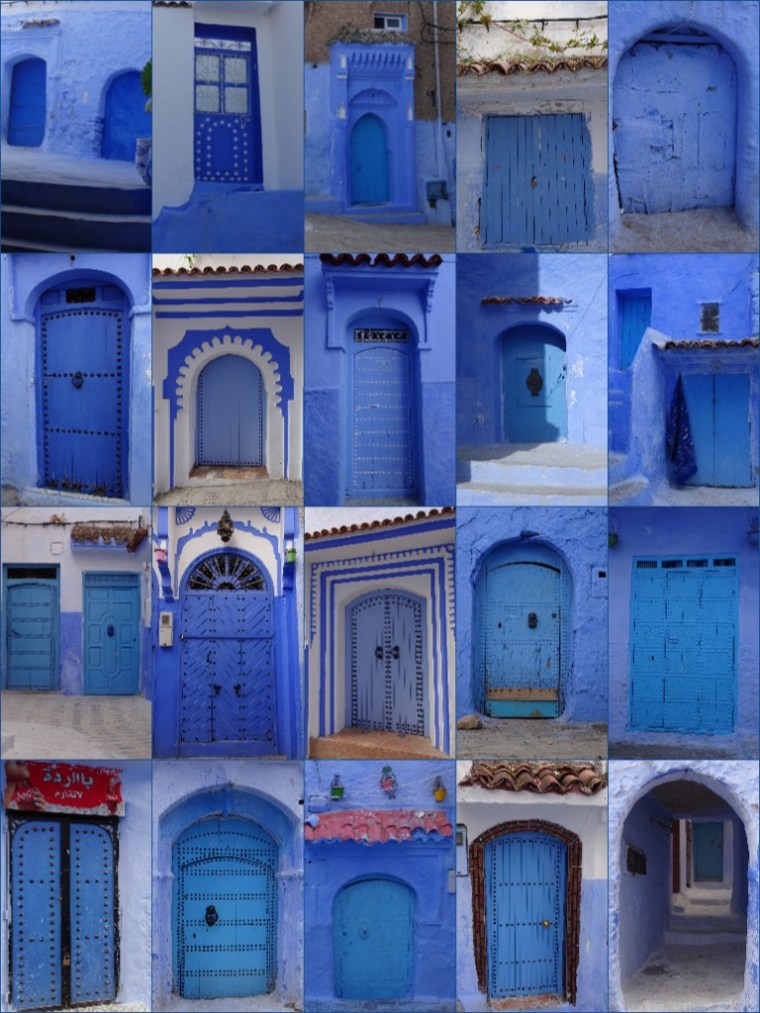
It is such a pretty place.  A thriving little town within the Medina which covers 4 1/2 acres and houses 18,000 people.  The primary industry these days is tourism and so the locals bear the hoardes as they point their cameras at their doors

ED1C9088-E3DE-45B2-824E-BED683854CE2.jpeg

into their streets, into their houses and into their lives.

We’ve had hot weather, hotter than ever we expected, since we left home and Abdu Salam tells us that his wife has invented a 13th month of the year, Augustober.  It’s August heat in October.  Tony, get over here and bring your budgie smugglers.

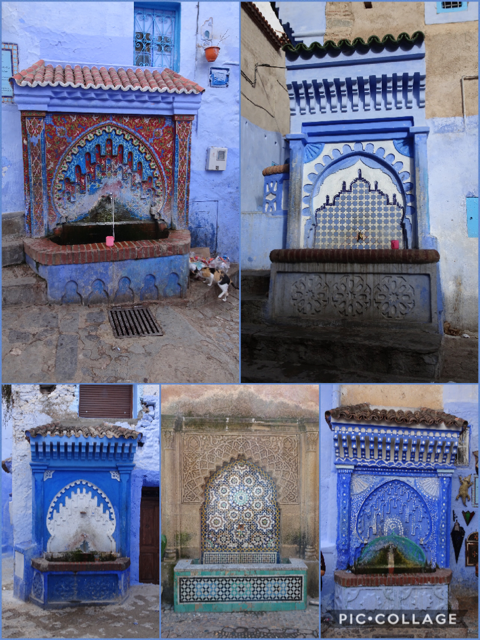
Our guide leaves us and we spend the rest of the day getting lost in the laneways and hills of this gorgeous place.  There are lots of water fountains which are fed by spring water, safe to drink. We did not test the theory but continue to carry water bottles with us.

D470E148-0B9A-4009-A3B4-ED23B7B2477C.png

The streets are narrow and care must be taken to avoid traffic

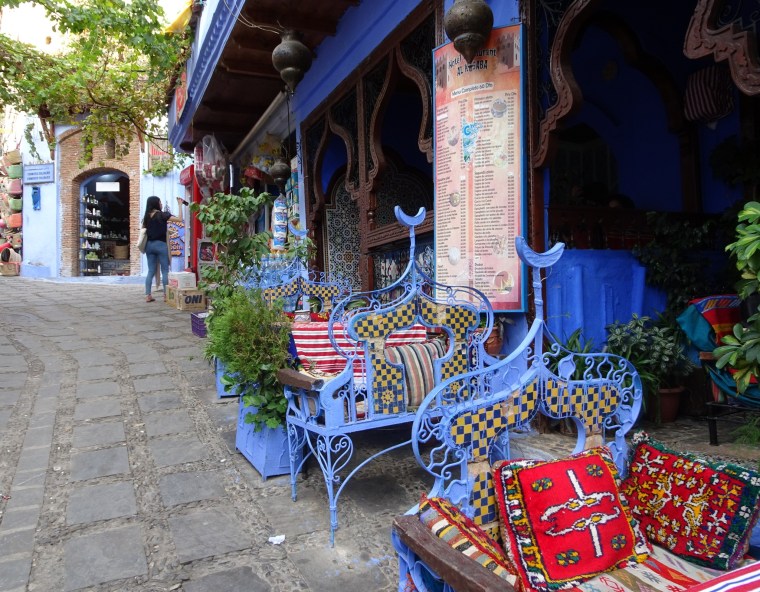
The colours of the fabrics and rugs are vibrant, and add to the beauty of the old town

B80D3526-A45E-4158-A6C9-99D7FB60943E.jpeg

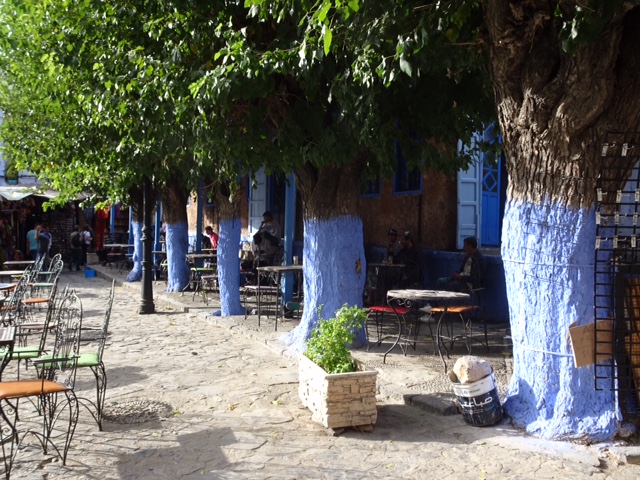
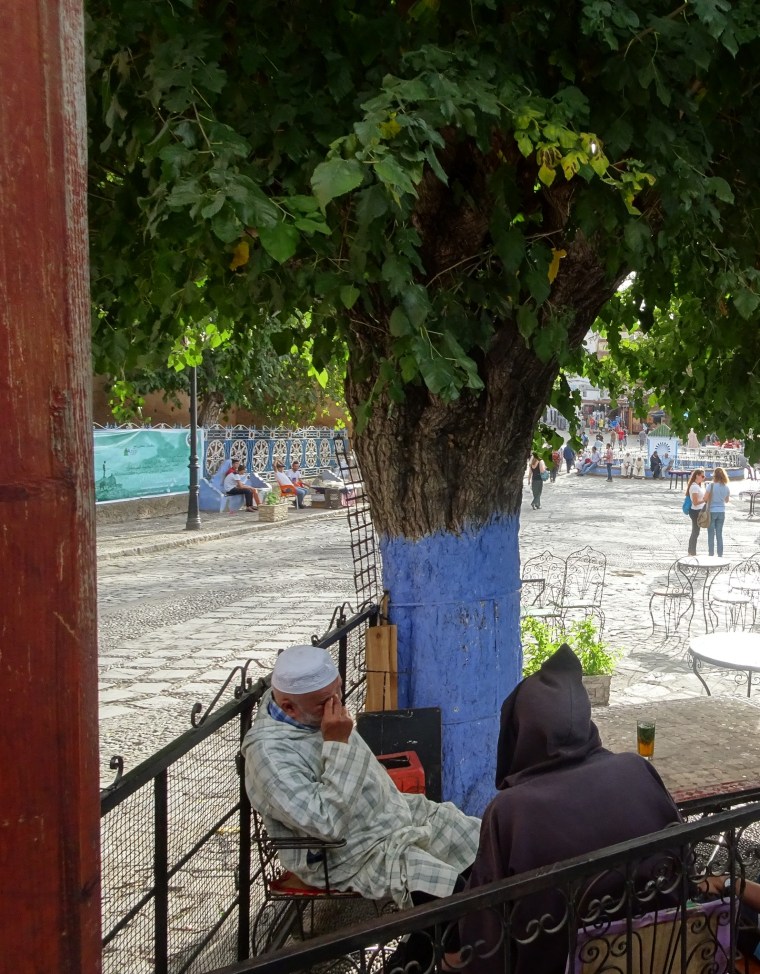
We have noticed in Morocco that the tree trunks are painted, an insect and animal deterrent.  In Chefchaouen they are, of course, painted blue

6265A190-3EEF-46EF-B40C-3163BA27A388B0FB0758-4DE9-40DF-9EE4-519DFA6D4782

Wait, is that Obe stalking us?  Or is he waiting for his tagine?

31037276-4CA8-427D-8584-AB51F8C11147

We are in an Islamic country, predominantly non alcoholic.   Our riad does not serve wine, indeed there is only one hotel in the whole town (and it’s outside of the Medina) which serves alcohol.  It’s been a few days now, and I’m starting to get the shakes. Maybe.  Mercifully, our wonderful travel agent had arranged for a bottle of Moroccan rose to be in our room in Rabat, which we carried with us. Tonight we prise it open, decant it into plastic water bottles (in what Cherrie tells me is boarding school style) and sit up on the gorgeous roof top terrace in the cool evening air, sipping pink water from plastic bottles.  We’re all class!

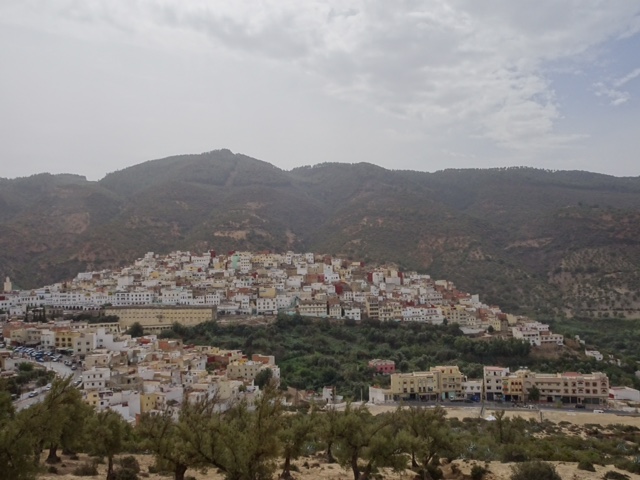
It’s a gorgeous view from up here, and we sip our ‘water’ contendely, listen to the call to prayer (five times a day) and look at the houses on the hillside

C2DE7A57-5013-4A59-9B02-59FF50096DEA.jpeg

Then we go to dinner.  Such a difficult choice