MMM…..Marrakech (reposting because I don’t think the 3rd M went through first time and who wants an M&M when you can have an MMM?)

Wednesday 25 October 2017

Three Ms of Marrakech today.  Majorelle, Momounia, Musee

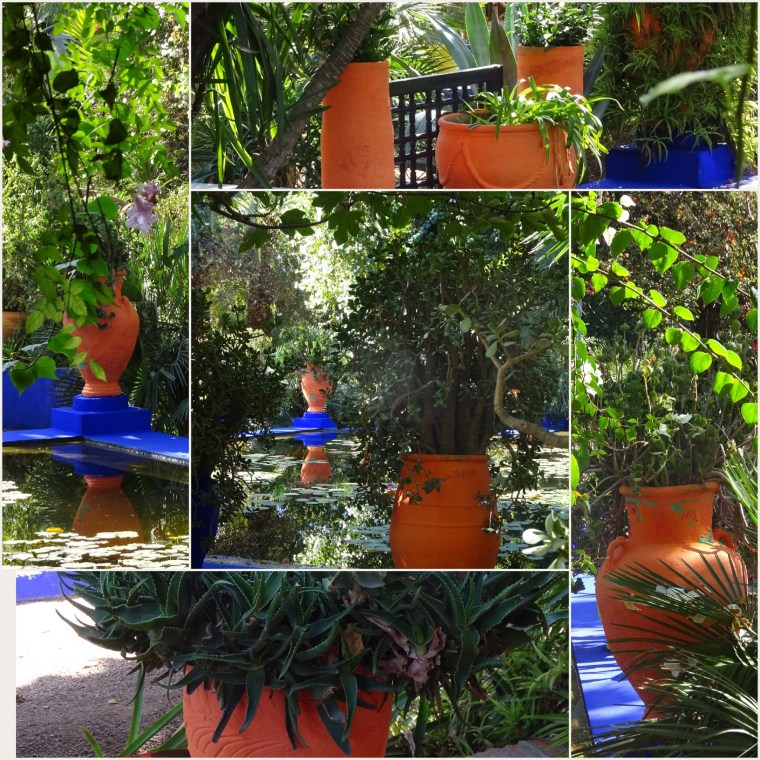
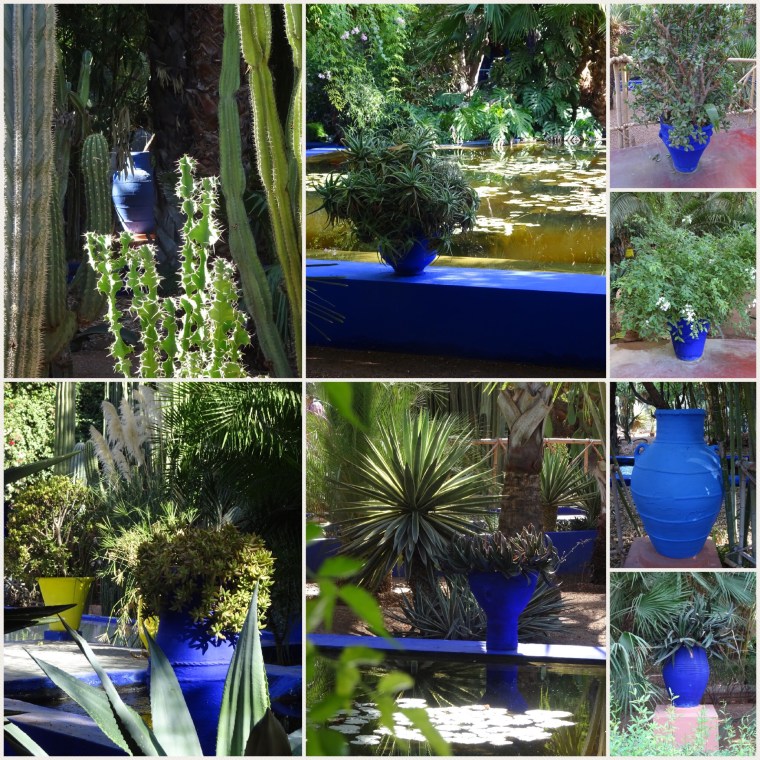
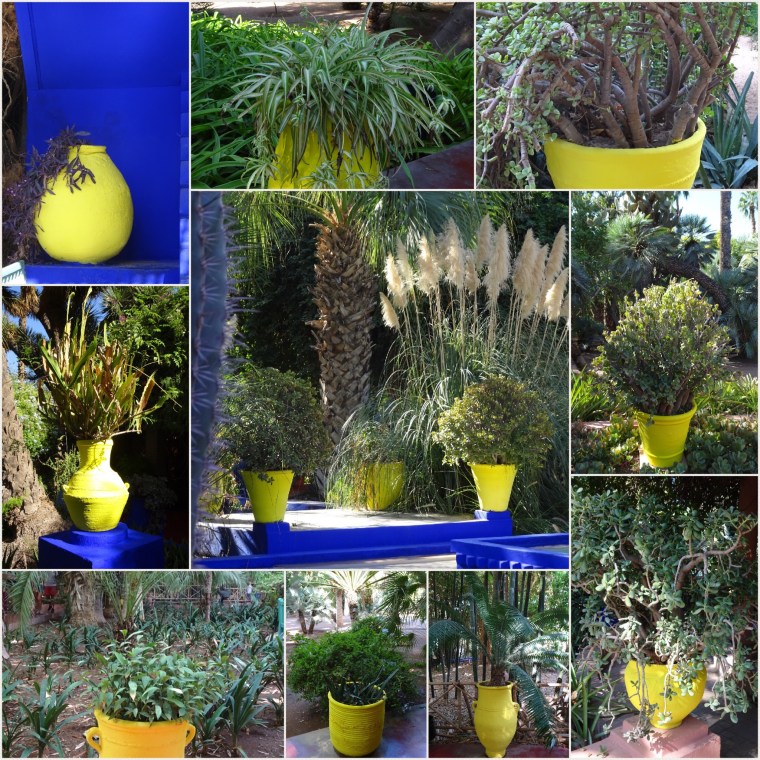
The Jardin Marjorelle is located in a classy suburb of Marrakech.  Established in the ‘20s by French artist Jacques Marjorelle, it is a vision of blue, yellow and orange pots.  The blue is so unique, more cobalt than cobalt, that it is officially now a colour  – Marjorelle Blue.  He was inspired by the Moroccan colours in the mosaics.
CE14E907-B5EC-401A-B7D3-B27F7628A377.jpeg

CB8D2C52-A39C-49AD-9A97-628FA3A4C170

B10BF778-3F90-433B-A4C9-EF2086853760

The colours define this garden, which were such an inspiration to Yves Saint Laurent who, with his partner Pierre Borge, bought the property in 1980.  It had been open to the public since the death of Jacques Moselle in 1962 but was slated for a high rise development in the late ‘70s.  Saint Laurent and Borges fought the development and ultimately purchased the property to save it.  They lived in the house next door, which they named Villa Oasis, and restored the garden to Majorelle’s vision by retaining the glorious colours

EF4692A8-10EC-4A51-8846-AF389B6807B8

6367D489-D89A-488A-96F2-6617EA395A4D.jpeg

installing irrigation and engaging 20 gardeners to maintain it.  The gardeners are, of course, colour coded.

14DAAE50-10D2-4A45-91B5-D1ADE487C0B5.jpeg

It always remained a public garden and retained the name of the original owner/designer.  Majorelle built his studio in the gardens, the sight of which is arresting

372F5829-F029-42C5-80A2-41B8D13B22A2.jpeg

which Yves and Pierre converted to a fascinating Berber museum.

Saint Laurent died in 2008, his ashes were scattered here, and there is a memorial to him in the garden.  His partner, Pierre Borge, who was 8 years older, died just last month and his ashes will also be scattered here.

Winston Churchill used to spend time in Marrakech and it is evident that he visited this garden too

09E824D8-9C97-4BD8-BE2E-844A781AD21D.jpeg

The brand new Musee Yves Saint Laurent opened next door just last Thursday, and we go to visit that too.  But, of course, Wednesday is ferme day.  So, we walk down the end of the road instead and Abdul Raheem loads us into a horse drawn carriage, which he says is included in our tour.  We’re not sure about this, and how fair to the animal it is, but we placidly obey and we are drawn to the public gardens in Gueliz, the new town. It’s a pleasant stroll through the garden but nothing special. I spot a large van which looks like a mobile library but Abdul laughs me off and says no, it is a van with gardening equipment.  I feel foolish, until we walk to the other side where the sign on the van clearly says Bibliotheque Mobile.  I stay uncharacteristicly quiet, but I am satisfied that our guide also sees the sign!  Oh, the smugness.

From there, we go to the second of the day, the Hotel Mamounia.  This is where Lois and Gerry (remember them from the desert camp and Skoura?)  stayed last year and loved it so much they have come back.  Perhaps to buy it, who knows? The Mamounia was built in the 12th Century is a luxury five star hotel, where we are NOT staying.  It is indeed amazing and we walk through and around the lush foyer area, guided by Abdul Raheem who shows us interesting things like the bar where Churchill used to drink, the original woodwork and the new carpets which have, somewhat regrettably, replaced the hand woven rugs etc.  But it is the garden which we are here to see and glorious it is.

39DD0B34-8884-4AA7-B0DC-4F0A3DAB0A99.jpeg

This is one luxurious hotel and we feel rather out of place amongst the beautiful people.  We are more at home amongst the workers who are harvesting the olives from their plentiful plantation

B9A676F2-6666-40E8-91D2-4EAB4E62DDC0

4130AD52-E15A-4FBB-9A0F-B86E89B0F67C.jpeg

I guess this just confirms what many of you have already observed- that I am most comfortable with a big stick in my hand.

The third is the Museum of Contemporary African Art.  Neither Abdul Raheem nor Jilali have ever heard of it, but fortunately Cherrie has the address.  It is in the golf estate (there are 27 golf courses in Marrakech) and it’s fabulous, with a collection from artists all over Africa.  Abdul accompanies us through this small museum, which opened in November last year.  He is grateful to have learnt about it.

C4E826FB-C378-4964-AC32-928AA367A5EC.jpeg

It’s lunchtime, and finally our pleas are heard.  We are delivered to that well known Moroccan institution, Le Pain Quotidien.  We could be in Paris or London, but no, we are in Marrakech.  Abdul Raheem leaves us here.  Jilali has parked somewhere.  No one in this international French shop speaks Anglaise or Francaise  it seems.  We have no idea what to do, but eventually succeed in purchasing a tomate sandwich each, which turns out to be mostly tuna.  At least we get a coffee.

Post lunch we ask Jilali to take us back to the souks, so we can wander at leisure, but he goes into meltdown because he is, after all, a driver and not a guide. He has no idea which gate of the Medina is best for the souks and really doesn’t want to risk it.  He knows somewhere much better anyway, with prix fixe, and he begs to take us there.  We don’t have the heart to tell him we are not buying but rather looking so we reluctantly agree and get dropped off at a two storey department souvenir store.  It’s actually quite fun perusing all the tat, but not the same as the souks.

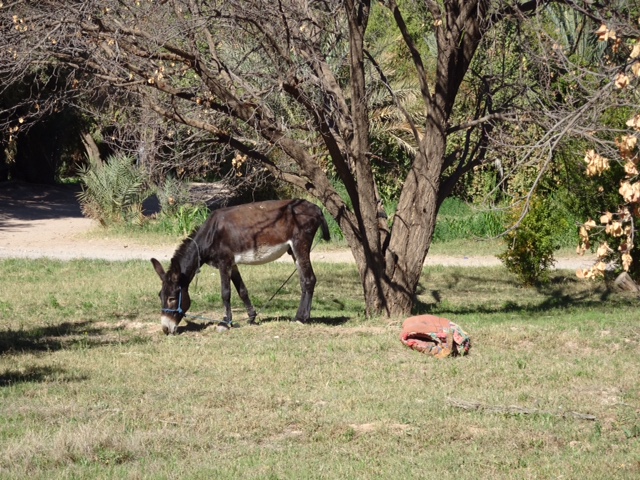
After being dropped back at the hotel, we decide we want to see the main square, and the snake charmers.  This area is hopping at night, and the place to be.    The hotel gives us a map and explains the route for the 15 minute walk.  Plenty of places to eat around there too they tell us.  The 15 minute walk takes us 50 minutes.  And, we cross the road three times, miraculously surviving.  The trick is to just look ahead, do not look at the traffic, take no notice of the traffic, walk to the other side of the road, pretending to be confident that the trucks, bikes, cars, vans, mules and donkeys will go round you.  You can be sure they won’t stop for you.

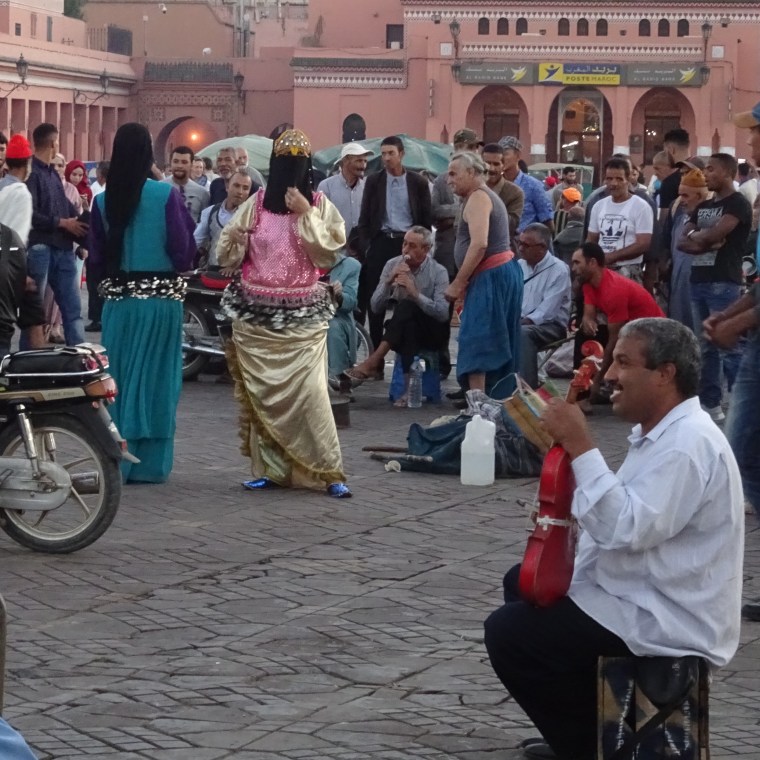
The square is like sideshow alley at the Easter Show

2E2E18DB-CB86-4C09-B49A-680AF3B301CB.png

Complete with drag belly dancers

92BEC558-3D1A-422F-BBBA-D289F248EA62.jpeg


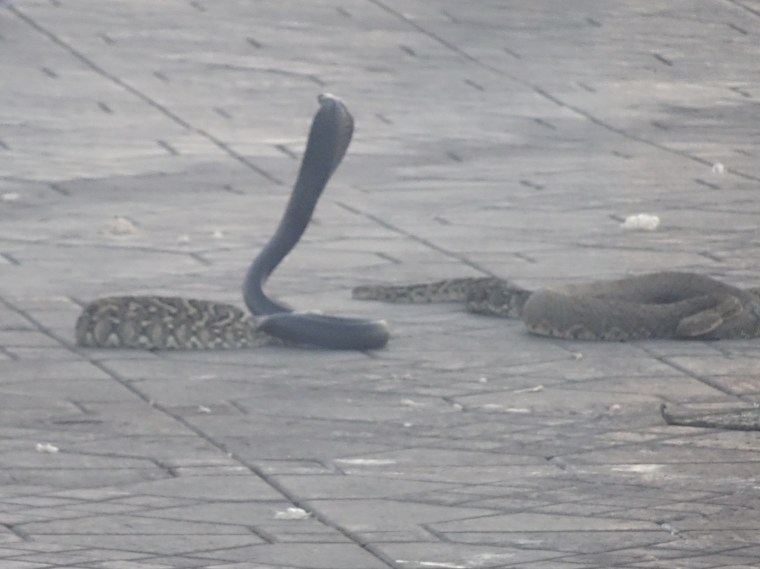
And the snake charmers.  We didn’t get close, because those cobras were slithering all over the pavement and we feared that one wrong note from the flute might reflect poorly on the reptilian behaviour, to potentially unpleasant result.  Besides which, the charmers demand 100 Duran (about $10) per photograph.  Our photo editor caught a long shot, as it were

93CB11DA-B25F-40AD-A293-AAF142F64E3B.jpeg


2F1AB5BA-1688-451A-9C70-57F7A7AE9356.jpeg

We decide that dinner is not an option in this square.  Neither is walking back to the hotel.  Instead we walk some way to find a taxi, which by some good fortune takes us home.  Picnic dinner in the room suffices nicely.


MMM…..Marrakech

Wednesday 25 October 2017

Three Ms of Marrakech today.  Majorelle, Momounia, Musee

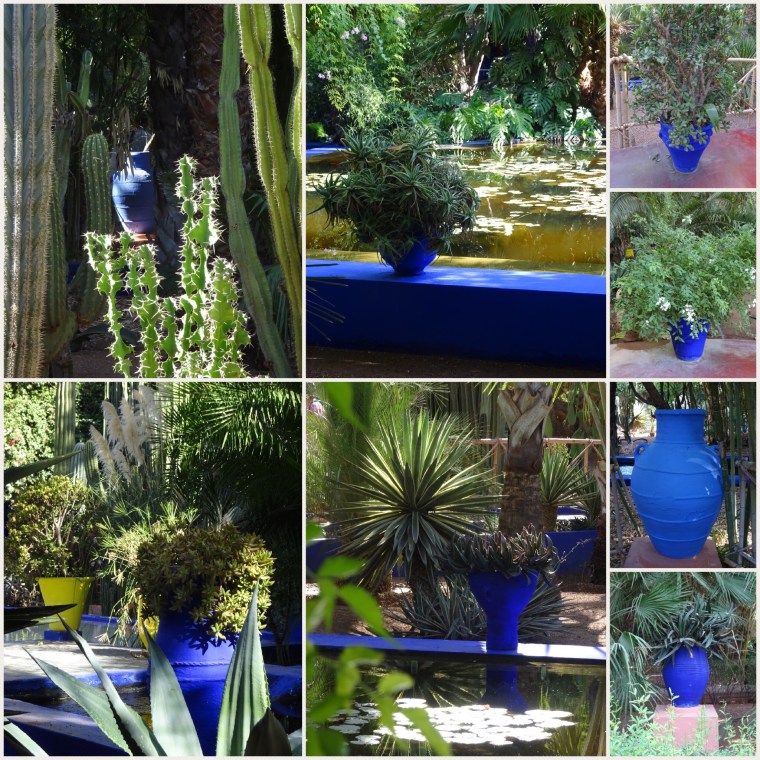
The Jardin Marjorelle is located in a classy suburb of Marrakech.  Established in the ‘20s by French artist Jacques Marjorelle, it is a vision of blue, yellow and orange pots.  The blue is so unique, more cobalt than cobalt, that it is officially now a colour  – Marjorelle Blue.  He was inspired by the Moroccan colours in the mosaics.
CE14E907-B5EC-401A-B7D3-B27F7628A377.jpeg

CB8D2C52-A39C-49AD-9A97-628FA3A4C170

B10BF778-3F90-433B-A4C9-EF2086853760

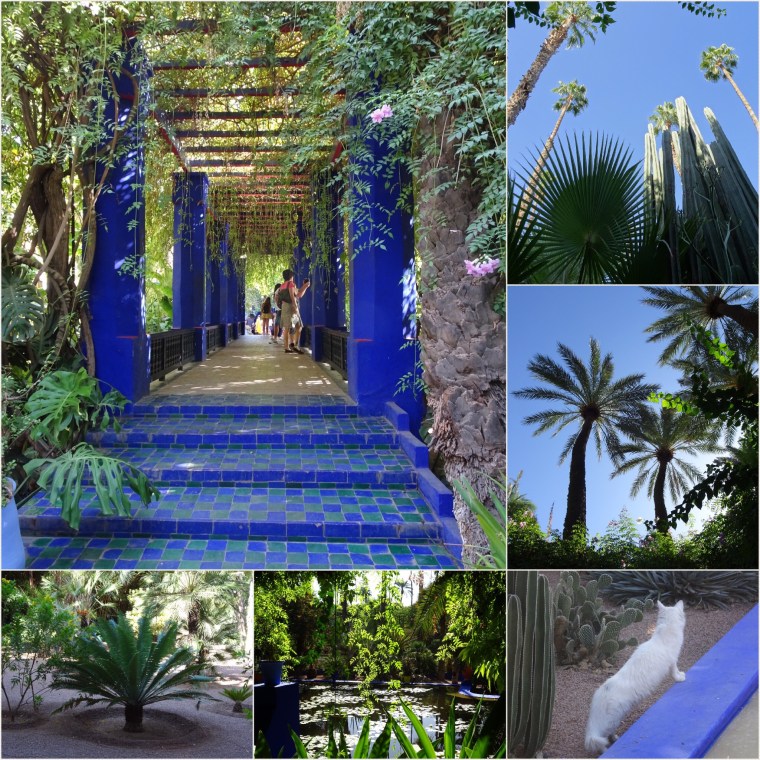
The colours define this garden, which were such an inspiration to Yves Saint Laurent who, with his partner Pierre Borge, bought the property in 1980.  It had been open to the public since the death of Jacques Moselle in 1962 but was slated for a high rise development in the late ‘70s.  Saint Laurent and Borges fought the development and ultimately purchased the property to save it.  They lived in the house next door, which they named Villa Oasis, and restored the garden to Majorelle’s vision by retaining the glorious colours
EF4692A8-10EC-4A51-8846-AF389B6807B8

6367D489-D89A-488A-96F2-6617EA395A4D.jpeg

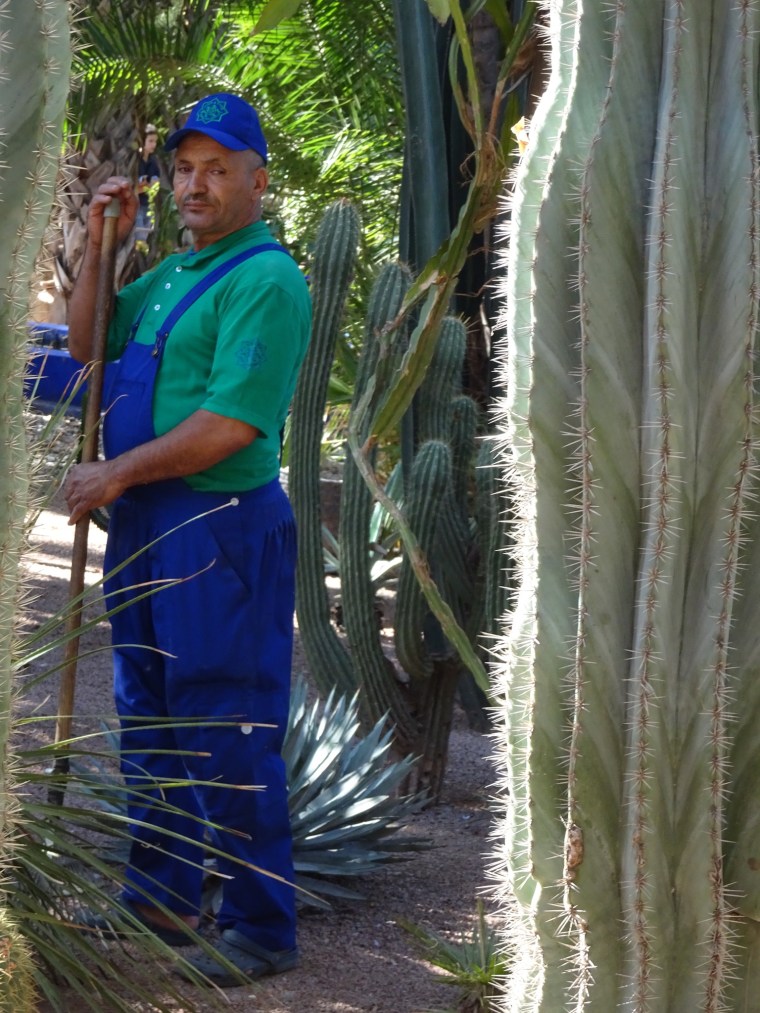
installing irrigation and engaging 20 gardeners to maintain it.  The gardeners are, of course, colour coded.
14DAAE50-10D2-4A45-91B5-D1ADE487C0B5.jpeg

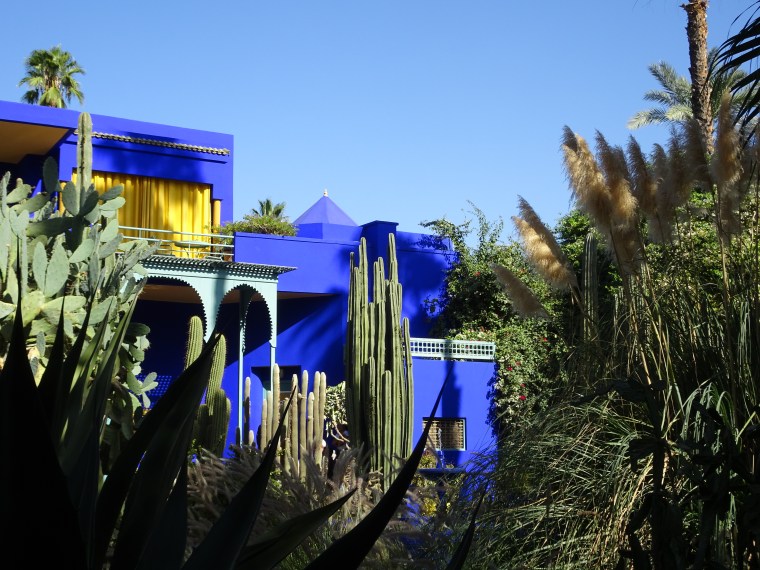
It always remained a public garden and retained the name of the original owner/designer.  Majorelle built his studio in the gardens, the sight of which is arresting
372F5829-F029-42C5-80A2-41B8D13B22A2.jpeg

which Yves and Pierre converted to a fascinating Berber museum.

Saint Laurent died in 2008, his ashes were scattered here, and there is a memorial to him in the garden.  His partner, Pierre Borge, who was 8 years older, died just last month and his ashes will also be scattered here.

Winston Churchill used to spend time in Marrakech and it is evident that he visited this garden too
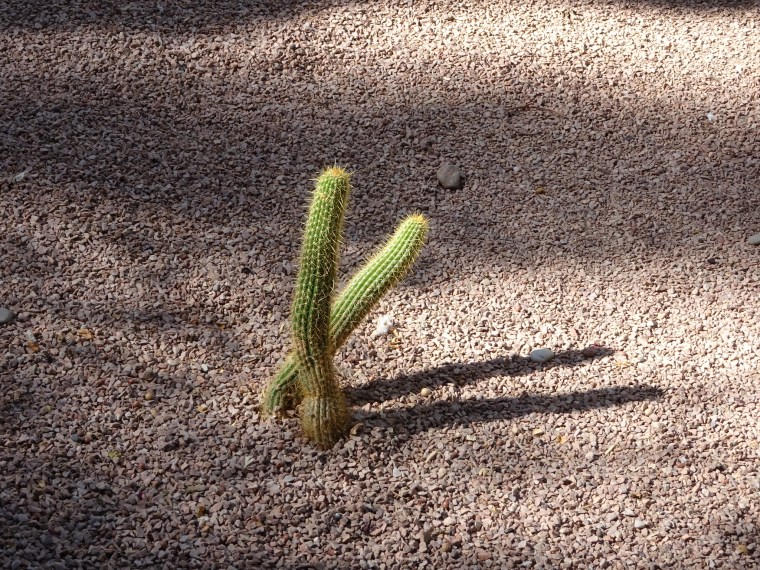
09E824D8-9C97-4BD8-BE2E-844A781AD21D.jpeg

The brand new Musee Yves Saint Laurent opened next door just last Thursday, and we go to visit that too.  But, of course, Wednesday is ferme day.  So, we walk down the end of the road instead and Abdul Raheem loads us into a horse drawn carriage, which he says is included in our tour.  We’re not sure about this, and how fair to the animal it is, but we placidly obey and we are drawn to the public gardens in Gueliz, the new town. It’s a pleasant stroll through the garden but nothing special. I spot a large van which looks like a mobile library but Abdul laughs me off and says no, it is a van with gardening equipment.  I feel foolish, until we walk to the other side where the sign on the van clearly says Bibliotheque Mobile.  I stay uncharacteristicly quiet, but I am satisfied that our guide also sees the sign!  Oh, the smugness.

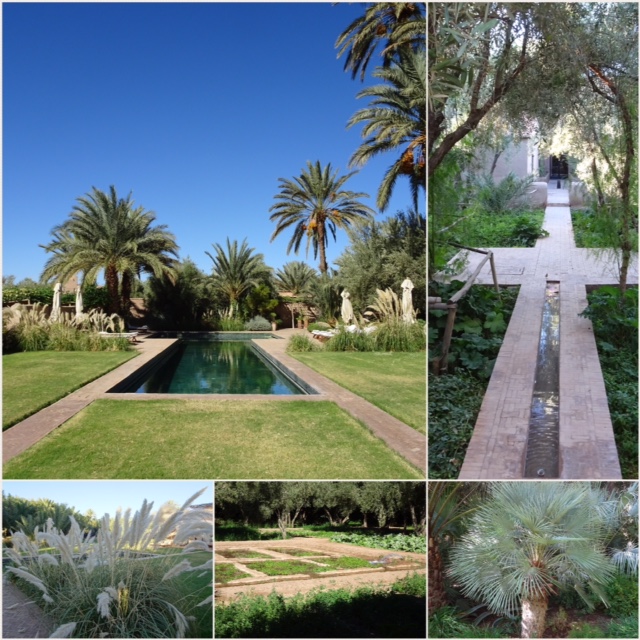
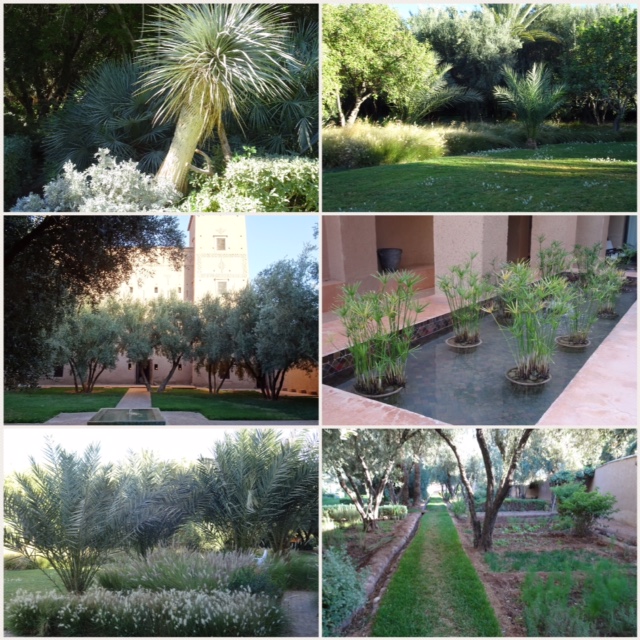
From there, we go to the second of the day, the Hotel Mamounia.  This is where Lois and Gerry (remember them from the desert camp and Skoura?)  stayed last year and loved it so much they have come back.  Perhaps to buy it, who knows? The Mamounia was built in the 12th Century is a luxury five star hotel, where we are NOT staying.  It is indeed amazing and we walk through and around the lush foyer area, guided by Abdul Raheem who shows us interesting things like the bar where Churchill used to drink, the original woodwork and the new carpets which have, somewhat regrettably, replaced the hand woven rugs etc.  But it is the garden which we are here to see and glorious it is.
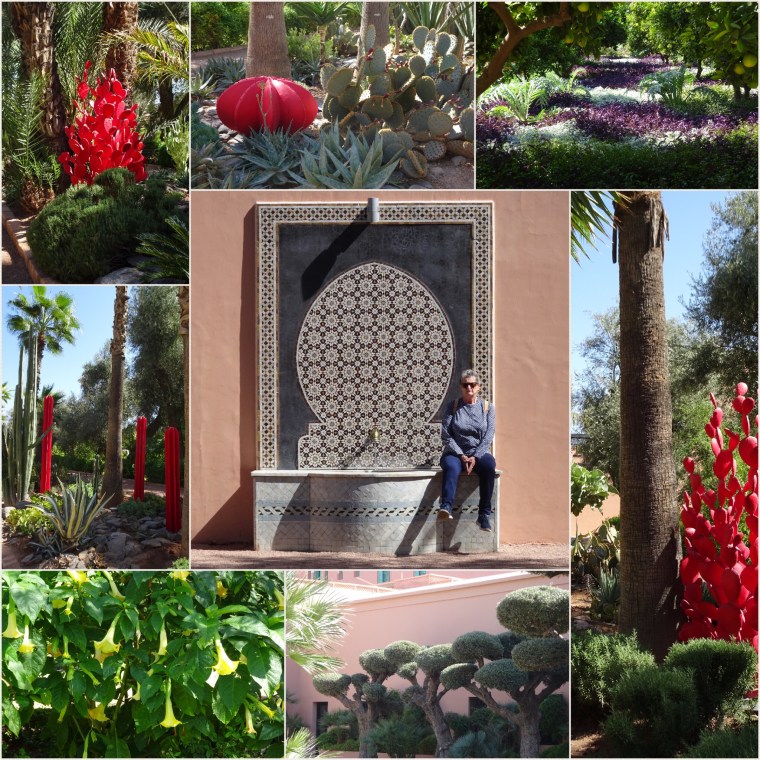
39DD0B34-8884-4AA7-B0DC-4F0A3DAB0A99.jpeg

This is one luxurious hotel and we feel rather out of place amongst the beautiful people.  We are more at home amongst the workers who are harvesting the olives from their plentiful plantation
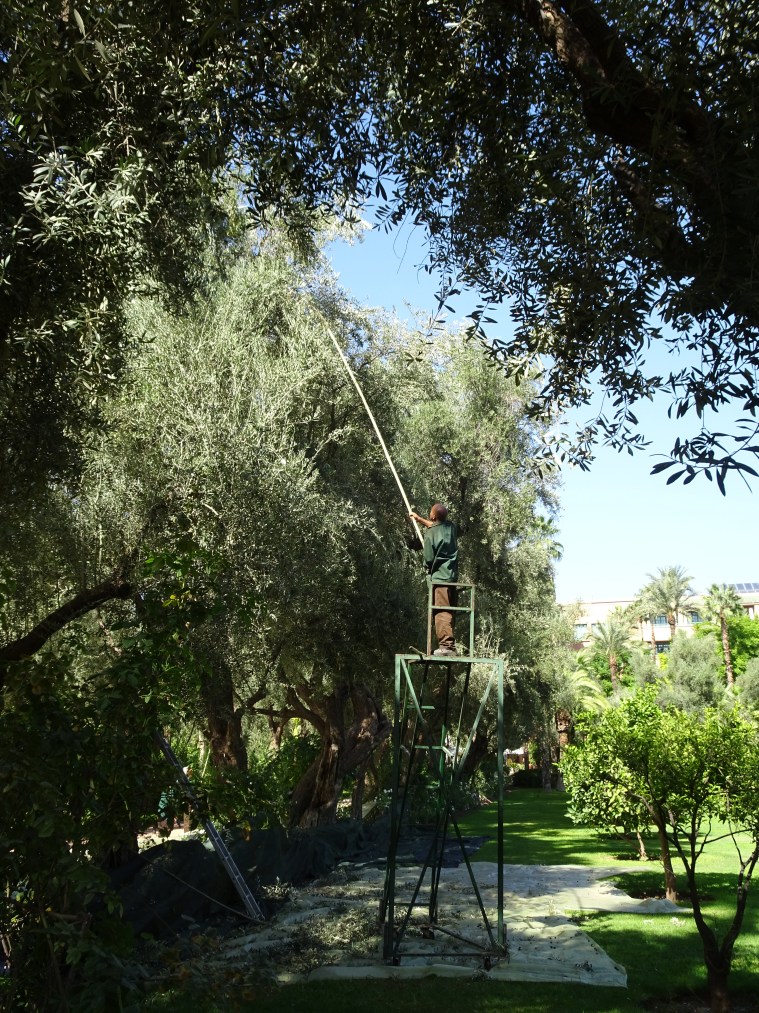
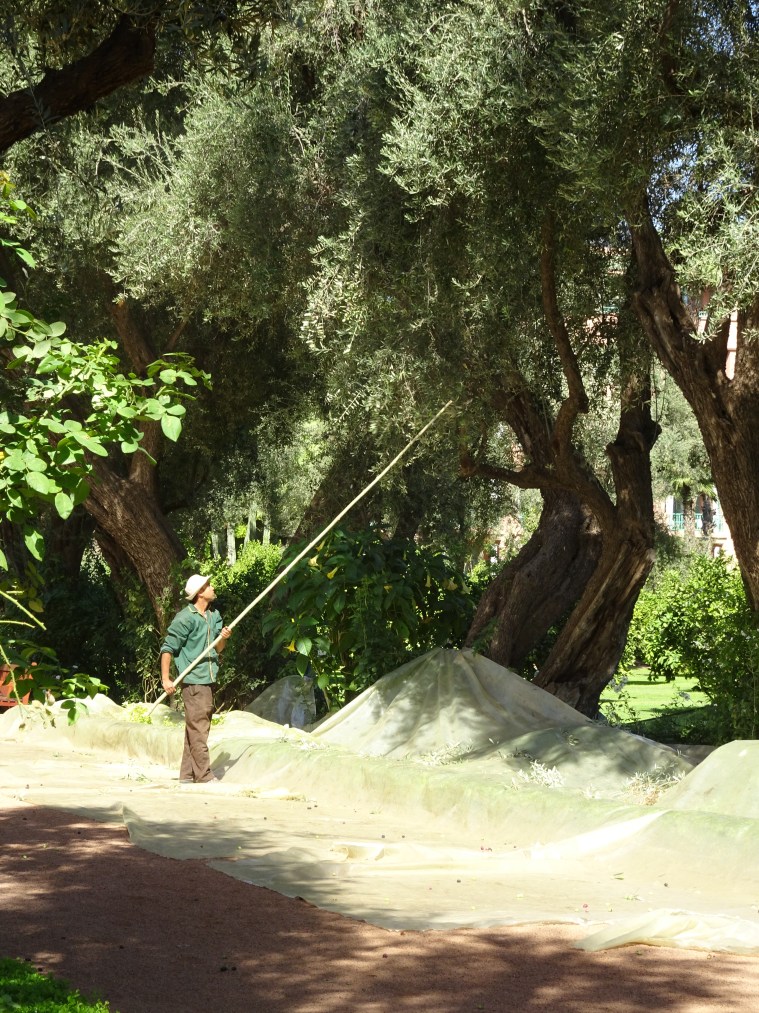
B9A676F2-6666-40E8-91D2-4EAB4E62DDC0

4130AD52-E15A-4FBB-9A0F-B86E89B0F67C.jpeg

I guess this just confirms what many of you have already observed- that I am most comfortable with a big stick in my hand.

The third is the Museum of Contemporary African Art.  Neither Abdul Raheem nor Jilali have ever heard of it, but fortunately Cherrie has the address.  It is in the golf estate (there are 27 golf courses in Marrakech) and it’s fabulous, with a collection from artists all over Africa.  Abdul accompanies us through this small museum, which opened in November last year.  He is grateful to have learnt about it.
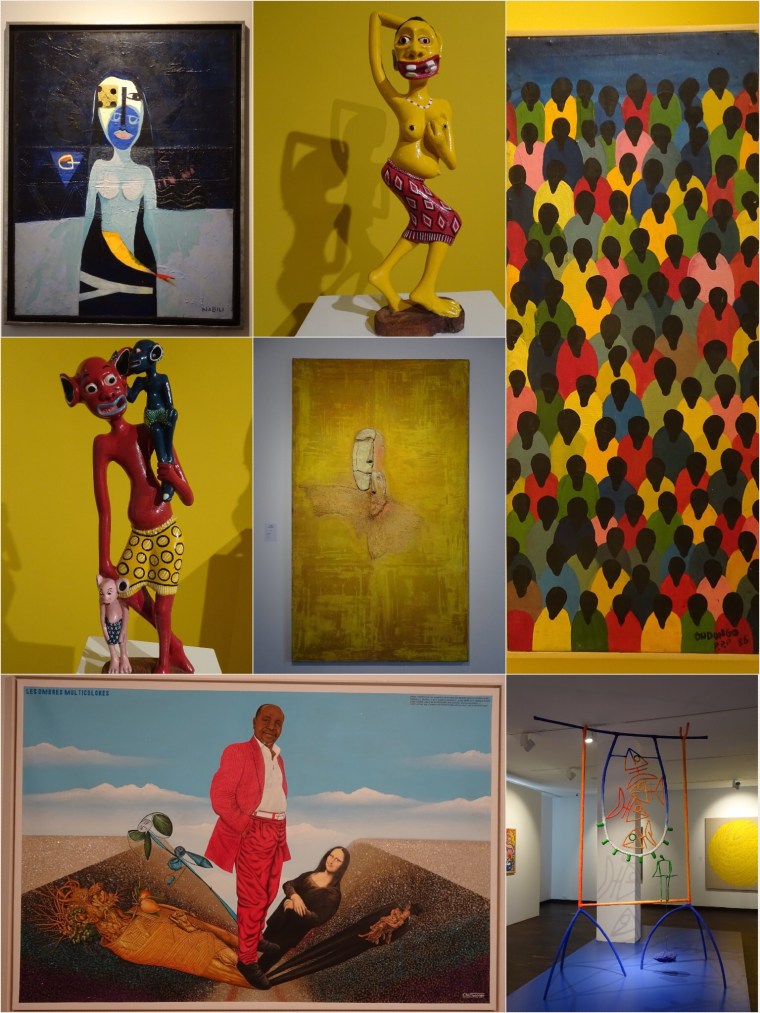
C4E826FB-C378-4964-AC32-928AA367A5EC.jpeg

It’s lunchtime, and finally our pleas are heard.  We are delivered to that well known Moroccan institution, Le Pain Quotidien.  We could be in Paris or London, but no, we are in Marrakech.  Abdul Raheem leaves us here.  Jilali has parked somewhere.  No one in this international French shop speaks Anglaise or Francaise  it seems.  We have no idea what to do, but eventually succeed in purchasing a tomate sandwich each, which turns out to be mostly tuna.  At least we get a coffee.

Post lunch we ask Jilali to take us back to the souks, so we can wander at leisure, but he goes into meltdown because he is, after all, a driver and not a guide. He has no idea which gate of the Medina is best for the souks and really doesn’t want to risk it.  He knows somewhere much better anyway, with prix fixe, and he begs to take us there.  We don’t have the heart to tell him we are not buying but rather looking so we reluctantly agree and get dropped off at a two storey department souvenir store.  It’s actually quite fun perusing all the tat, but not the same as the souks.

After being dropped back at the hotel, we decide we want to see the main square, and the snake charmers.  This area is hopping at night, and the place to be.    The hotel gives us a map and explains the route for the 15 minute walk.  Plenty of places to eat around there too they tell us.  The 15 minute walk takes us 50 minutes.  And, we cross the road three times, miraculously surviving.  The trick is to just look ahead, do not look at the traffic, take no notice of the traffic, walk to the other side of the road, pretending to be confident that the trucks, bikes, cars, vans, mules and donkeys will go round you.  You can be sure they won’t stop for you.

The square is like sideshow alley at the Easter Show
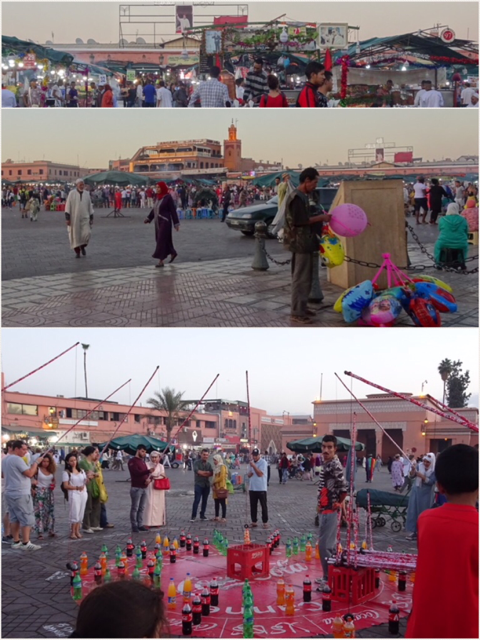
2E2E18DB-CB86-4C09-B49A-680AF3B301CB.png

Complete with drag belly dancers

92BEC558-3D1A-422F-BBBA-D289F248EA62.jpeg


And the snake charmers.  We didn’t get close, because those cobras were slithering all over the pavement and we feared that one wrong note from the flute might reflect poorly on the reptilian behaviour, to potentially unpleasant result.  Besides which, the charmers demand 100 Duran (about $10) per photograph.  Our photo editor caught a long shot, as it were
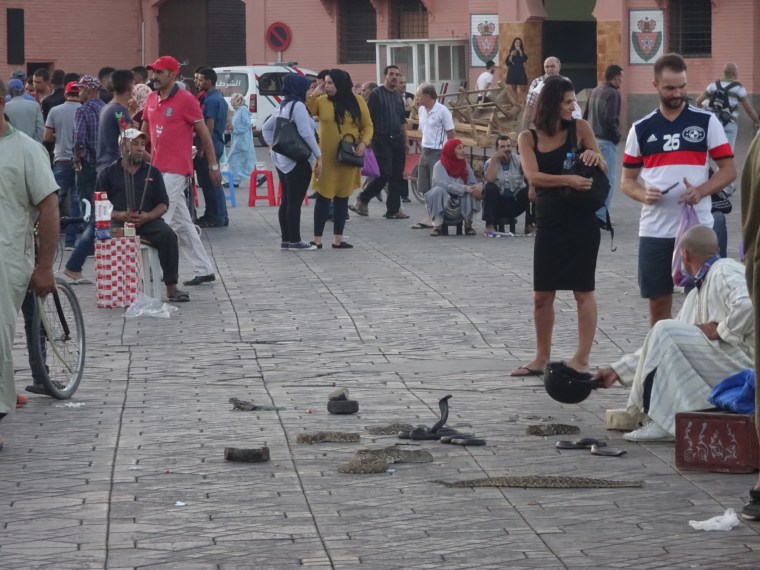
93CB11DA-B25F-40AD-A293-AAF142F64E3B.jpeg


2F1AB5BA-1688-451A-9C70-57F7A7AE9356.jpeg

We decide that dinner is not an option in this square.  Neither is walking back to the hotel.  Instead we walk some way to find a taxi, which by some good fortune takes us home.  Picnic dinner in the room suffices nicely.


Marvellous Marrakech

Tuesday 24 October 2017

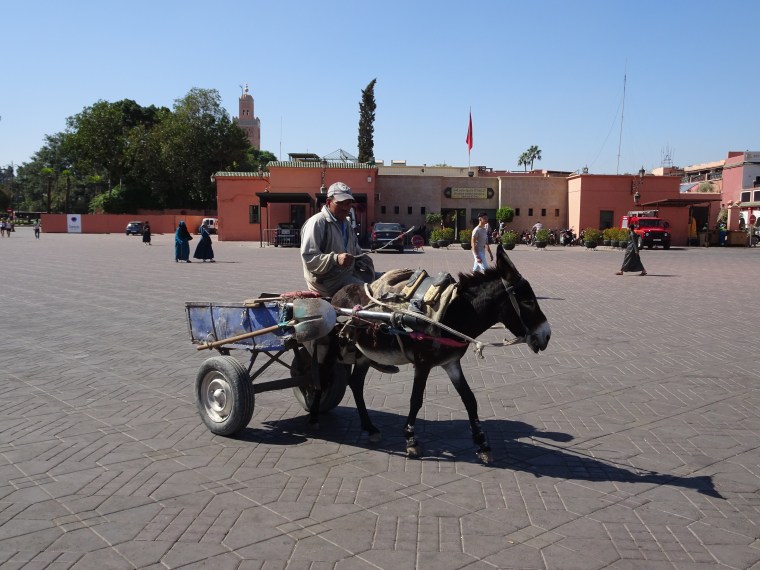
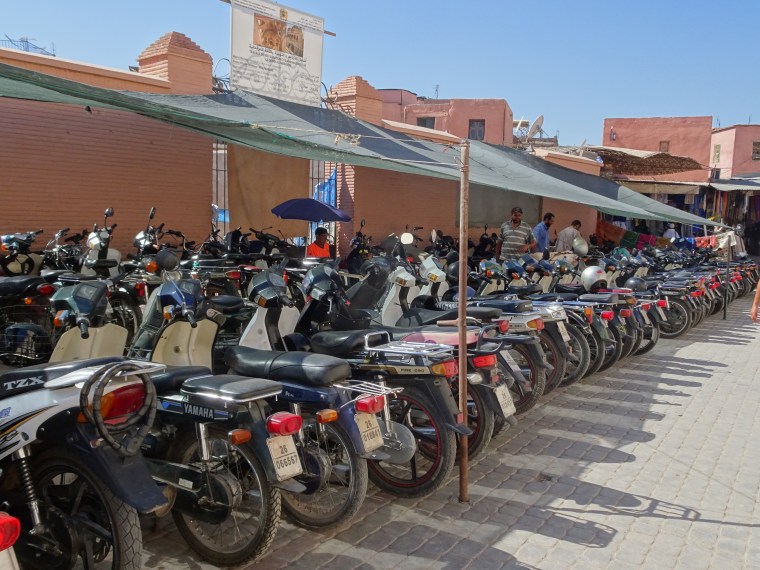
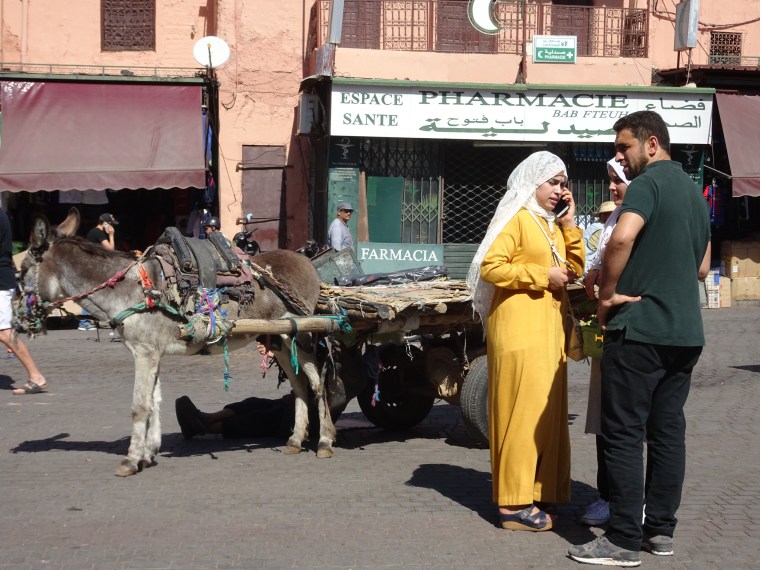
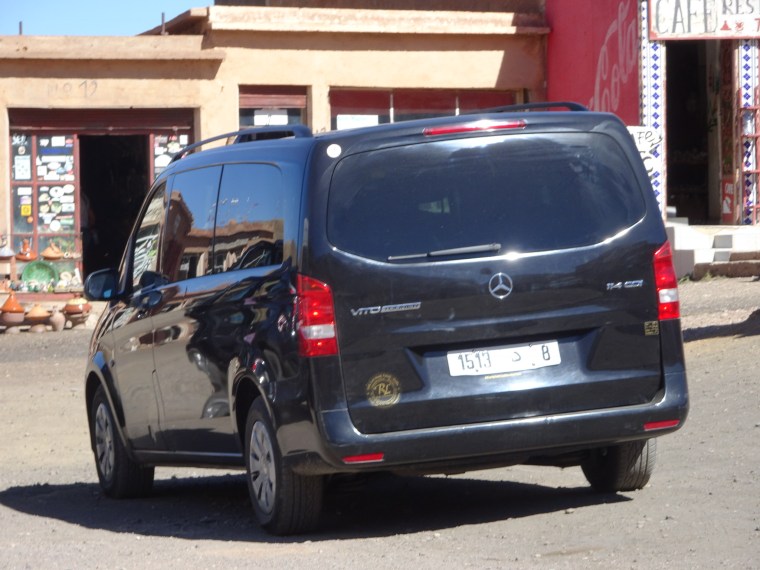
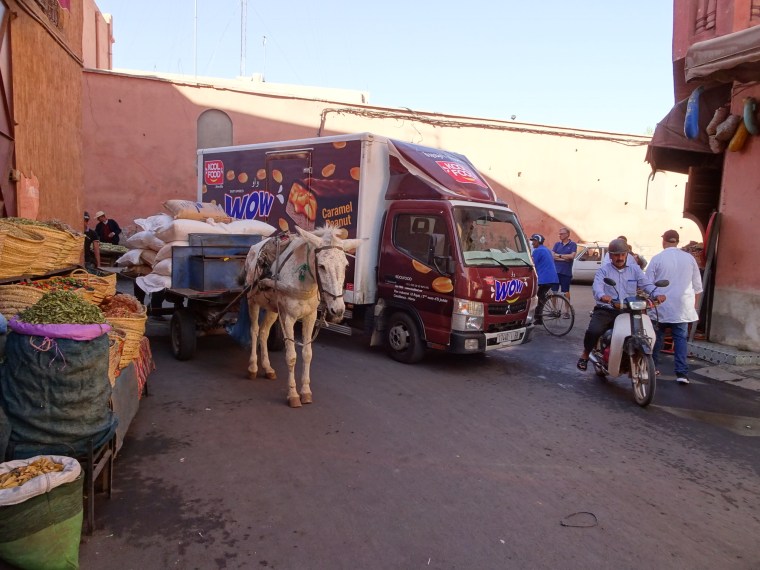
It’s little wonder this city is known as the Jewel of the South.  It is modern, ancient, sophisticated, simple, bewitching, all at once.  Mercedes mix with mules and traffic jams often occur

55F24B7A-CD91-4924-B03E-DD4F0FFE26AC

But the many motor bikes, donkeys, cars and pedestrians manage to survive amongst the chaos, against all odds I must say.

D44A1D92-699A-4071-8FBD-11E375C9C652

AC9D5260-4407-42DD-8509-9BD38DBD6429

4E1269F4-2A8A-45E7-B836-D9845C491874

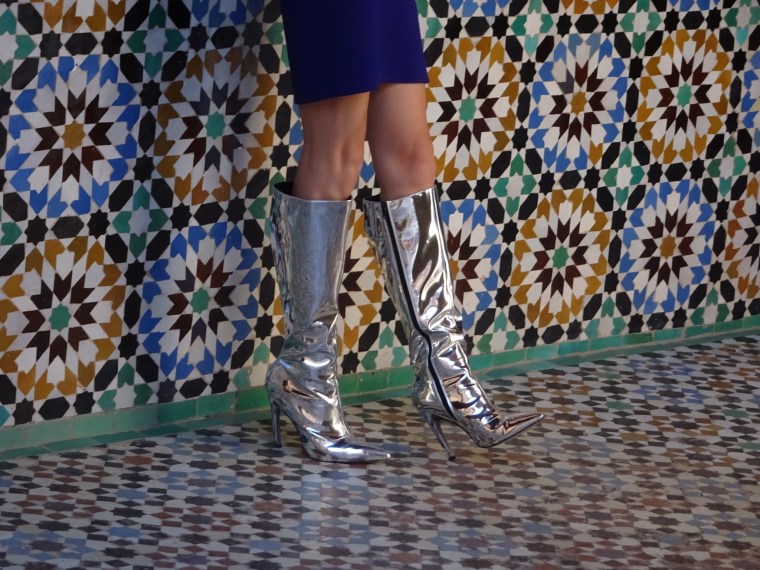
This morning we meet our guide, Abdul Raheem. Jilali drives the three of us through the wide, tree lined streets to the Bahia Palace, built by the Prime Minister of the day to house his 4 wives and 23 concubines. As well as himself of course. It’s quite beautiful, with those wonderful mosaics which never fail to delight. We have learned that the three totems of Islamic art is geometric, calligraphy and flowers.

Sensible walking shoes are a must when on tour, don’t you agree?

F7F2B3AA-4401-4A9C-8C81-1C45EF6575F5

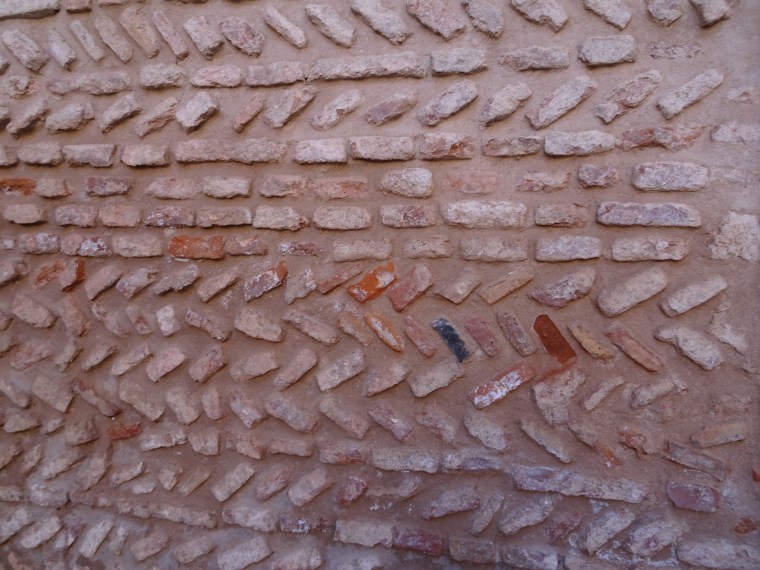
From there, to the Ben Youssef University, built in the 12th Century. It has survived subsequent earthquakes because of the clever technique of the brickwork, which added significant strength.

23EA903B-2BD0-4B2D-AF90-D325ABBD2D2F.jpeg

We saw the so called Saadian tombs of the 16th Century where more than 100 members of the royal family are buried. Muslims are buried on their side, facing Mecca. There are, however, tombs here of Jews, too, who consulted the royal family and were close. The mausoleum was originally built by Sultan Ahmed el Mansour, who went on to found a chain of manchester stores in Sydney.

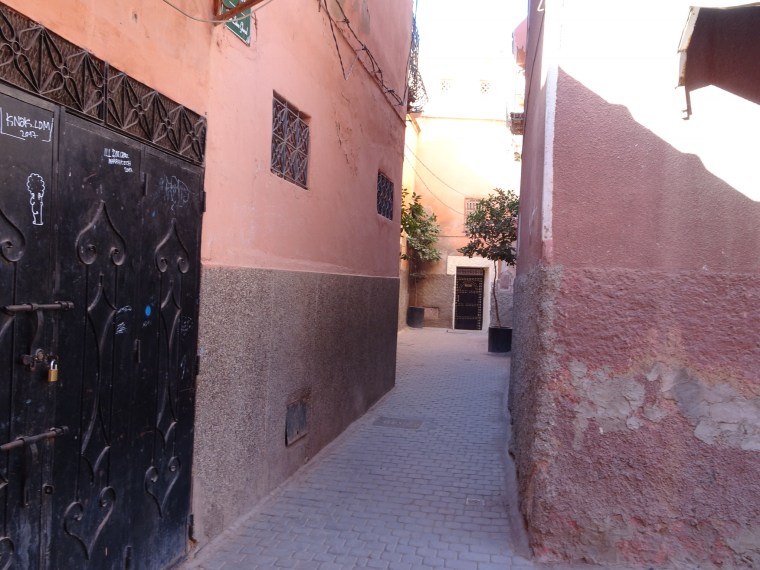
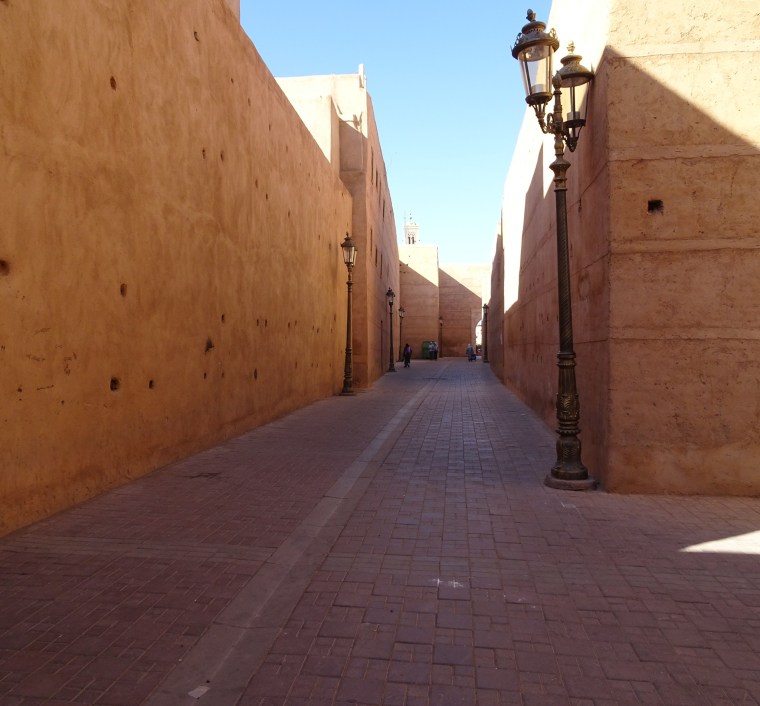
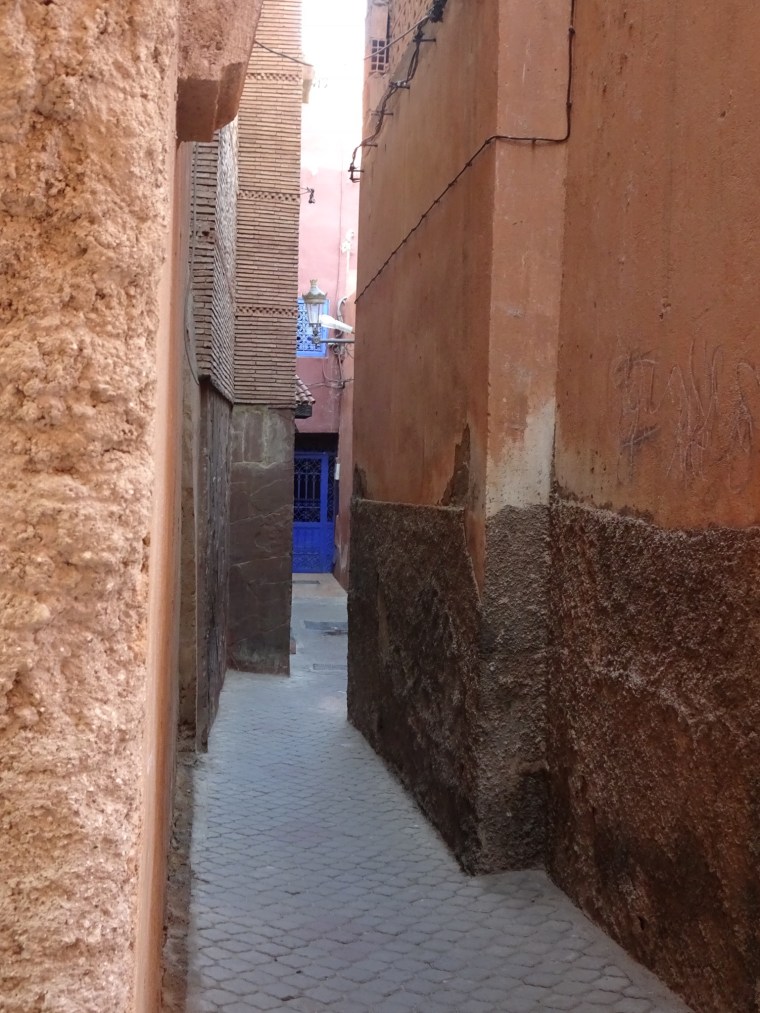
Walking to the souks, via back streets, revealed surprising and refreshing quiet.
57F0B7B8-D016-4830-A94A-0B34F4511BB3ED13336B-4069-44B5-BC03-84C9BBA2F4D352942295-3580-4EA1-A082-8B5F2435FD1F

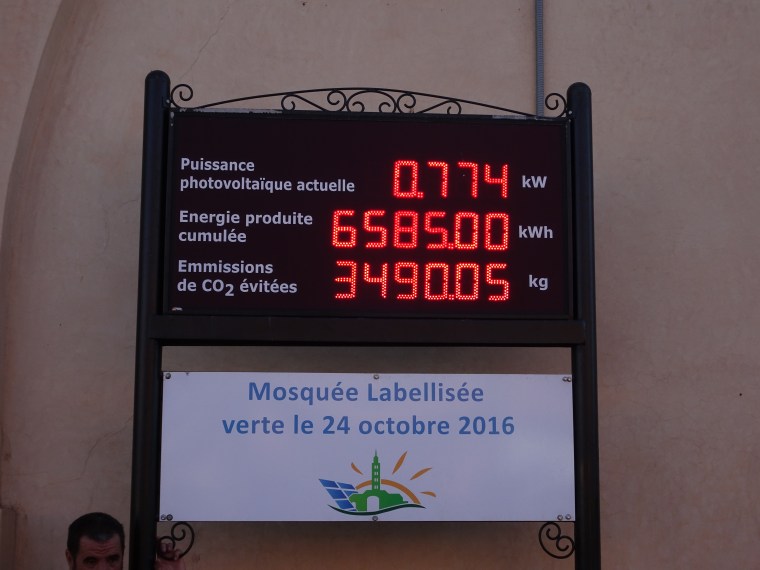
Morocco has the largest solar farm in the world, not far from Marrakech, and 40% of the city’s power is solar generated. This is a source of great pride, and rightly so, and the daily stats are displayed for all to see. This sign is indicative of what the panels on the mosque are generating.

B1AC06BC-5043-48ED-97FC-482F485A75A6.jpeg

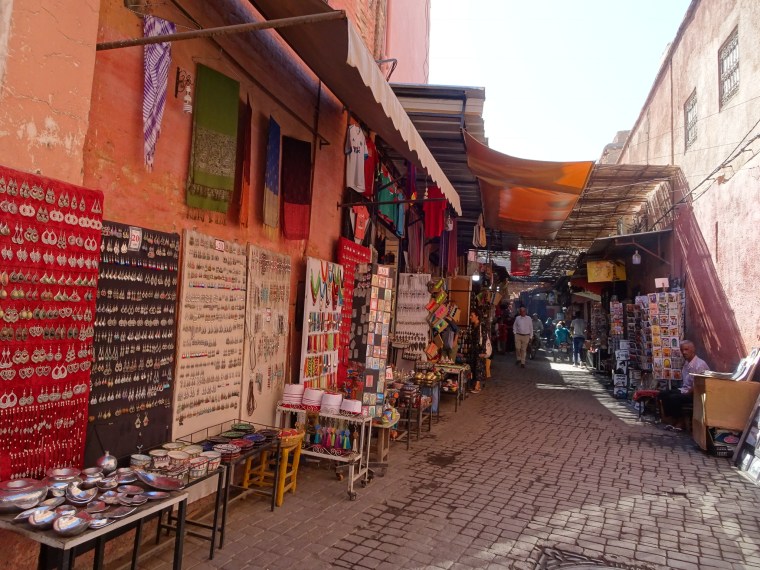
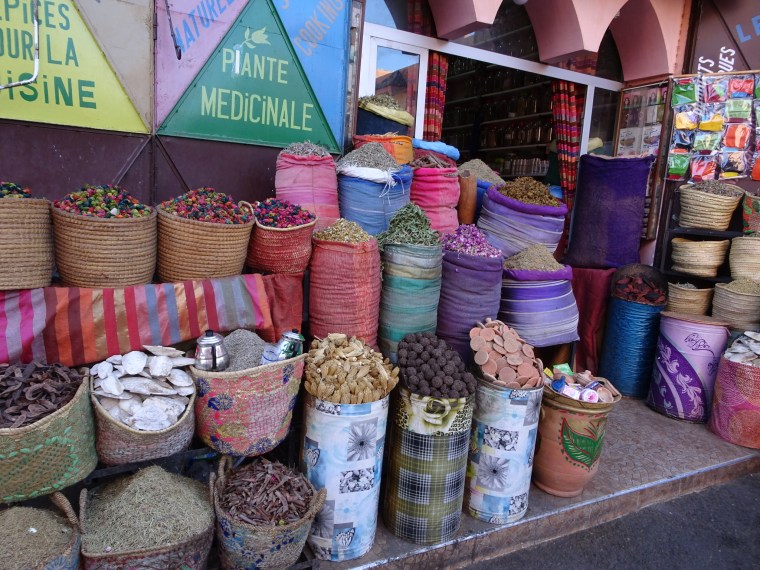
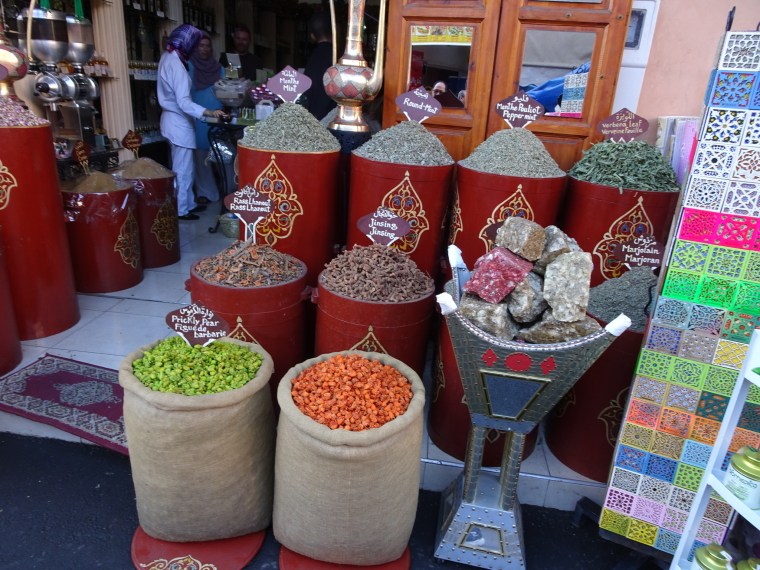
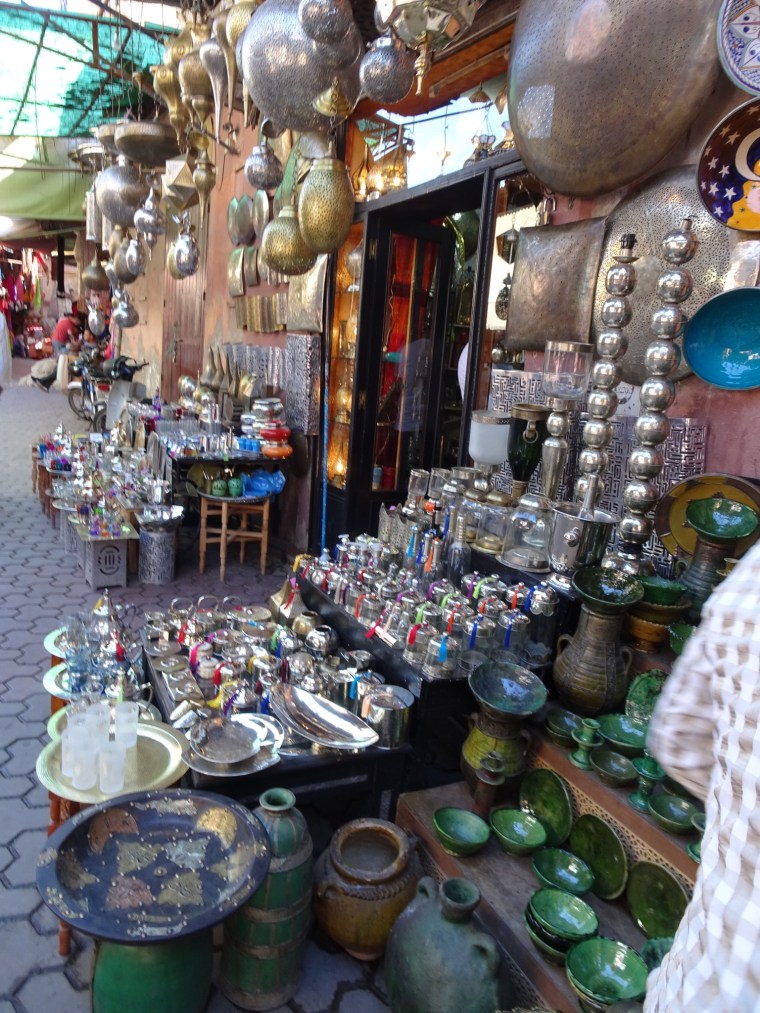
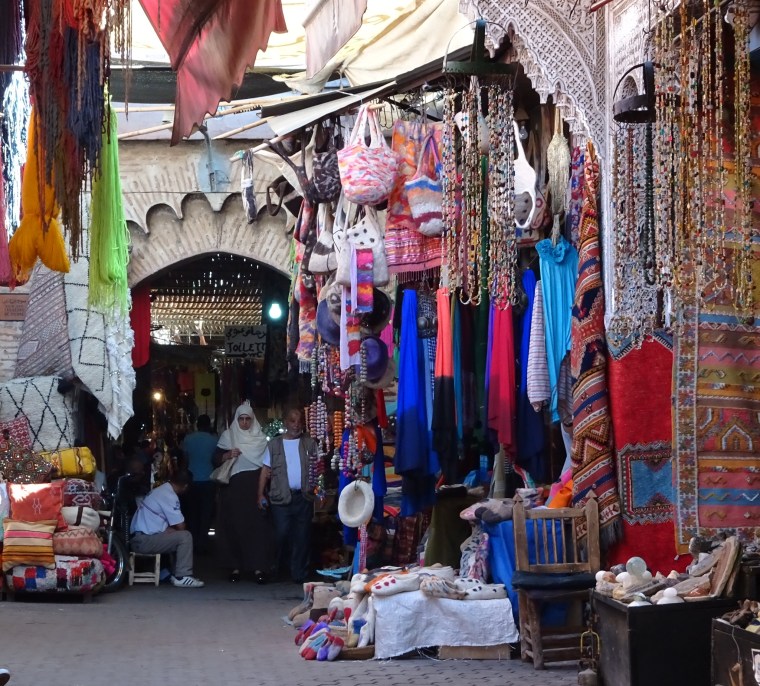
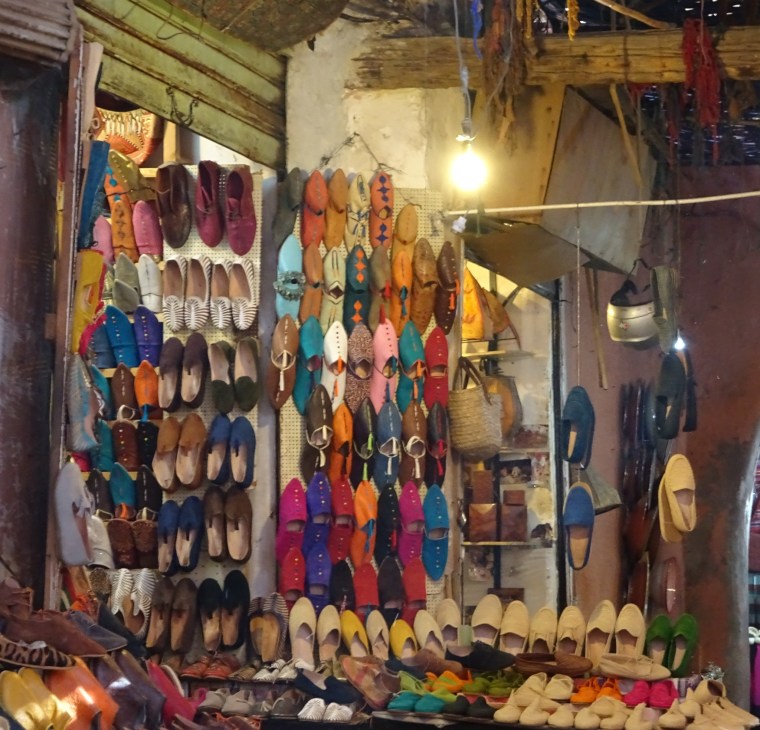
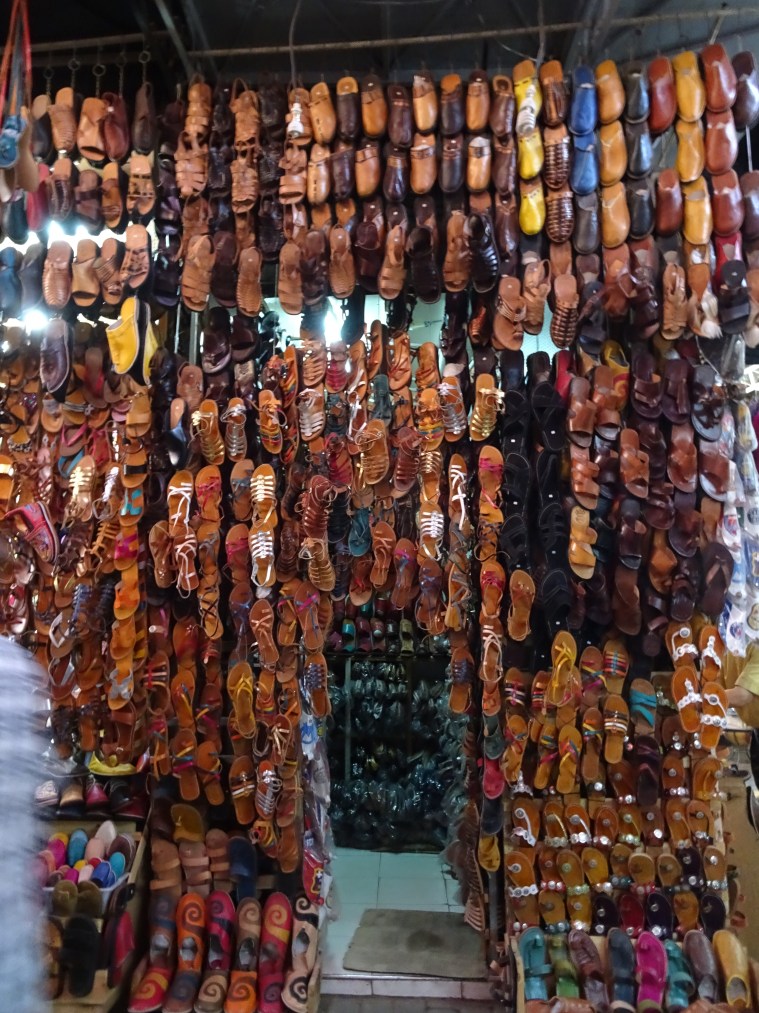
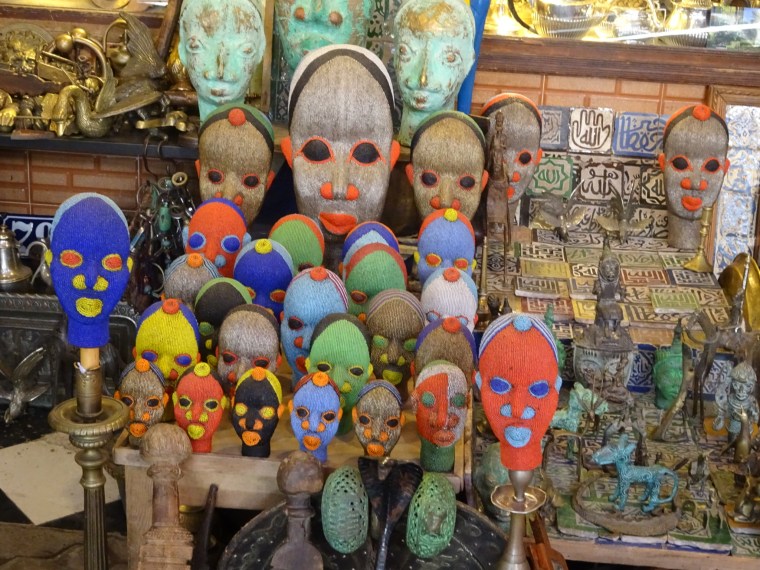
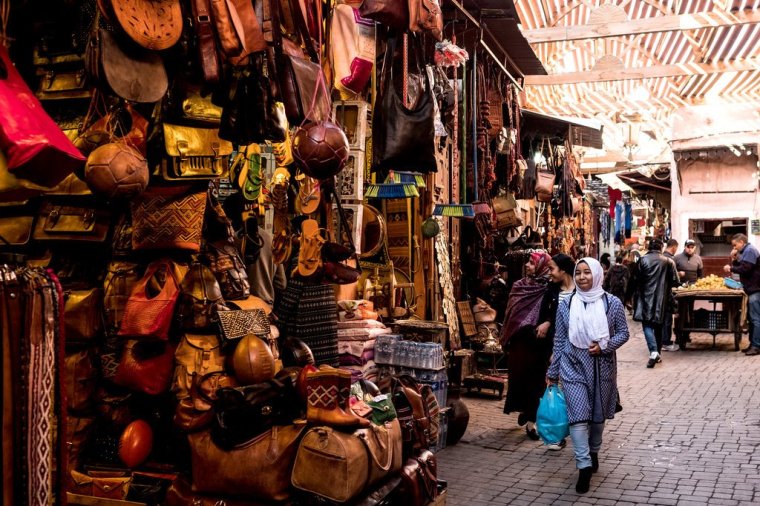
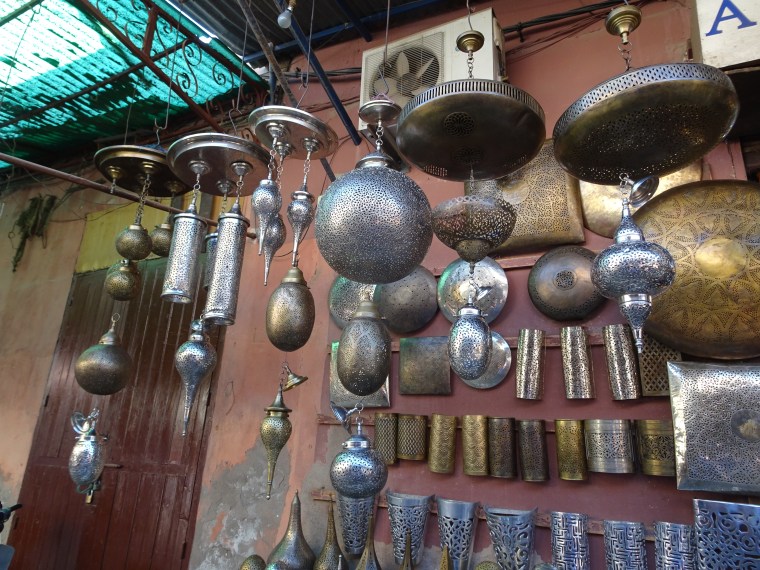
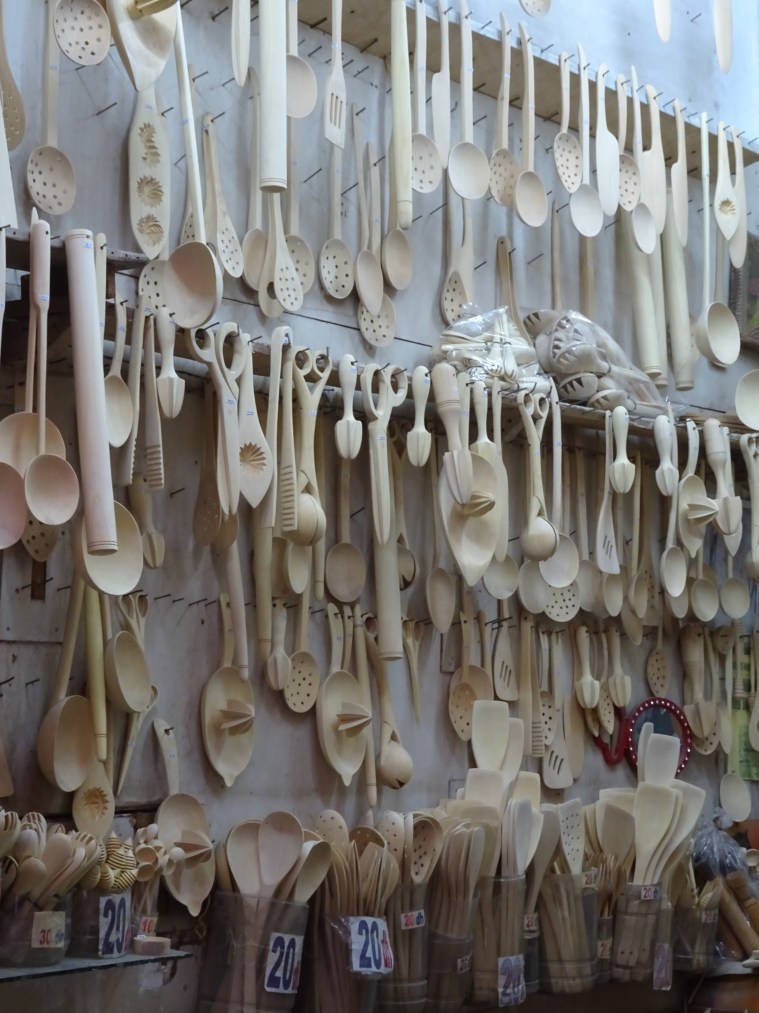
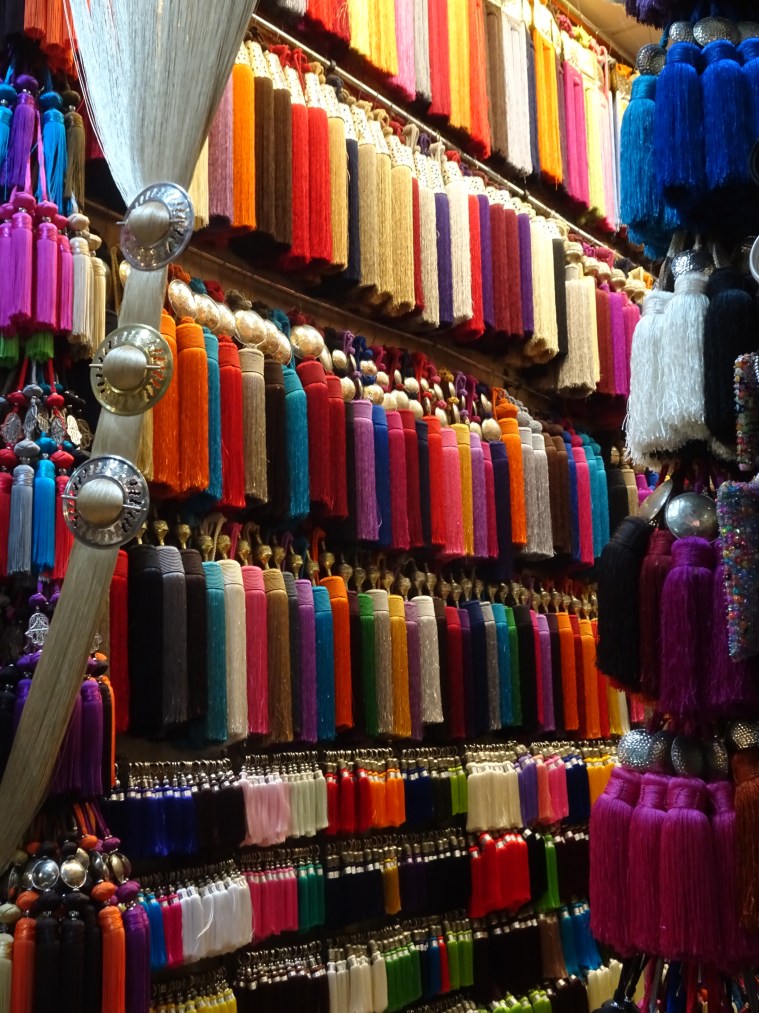
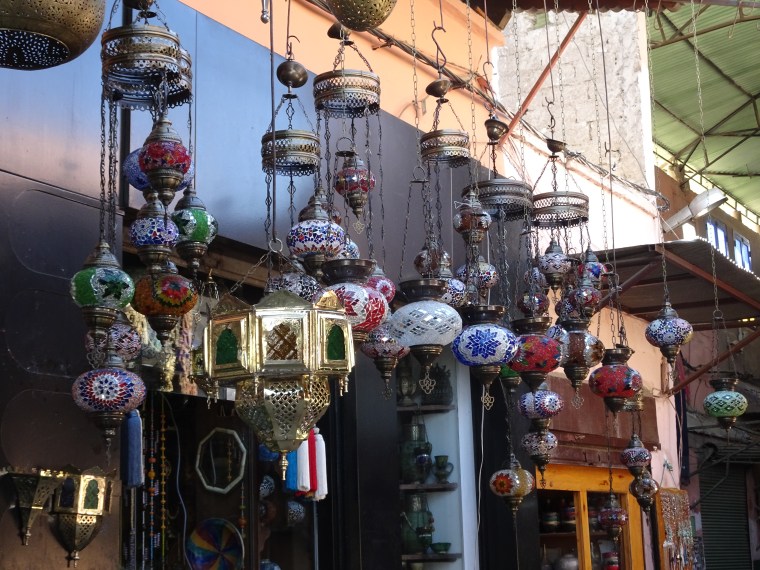
Seen one souk, seen em all you might say. And there is some truth to that, except the souks of Marrakech seem more ordered, cleaner and less frantic. Rather like the city itself. Whatever you want is on hand here.

3E9D1018-65B6-4696-B1B6-B8139E3FC08C2FFB438E-00CD-4CAA-83B2-87522D2A62DE61858329-117D-44A0-8BC2-448E8086FAFAD2E3B49E-5006-4CF2-A247-42CA18F07EB4

745A5B40-7681-4482-851E-8BB4BCAA3F95DE6BAC18-0E48-4867-BFF9-D1D20E96D3C30E77B338-46FB-4527-A31B-1D9719EBE4D85DE13C9C-A6AD-4666-A8A1-98B33765E747

B2D297AC-B7AC-4BA8-9385-6DC63284C10348A3E92D-A5D9-454C-B426-AE9B18A95C82E246D8C8-2E02-4EFA-B545-4303276FC67AF97FA18F-4625-4E14-B12C-C01903BA84A701E5AA57-CF74-434B-8E25-C235D856EF74

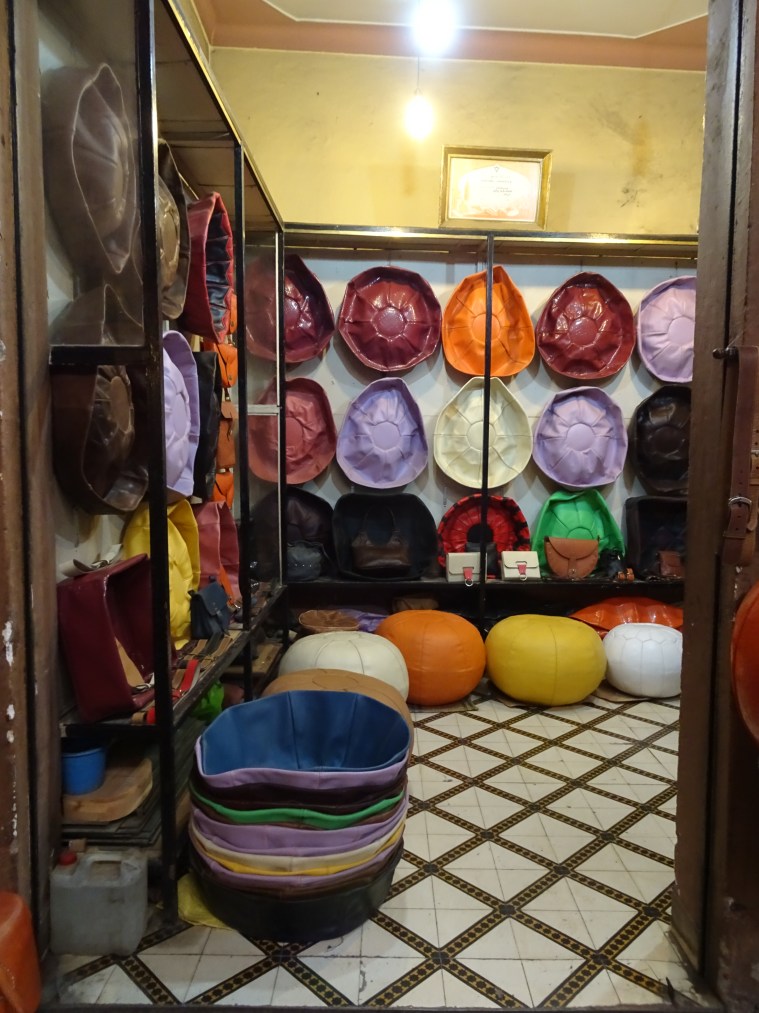
I was pleased to see that in Marrakech, at least in the souks, there are still plenty of pouffes

651146DE-95B6-4836-B5B1-C8313AE751AB.jpeg

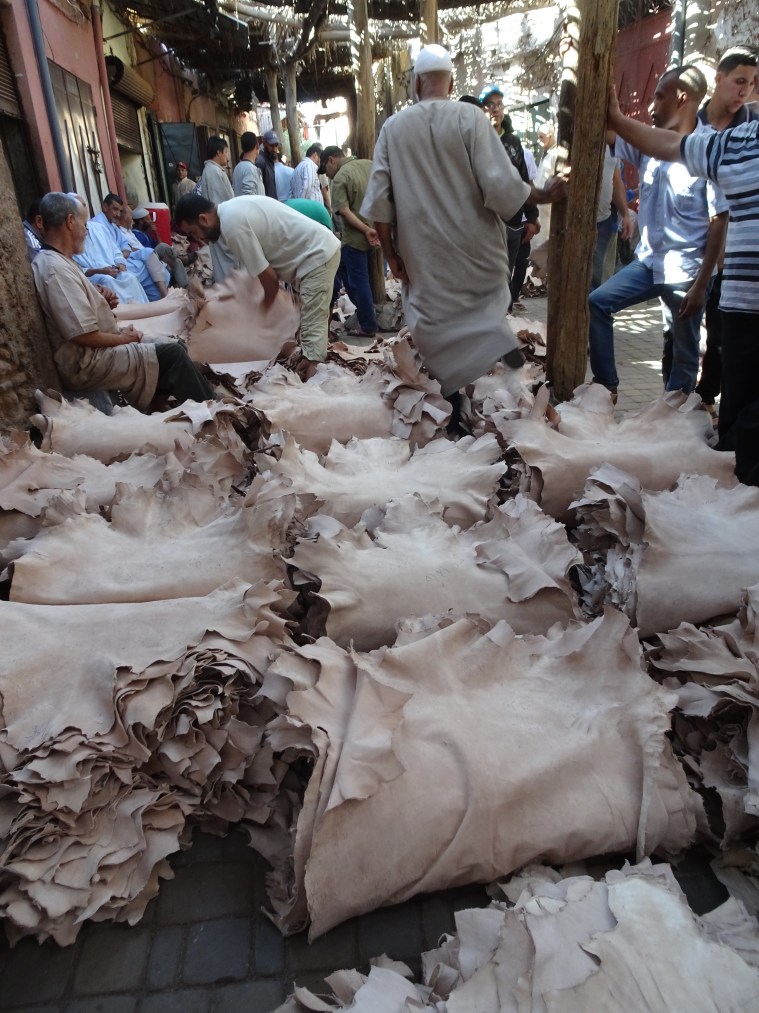
More leather auctions, like those we saw in Fes

2F9C132B-B13E-41AA-AA06-9582463DC215.jpeg

But Abdul Raheem is here to show us around his city, not to shop. He actively discourages browsing and moves us at quite a pace. We would have preferred a more leisurely pace but we daren’t lose him for we might never find our way out of here. Call me a sook.

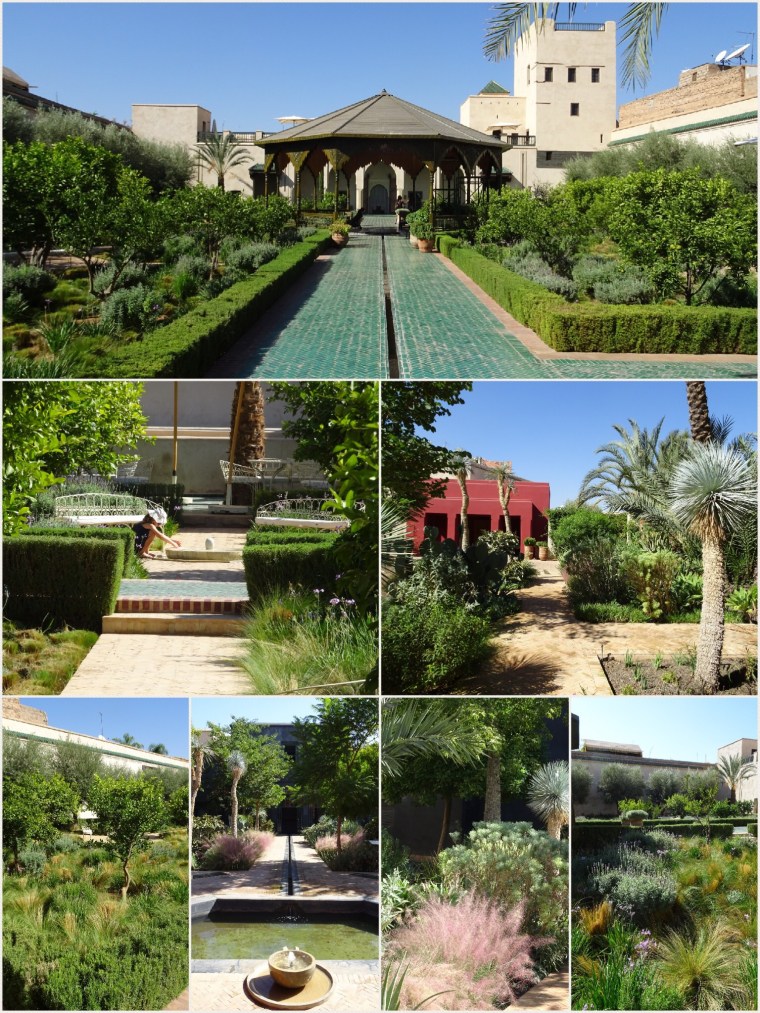
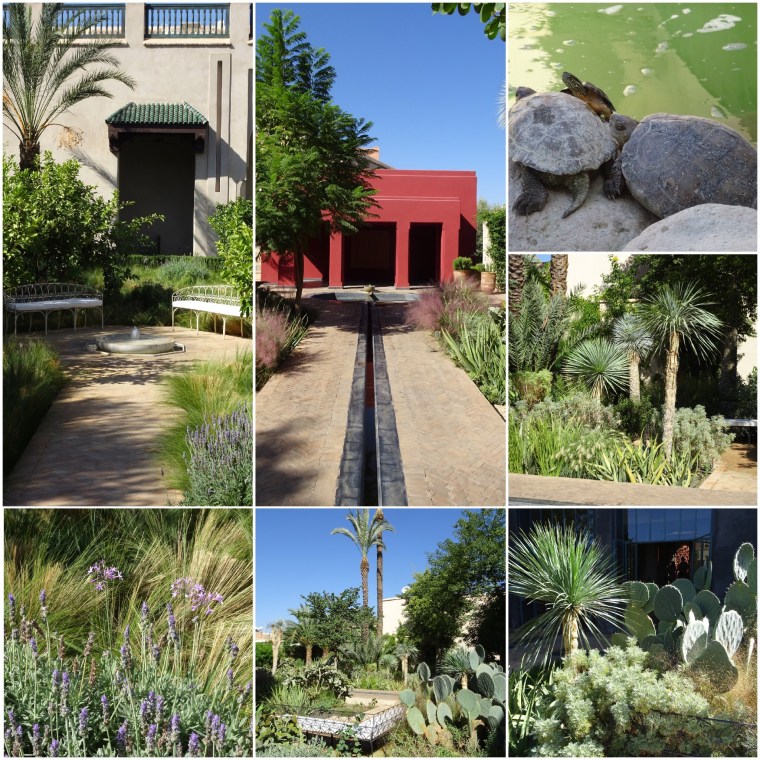
A delightful oasis of peace amongst this madness is Le Jardin Secret, which hosts two gardens – the Exotic which has plants and trees from five continents, and the Islamic Garden, in the traditional four quadrants. The garden is watered by a flow from the Atlas Mountains (from where all the water for this southern part of Morocco comes) via an ingenious system of underground channels. I’m not sure if the Romans were responsible for this, but someone very clever was.


4457CEEE-F86A-4725-9966-534A58F682D2C946312B-5CFB-4B91-B38E-81FECD45ECB1

We finish our tour of the medina and exit into the main square of Marrakech. This is where the snake charmers are, and the men with monkeys on leads. But of course this is a dreadful tourist trap which Abdul Raheem was not going to allow us to have a bar of, since he knows we are far too discerning to care about such trifles. I secretly vow to come back without his knowledge, as I am particularly keen to see a snake being charming.

Off to lunch. A simple sandwich, we plea, but alas we are delivered to a rather nice courtyard restaurant, where we indulge in two courses. Abdul leaves us at the entrance to the restaurant with a promise to meet us at 10am tomorrow for our day of garden tours.

After lunch, Jilali kindly agrees to take us to a supermarche, to buy some picnic items for our next two dinners. We might have lost the lunch battle, but we can control dinner at least! Jilali takes the opportunity to drive us around this beautiful, curious, cosmopolitan and historic city with its wide tree lined boulevards, modern buildings, architectural heritage and chaotic traffic, complete with donkeys . It really is something, Marrakech. Jilali has an eye for the girls. We have observed often his preparedness to run down any car, bike, cyclist or pedestrian who gets in his way, but he will come to a stop for any attractive female crossing the road. And then follow her path in the rear view mirror.

Back at the hotel we swim and laze by the pool. It’s still unseasonably hot here – 34 degrees today. Later we enjoy our bread, cheese, olives and dates on the Juliet balcony of our room. Washed down with the well travelled remaining bottle of red purchased in Fes.  Palatable. Just.


The Great Atlas Road Race

Monday 23 October

Today we leave the beautiful Oasis of Skoura and we are heading to the Jewel of the South – Marrakech.  But first we have to cross the High Atlas Mountains.  But, before that we drive through Ouarzazate, the Hollywood of Morocco.  There are huge film studios here, including one American one.  The Main Street, boulevard really, is lined with giant props and film paraphernalia. The industry is an important one here, and an international film school has recently opened.

We sail through, declining the invitation to tour the studio (the presence of 6 tourist coaches in the parking lot no doubt influence our decision) and continue our journey.   We are climbing, and passing specks of wonderful colours from the occasional roadside stall selling brightly coloured plates and tagine dishes,  in the middle of nowhere.

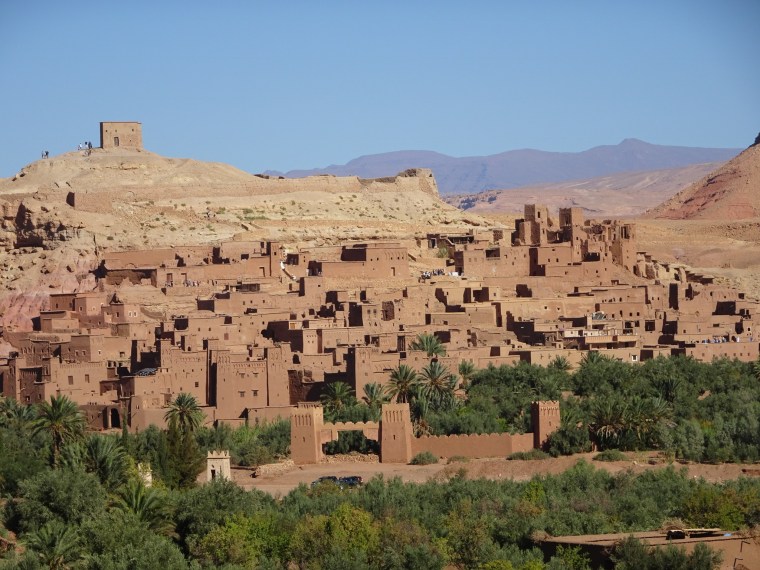
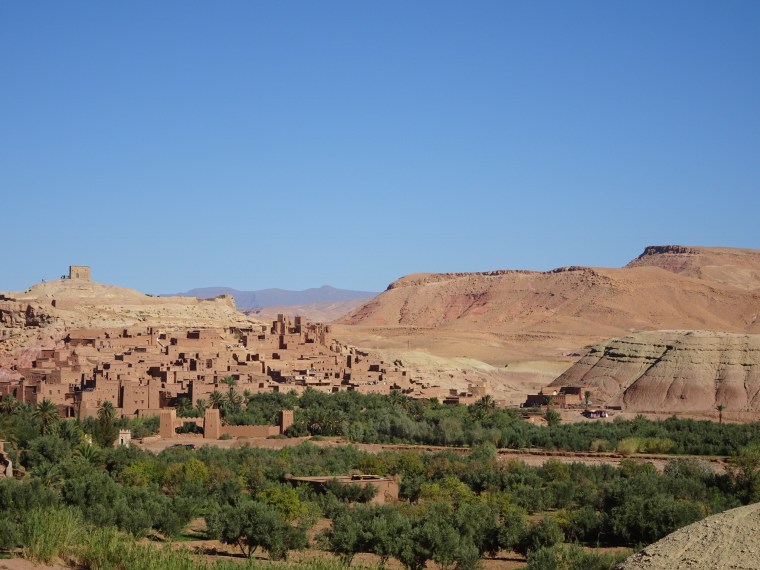
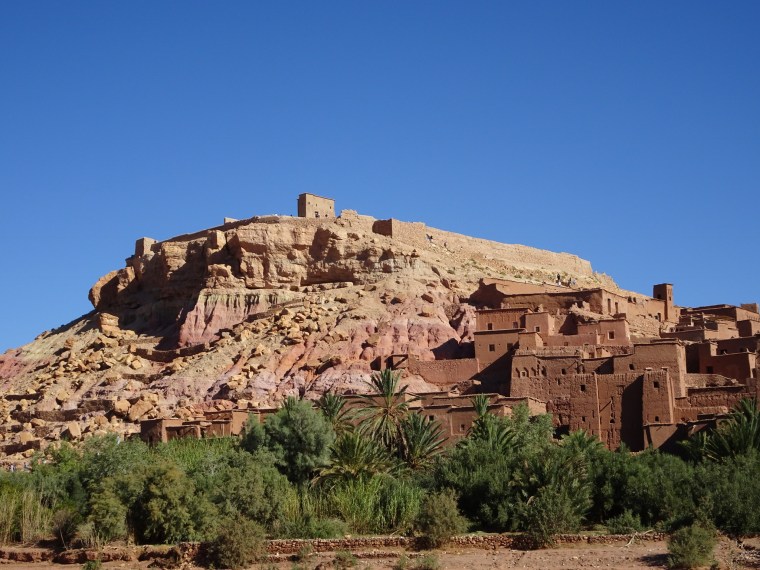
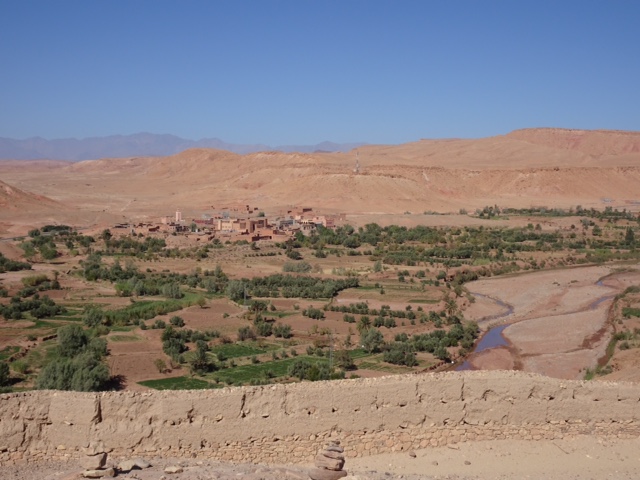
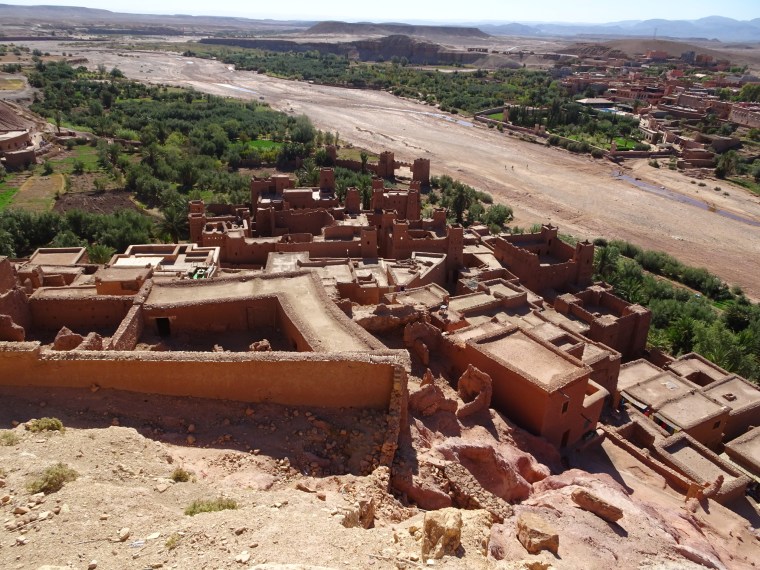
We stop at the fortified village of another UNESCO world heritage site,  Ait Ben Haddou, the best preserved Kasbah in the whole Atlas region. This village has featured in a huge list of movies, but I have only heard of three of them – Gladiators, Raiders of the Lost Ark and Lawrence of Arabia. Less discerning readers amongst you may have seen, even enjoyed, such classics as “The Mummy”, “ Sodom and Gomorrah”, “The Jewel of the Nile”, some eps of “Game of Thrones”, the list is a large ng one

768C8DCB-2E92-49E3-A3D4-1237E2FF429606965734-0AAE-4834-AF38-B36B3709D3BB0E343BE3-02E6-410A-B541-079CF28C3868

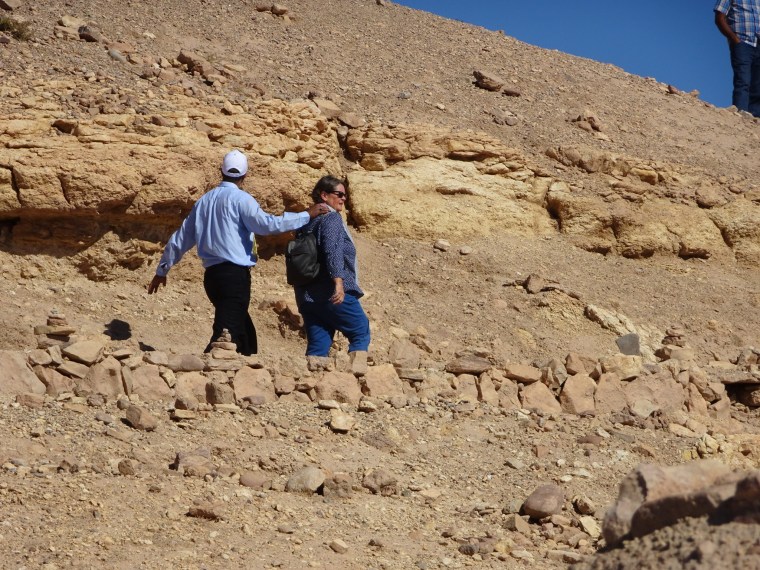
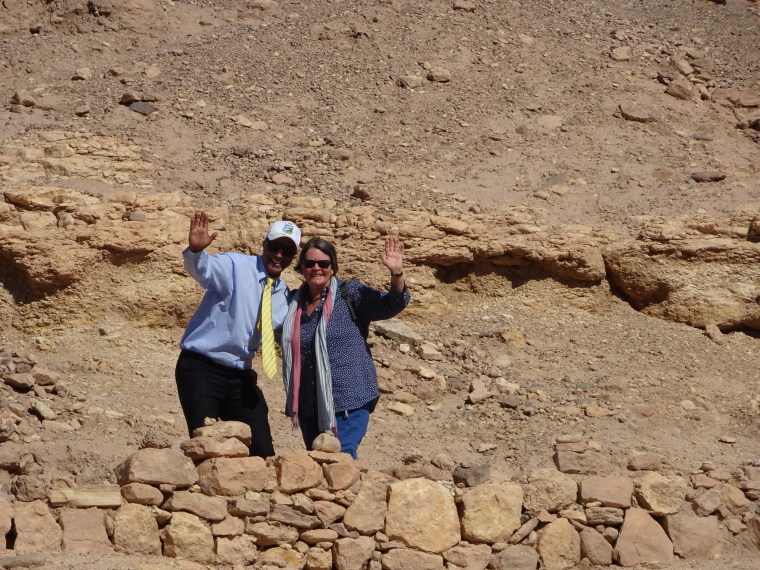
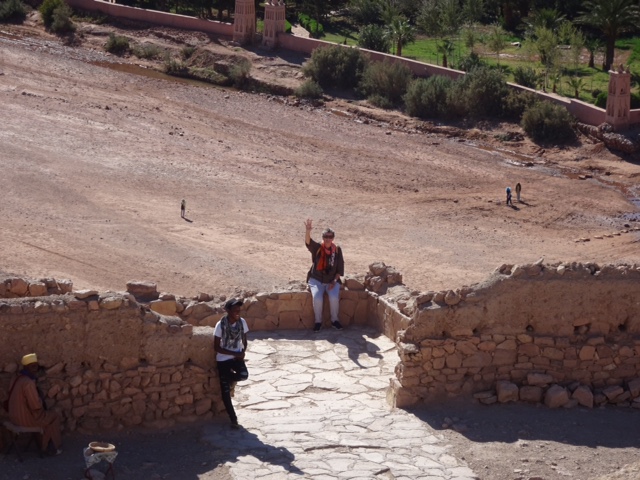
We’re going to climb to the top of that.  Well, some of us are.  I make a Herculean effort, even if I do say so myself (I believe I just did) but don’t quite get to the top. Cherrie and the ever attendant Jillali do though.

D271E360-6BC5-4DE7-9BAA-DA2936BE8681CB6D733A-502D-436F-94B1-10DF0113731B139F7899-3067-40B4-AD2F-8E3AA3A7C801

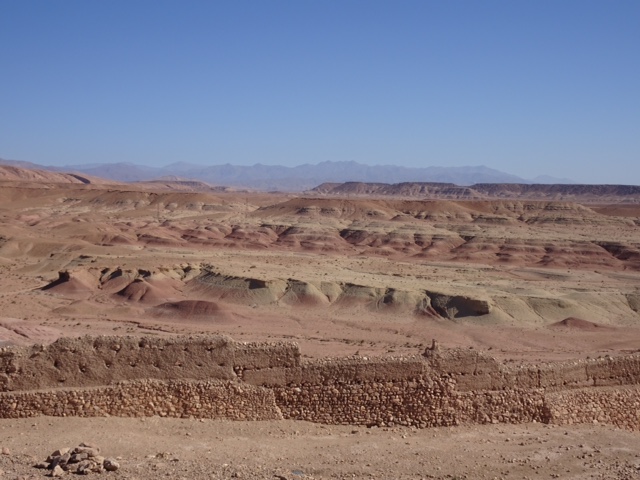
And here’s what they saw

A297A93F-D04E-4319-86AA-59D53F25A2CC9EBA3041-81A6-44E5-A347-06B85EFB5732EC0BE18D-DB06-4BC4-A30D-66AB5FF239BC9A6A0EF3-5395-44A3-8026-1BE240940879

From my viewpoint, a little more than half way up,

76844921-A990-4BA3-AB3D-F7865A6C01B2

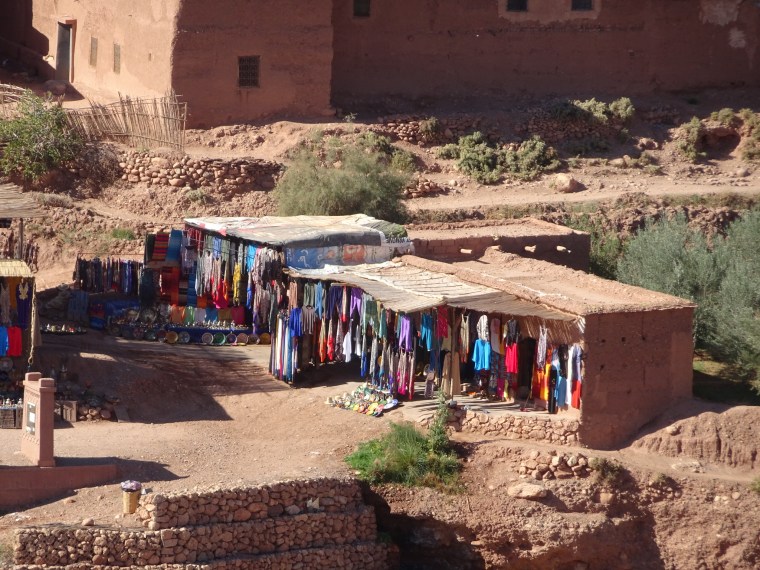
I look down on some more wonderful colour

D142DFE8-8A5F-4AF0-A7CC-69E8D7640893.jpeg

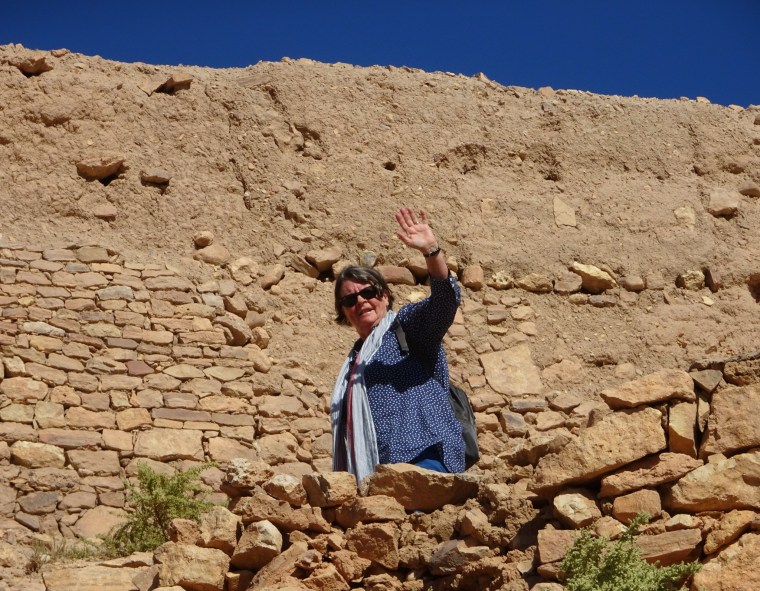
And, of course, I continue to look up to Cherrie.  Always have, always will

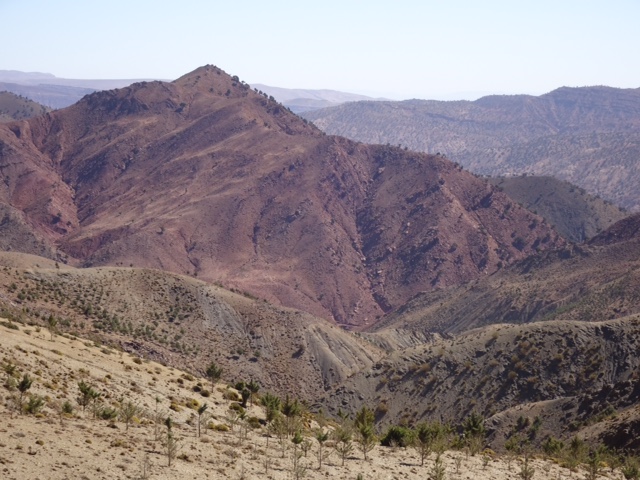
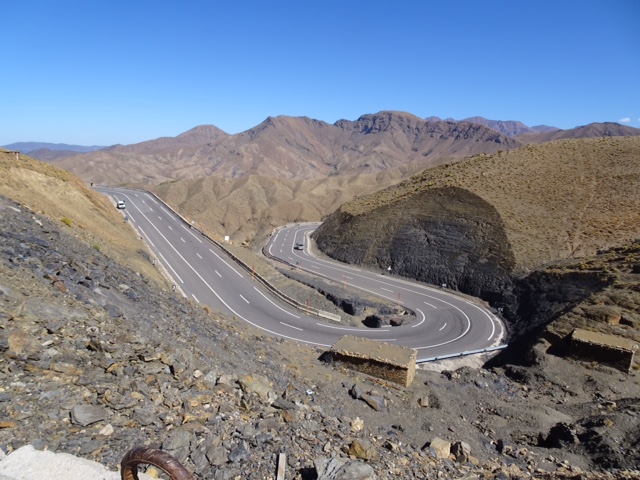
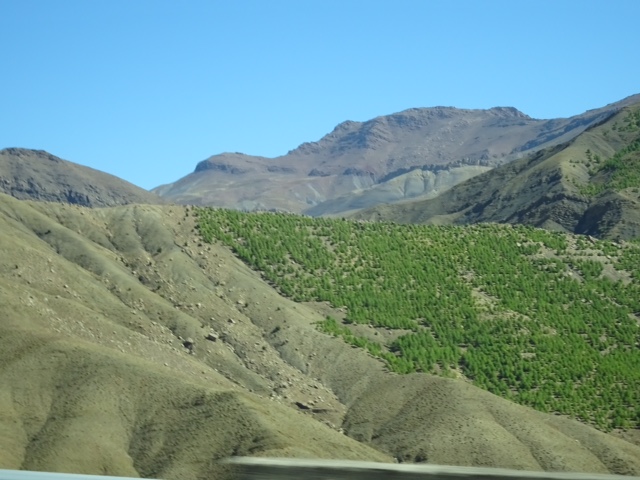
4B77A24F-4E4D-41D8-AE4A-BA86F5B4FC51.jpegSo, now we continue the climb up the High Atlas Mountains in earnest.  We know this is a rough and windy road, and as I am prone to travel sickness I take a TravelCalm.  It’s not enough to touch the sides.  This road is unbelievably windy, and in shocking condition.  It seems that every car that is on it is keen to get to the other side, and will spare no time to make it.  It’s a great race, for who can go faster and who can overtake closest and who can make it first.  Our driver is no exception.  It is terrifying.  The road spirals into the sky.  The views, however, are amazing

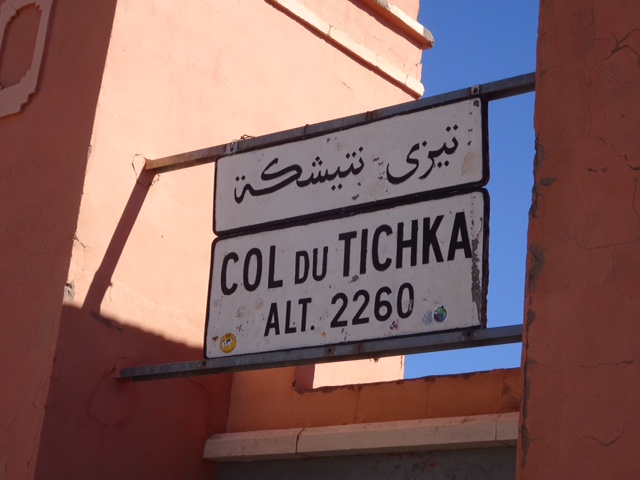
895F9ACF-320D-4C7A-BF7D-D7FA4E21878950B50350-F283-469D-AE94-281ED839B119DF5740F4-B603-47CC-8330-F0BE343E40DC Until, merciful heaven, we reach the top

1FF0F2F7-0CB7-4D6E-A103-402BADDC278B.jpeg

I take some deep breaths of fresh air and Cherrie asks Jillali if he can drive a bit more slowly perhaps.  The plea falls on deaf ears, because the road is in better condition now and is sealed (oh goody, now we can go even faster). He continues the race to the chequered flags.  There are 99 bends in 30kms.  It was apparently a curious ascent. I cannot personally comment, because my eyes were clamped closed the whole time, as was my mouth for fear of expelling my breakfast.

DDAC4FD3-81AB-456E-8D94-77979FCD60C6.jpeg

An article we read a few days ago in the UK Telegraph says, and I quote “One false move here and you’re a goner. From the top of Tizi N’tichka, a car could freefall for almost half a mile before reconnecting with the hot, hard surface of Morocco, and then go bouncing off into the wheat fields below. During those few seconds, its passengers would enjoy the colours of Moroccan geology, from scarlet to crimson, and perhaps the odd trilobite hurtling past: a reminder that this was once below the sea, instead of 6,000 feet above it.”

It occurs to us that if the worst were to happen, at least we’ve skipped a step because we are already in the hearse.

56A4AE55-0BF4-4ACD-B0E7-F7197B00F63C.jpeg

On the way down we come across a nomadic tribe moving their goats

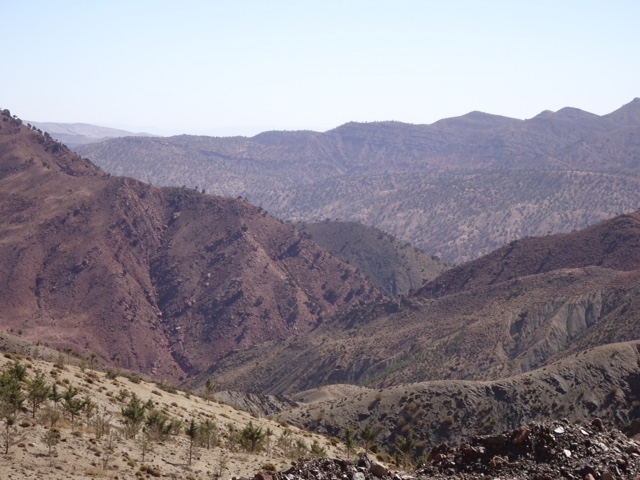
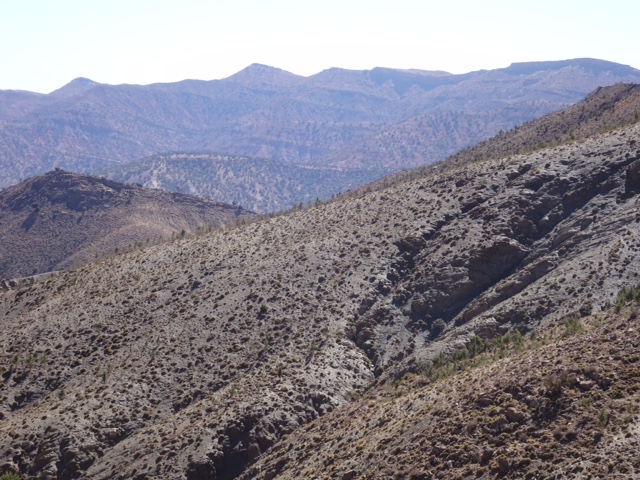
Extraordinary  views

AAC17F64-C8C4-45ED-BD86-655BC67466B692C11B66-2811-4C87-80BE-3E0A9B93977DABE29772-58AC-466D-850C-2732BB54CC56

And landscape resembling the colour of my face

66F1F398-B518-466C-9A22-B6E51C7E7399

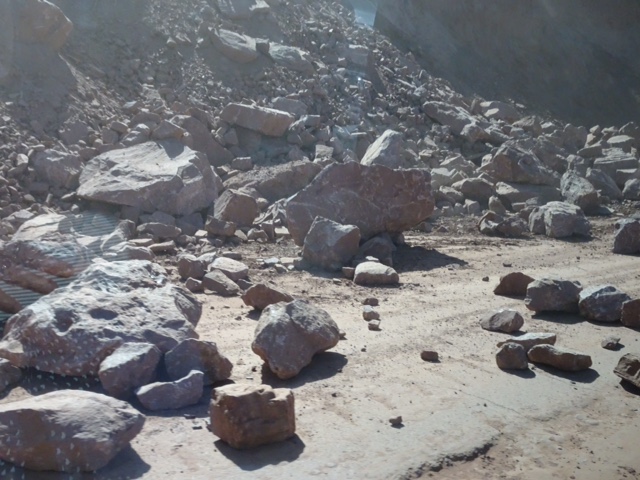
And then, praise be to Allah, it all came to a sudden stop.  After nearly three hours of this hell, we hit a traffic jam.  Everything has come to a stop.  Jillali locks us in the van and walks down the queue of vehicles to investigate.  He comes back with the news that there has been a landslide and we may be here for some time. Frankly, that is music to my ears and we get out of the car and sit on the safety fence, although I use that S word lightly.  I nibble at a sandwich we made from our breakfast leftovers, and Cherrie and Jillali knock the rest off.  Eventually the traffic starts to move at a snails pace, and we pass the rockslide
69730720-8839-491B-B4B4-35BE12916C31

3248909D-752B-464E-9582-96C5D0FBE3DE

That is one BIG rock folks.  It must be 6 feet high. We don’t know if there was any damage to vehicles or people, or how long ago this happened, but the temperate nature of the drivers doesn’t last long and soon the great race was on again.

Then we hit the remnants of a load of cement bags, which have come off a truck. The cloud of cement literally brings us to another stop, before we limp through at a much more lady like pace

6914522E-6E8A-45C7-B27A-5ED8500D36B3

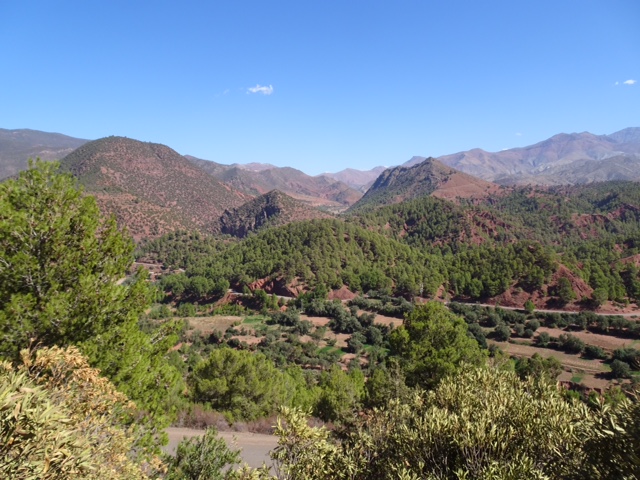
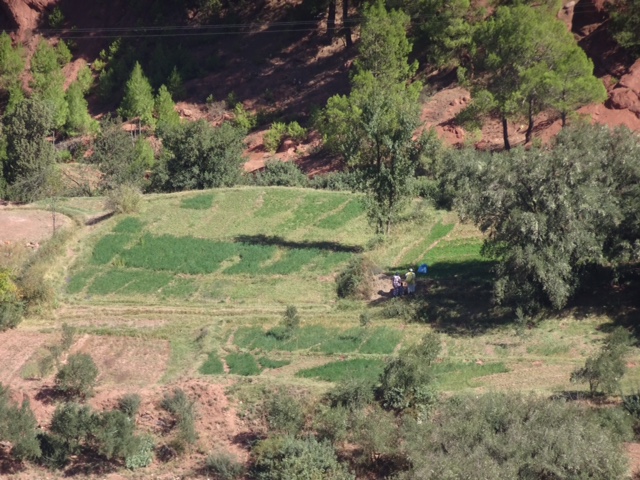
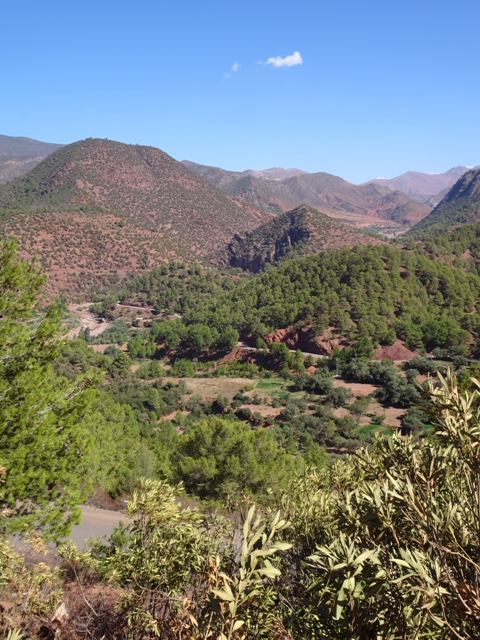
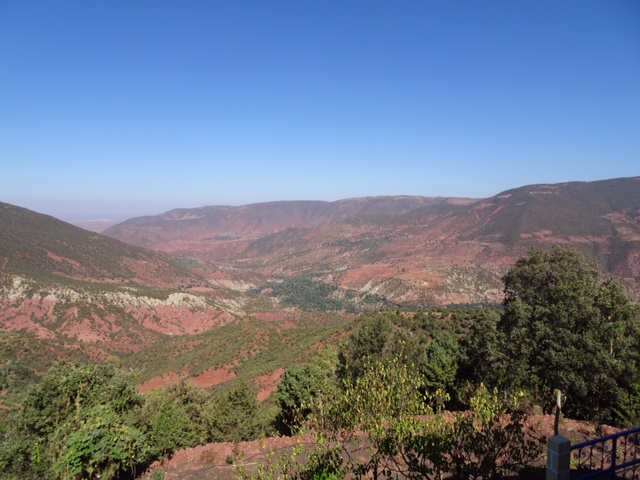
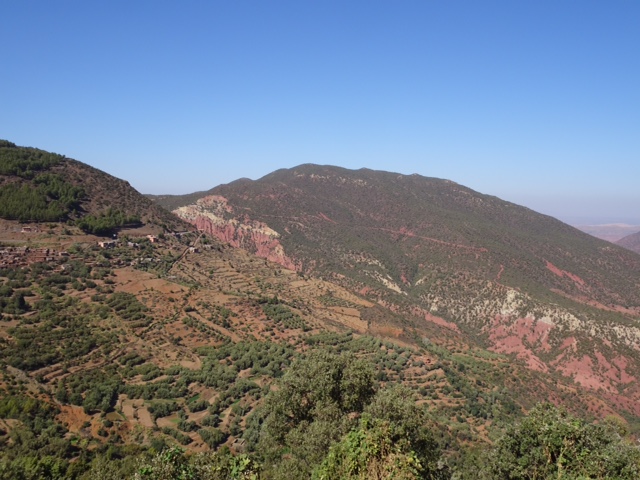
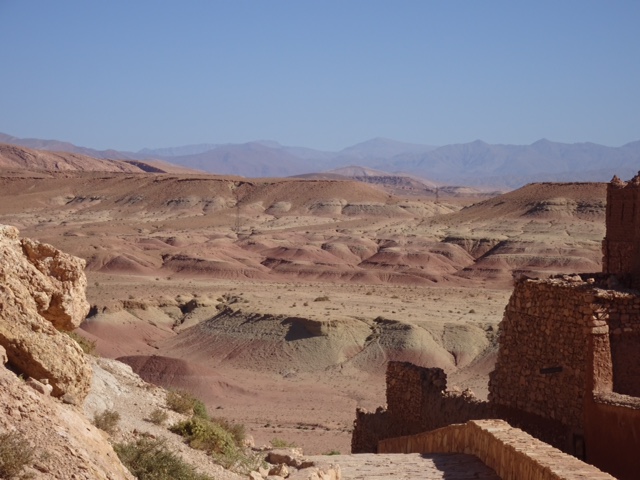
This huge mountain range separates the Mediterranean and the Atlantic from the Sahara desert, and it spectacularly beautiful.  Apparently.  These photos are taken on the descent, which feels rather like the Big Dipper to me.  I certainly feel like mimicking the sound effects.
39413E9B-6271-4623-A186-A029161E12DE101A7F73-F808-43DC-A053-0B03E858BE29

And then we hit level ground.  I open my eyes to the outskirts of Marrakech, after a five hour hair raising drive.   It’s a very different city to those we have been to in Morocco, and we look forward to exploring tomorrow. We are staying at a lovely riad within the Medina.

Next time I shall fly over the Atlas Mountains.  In a big plane.

Oasis Hiatus Part 2


Saturday 21 October 2017

A day of rest, except we were woken at 7am by a loud rap at the door. Cherrie opened it to a Berber man who spoke to her in native Berber.  I’m disappointed to report that she failed to understand him. He indicated that she was to go with him, but she stood her ground and told him, in her finest English, to bugger off. He did. We learned later that he had come to the wrong room to collect his tour patrons for the day. I hope they understood him.

We don’t leave the Kasbah today.  We do everything in a leisurely manner.  We breakfast, we stroll through the gardens of this lovely place,

A61E4B91-CA45-4863-ABC8-C846FD8BCDC00CFE1C57-C486-45E0-9A40-65F5A690257C

we swim in the pool, we lunch, we read, we reunite with Lois and Gerry from the desert camp who are also staying here, and we generally refuel.  The food is lovely, today a little less western, a little more Moroccan.

The perfect holiday day.


Sunday 22 October 2017

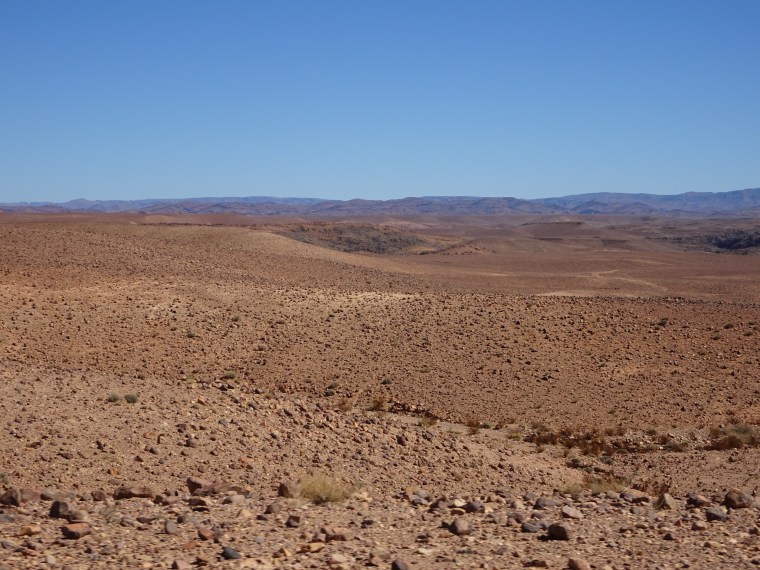
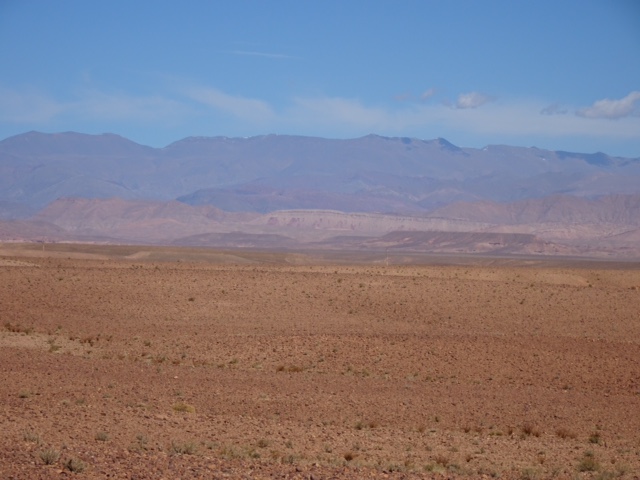
This morning we go exploring with Abdul.  We are driven, in 4WD, across the river bed and into the heart of this extraordinary oasis.  This southern Moroccan desert is called the rocky desert, unlike the sandy desert of Mergouza where we were, with those wonderful dunes.

498ECEF4-FD73-4E36-BEAE-706F5F01896D.jpeg

In the middle of this rocky country lies this huge oasis, 450 hectares of it.

DF33AEF3-2EBD-45AD-B6EB-192117E52EDB.jpeg

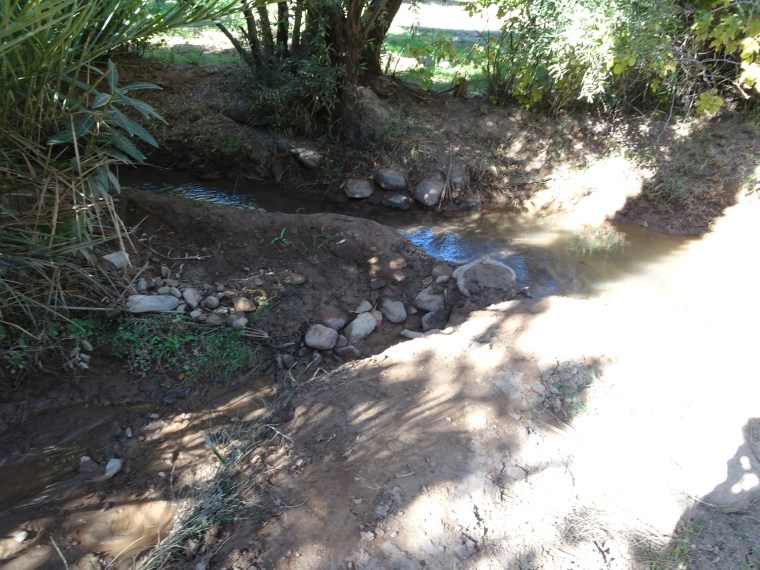
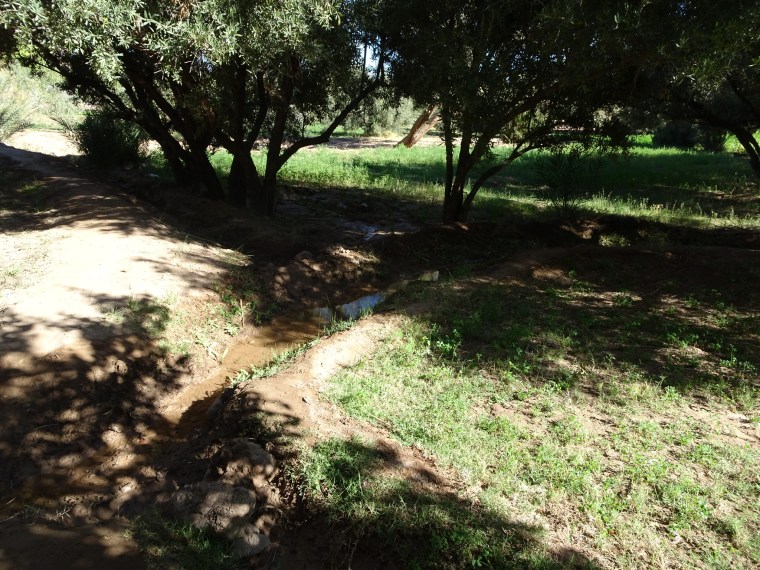
UNESCO protected, as I have said. It is all fed by canals which were hand dug by the Romans (those Romans sure got around, and they were enterprising folk) and those same canals still feed the plantings today.

F0558109-7311-4BF6-8312-A95CFF1F2886F2E303DB-BB79-44B5-B076-D04B51C32DE3D5B85661-1476-4D71-976B-ADF0612FAF43

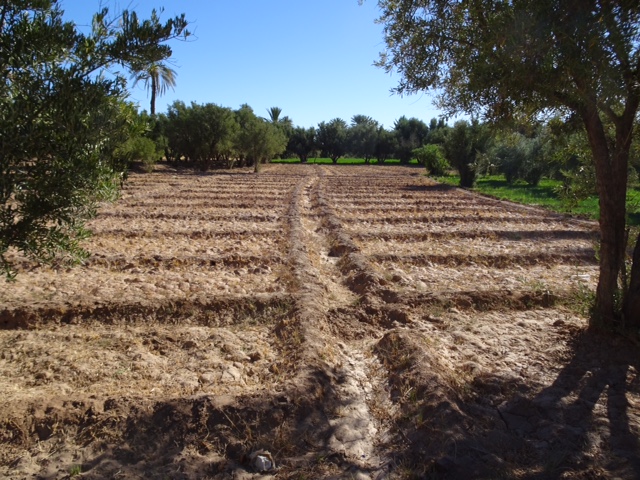
These Berbers live by traditional methods.  They grow alfalfa (aka lucerne), almonds, apricots, olives, corn, dates, quince, pomegranates, fava (aka broad) beans and parsley.   All in very salty water. The olives tolerate the salt, thrive on it in fact, and the dates bury down until they find clear water, which is not very far.  The others tolerate the salt because of the flooding watering method used.  A man is in charge of how much water each canal is fed, and he controls that with his hand shovel and simple damming.

B195695F-6414-42F6-B091-52EA7E362330.jpeg

The community lives in harmony with this water sharing system, it is, after all, the tradition.  The annual rainfall is only 200mm so the water from the alps is essential.  The dry river bed we drove through flows mightily apparently, during the season.

We are at 1200m above sea level but the high Atlas Mountains tower over us.


04FCBDC6-C7AF-47DF-ADCC-4614902AADB1.jpeg

The planting routine is  determined by the amount of water they will get each year, and that is determined by looking at how much snow is on the high Atlas Mountains up there.  If there is a lot of snow, they know it will be a good  season and they plant accordingly.  If the snow is light (as it has been for the past few years – Tony please take note) then they plant crops which need less water.  They are pretty sanguine about it all.

58654033-21F7-4C59-BAC9-1867CA91BE4F.jpeg

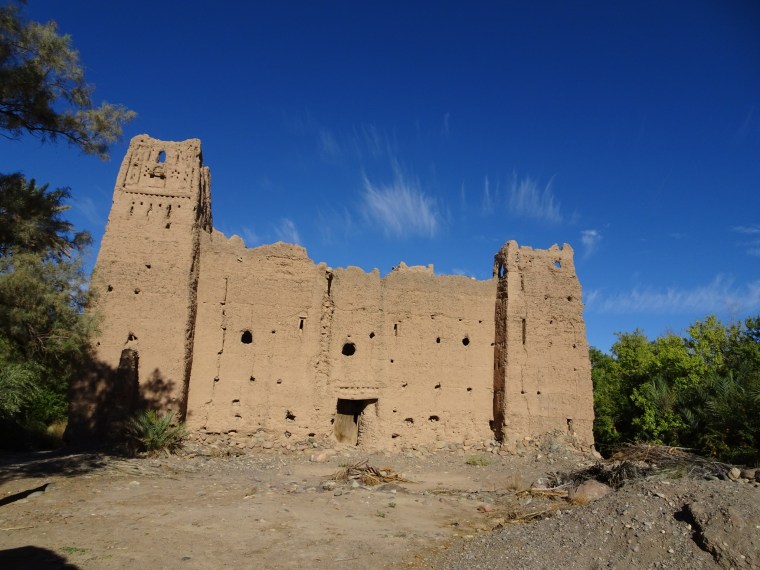
There are kasbahs surrounding the oasis, in various stages of repair.

BC7ED7EE-D4DC-4F42-98EA-5F4CADC89771.jpeg

DF5F94AB-8490-4575-BA36-2DAB8D9CF464

some even with important political messages (Tony, please take note)

EFB8E5E4-40A1-414E-9CC7-68772F4FC304

From this amazing oasis we drive to a beautiful gorge, dare I suggest it was gorgeous?

We were provided with a picnic lunch, seated on a rug on the ground.  An incredible feat for me to get down and an even greater one to get up again.  I am unable to do either without considerable assistance, which is both irritating and embarrassing.  However, the good news about being on the sand is that it is a simple matter to dig a hole and bury the food which is not to our taste, so as not to offend.

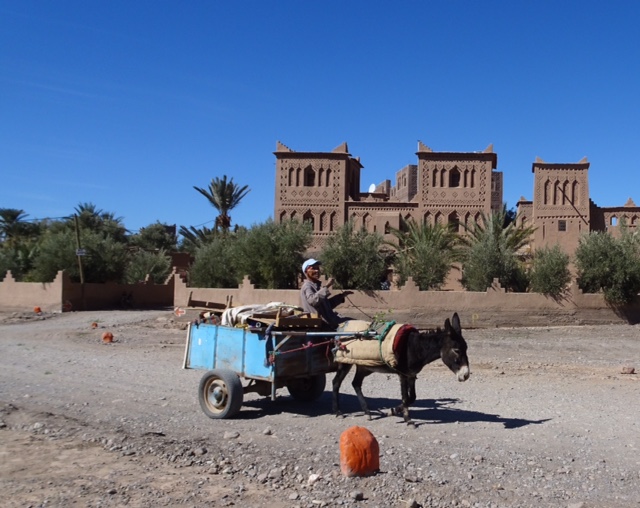
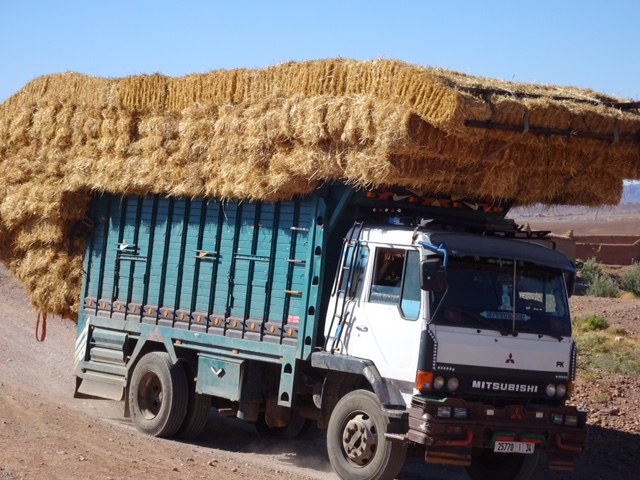
Driving back to our Kasbah we pass both traditional and modern transport

572ABBF7-B952-4EC9-89F7-A65F42B7BF130441FBAB-DEE0-4FC4-BB52-1DA747C2B06F

Back home, we have another swim.  It is far hotter than normal and temperatures are soaring into the 30s (Tony please take note).

At 6.30pm we take a cooking class with Chef, a delightful and patient man with excellent English.  We cook our own dinner.  Well, actually, he cooks it while we add a cursory stir here and there but he is kind enough to suggest that if we enjoy it he cooked it and if we don’t we cooked it.

The resultant tomato crumble and chicken tagine was cooked by him!  Delicious, and fully Moroccan tonight.  Washed down with a glass of Moroccan Cabernet.

For those of you who have given me feedback that the blog is negative and not conducive to a trip to Morocco, please take note.  Another glorious day in Morocco.